Aerial lift and boom lift safety requires a combination of operator training, daily equipment inspections and strict adherence to fall protection requirements. Mobile Elevating Work Platforms (MEWPs) - including boom lifts, scissor lifts and aerial work platforms - are involved in an average of 26 workplace fatalities and thousands of injuries per year in the United States. The vast majority of these incidents are preventable through proper training and operational controls covered in this guide.
Types of Aerial Lifts and Their Hazards
Understanding the specific hazards associated with each type of aerial lift is the first step toward safe operation. Different platforms present different risk profiles and operators must be trained on the specific type of equipment they will use.
Boom Lifts (Articulating and Telescopic)
Boom lifts provide the greatest reach and flexibility, which also makes them the most hazardous type of aerial lift. Articulating boom lifts have jointed arms that allow the platform to reach over and around obstacles. Telescopic boom lifts extend in a straight line for maximum height and horizontal reach. Key hazards include:
Free Download: 5 Safe Work Procedures
Choose from 112 professionally written SWPs. No credit card required.
Get Free SWPs- Tip-overs: Boom lifts have a high center of gravity when extended, making them susceptible to tipping on uneven ground, slopes or soft surfaces
- Catapult ejections: Sudden movements, especially when the boom contacts an overhead structure or another object, can catapult workers from the platform
- Electrocution: Extended boom reach increases the risk of contact with overhead power lines
- Crush injuries: Workers can be crushed between the platform and overhead structures, beams or adjacent equipment
Scissor Lifts
Scissor lifts provide vertical elevation only through a crisscrossing support mechanism. While generally more stable than boom lifts, scissor lifts still present significant hazards:
- Tip-overs: Driving with the platform elevated, operating on slopes or using on uneven surfaces causes tip-over incidents
- Falls: Workers leaning over guardrails or standing on the mid-rail to gain extra height
- Struck-by: Objects and tools falling from the elevated platform to workers below
- Collapse: Mechanical or structural failure due to overloading or inadequate maintenance
Vehicle-Mounted Aerial Platforms
Bucket trucks and vehicle-mounted platforms combine the hazards of aerial work with vehicle operation. Outrigger deployment, ground conditions and proximity to traffic are additional considerations that operators must manage.
OSHA and ANSI Requirements for Aerial Lifts
Aerial lift safety is governed by OSHA standards 29 CFR 1926.453 (construction) and 29 CFR 1910.67 (general industry), along with the ANSI A92 series of standards that were significantly updated in 2018. The ANSI A92.22-2018 standard introduced several important requirements that align with international ISO standards.
Training Requirements
Under ANSI A92.24-2018, three categories of personnel require training:
- Operators: Must receive familiarization training on each specific type and model of MEWP before operating it. Training must include both classroom instruction and practical demonstration of competency
- Occupants: Any worker who rides in the platform (even if they do not operate the controls) must receive training on fall protection, safe work practices and emergency procedures
- Supervisors: Must be trained to assess site conditions, select appropriate equipment and recognize hazards specific to aerial lift operations
Training must be documented and refreshed at least every three years or whenever an operator demonstrates unsafe behavior, is involved in an incident or is assigned to a new type of MEWP.
Fall Protection Requirements
Fall protection requirements differ by lift type:
- Boom lifts: A personal fall restraint system (harness and lanyard attached to the manufacturer's designated anchor point) is required at all times when the platform is elevated. The system must be short enough to prevent the worker from being ejected from the platform
- Scissor lifts: The guardrail system serves as the primary fall protection. A personal fall restraint system is not required by OSHA unless the guardrail system is compromised, though some employers and jurisdictions require it as an additional measure
- All types: Workers must never stand on the guardrails, use ladders or step stools inside the platform or lean beyond the platform edge
Pre-Use Inspection Requirements
Every aerial lift must be inspected before each work shift by a qualified operator. This is not optional - it is an OSHA and ANSI requirement that prevents mechanical failures and identifies hazardous conditions before workers are elevated.
Equipment Inspection Checklist
- Operating and emergency controls for proper function
- Safety devices including limit switches, tilt sensors and overload protection
- Personal protective equipment including harnesses and lanyards for damage
- Hydraulic and pneumatic systems for leaks
- Tires, wheels and outriggers for damage and proper inflation
- Platform guardrails, gates and toe boards for security and damage
- Structural components for visible cracks, welds or deformation
- Electrical systems and battery charge levels
- All placards, warnings and capacity labels for legibility
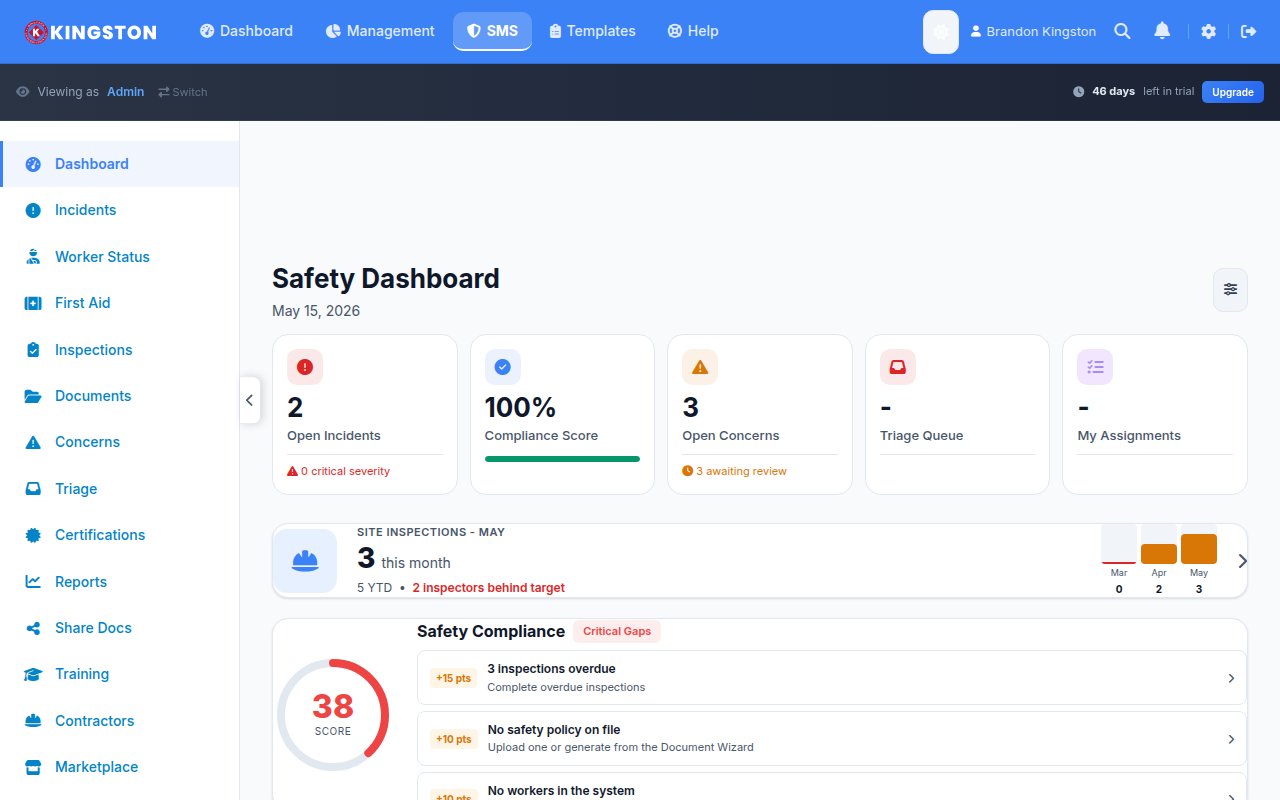
Using a digital inspection platform for daily MEWP inspections ensures every check is documented, deficiencies trigger immediate corrective actions and records are stored for compliance audits. Paper inspection forms are frequently lost or incomplete, creating liability gaps.
Work Site Assessment
Before positioning any aerial lift, the operator and supervisor must assess the work site for:
- Ground conditions: Confirm the surface can support the lift's weight and is level within manufacturer specifications. Soft, muddy or freshly filled ground is often inadequate
- Overhead obstructions: Identify power lines, beams, pipes and other structures that the boom or platform could contact
- Power line clearance: Maintain minimum approach distances per OSHA requirements (10 feet for lines under 50kV, greater distances for higher voltages)
- Weather: Wind is the most common weather-related hazard for aerial lifts. Most manufacturers specify maximum operating wind speeds of 28 mph, though this varies by model and boom extension
- Traffic: Establish barricades and warning signs when operating near vehicle or pedestrian traffic
- Drop zone: Ensure the area below the platform is barricaded to protect workers from falling objects
Common Aerial Lift Incidents and Prevention
Analyzing the most common aerial lift incident types reveals clear prevention strategies for each.
Tip-Over Prevention
Tip-overs account for a significant percentage of aerial lift fatalities. Prevention measures include always setting up on firm and level ground, using outriggers when equipped, never exceeding the rated capacity, avoiding driving with the platform elevated (or only at slow speeds on level ground when the manufacturer permits) and never using the lift in wind speeds exceeding the manufacturer's rating.
Electrocution Prevention
Contact with overhead power lines is the second leading cause of aerial lift fatalities in construction. Prevention requires conducting a power line survey before starting work, maintaining minimum approach distances, designating a spotter when working near energized lines and de-energizing lines when possible.
Ejection and Fall Prevention
Workers are ejected from boom lift platforms when the boom strikes a fixed object, when the lift drives over a bump or hole or when the operator makes sudden control movements. Always wearing a properly adjusted fall restraint system, maintaining three points of contact when entering and exiting the platform and never overriding platform controls from the ground while workers are elevated are the primary prevention measures.
Crush Injury Prevention
Workers can be crushed between the platform and overhead structures, adjacent equipment or the lift's own components. Maintaining awareness of overhead clearance at all times, using a spotter when working in congested areas and never positioning the body between the platform and a fixed structure are essential precautions.
Rescue Planning
Every aerial lift operation must have a rescue plan in place before workers are elevated. If an operator becomes incapacitated at height, how will they be brought down safely? Rescue options include using the ground-level emergency controls (which every MEWP must have), deploying a second aerial lift to access the stranded worker or using a trained rescue team with rope rescue equipment.
All workers who operate or ride in aerial lifts should know the location of the ground-level emergency controls and be trained to operate them. Rescue procedures should be practiced periodically, not just documented in a binder.
Maintenance and Periodic Inspections
Beyond daily pre-use inspections, aerial lifts require periodic maintenance inspections by qualified technicians according to the manufacturer's schedule. Annual inspections are typical for most components, with more frequent attention to high-wear items like hydraulic hoses, electrical connections and structural pins. All maintenance must be documented and performed only by personnel trained and authorized by the manufacturer or a qualified service provider.
Rental equipment deserves particular attention. Many construction operations rely on rented aerial lifts that arrive on site with unknown maintenance histories. Operators must perform a thorough pre-use inspection on every rental unit before first use, regardless of any inspection stickers or certifications the rental company provides. If the equipment does not pass inspection, it should be refused and a replacement requested.
Tracking maintenance schedules and inspection records across a fleet of aerial lifts is a significant administrative task. Digital inspection management tools automate scheduling, send reminders when inspections are due and store records in a searchable format for regulatory audits.
Elevate Your Aerial Lift Safety Program
Aerial lift incidents are preventable when operators are properly trained, equipment is inspected daily and work sites are assessed before every lift. Make Safety Easy provides the digital tools to manage daily inspections, track operator training records and maintain compliance documentation for your entire MEWP fleet.
Schedule a demo to see how our platform keeps your aerial lift operations safe and compliant, or view pricing to get started today.
Ready to simplify your safety program?
Make Safety Easy helps teams run toolbox talks, inspections, incident reports and more - all from one platform.
Start Your Free TrialNo credit card required. 14-day free trial.