Chemical plant safety is the discipline of identifying, evaluating and controlling hazards in facilities that manufacture, process or store hazardous chemicals - including petrochemical refineries, specialty chemical producers and industrial gas plants. The consequences of safety failures in these environments are catastrophic, ranging from toxic releases and explosions to environmental contamination that affects surrounding communities for decades.
The U.S. Chemical Safety Board (CSB) investigates major chemical incidents and consistently finds that failures in process safety management, inadequate inspections and poor hazard communication are root causes. This guide covers the essential elements of a chemical facility safety program that meets OSHA and EPA requirements while protecting workers and communities.
Understanding Chemical Facility Hazards
Chemical plants present a concentration of hazards that is unmatched in most other industries. Workers may be simultaneously exposed to toxic vapors, flammable atmospheres, extreme temperatures, high pressures and corrosive substances. The interaction between these hazards creates scenarios where a single failure can cascade into a major event.
Free Download: 5 Safe Work Procedures
Choose from 112 professionally written SWPs. No credit card required.
Get Free SWPsToxic Chemical Exposure
Acute exposure to chemicals like hydrogen sulfide, chlorine, ammonia and hydrogen fluoride can cause rapid incapacitation or death. Chronic exposure to carcinogens, mutagens and reproductive toxins creates long-term health risks that may not manifest for years or decades.
OSHA's Permissible Exposure Limits (PELs) establish maximum allowable concentrations for hundreds of chemical substances. However, many PELs have not been updated since the 1970s and may not reflect current scientific understanding. Many facilities adopt the more protective Threshold Limit Values (TLVs) published by the American Conference of Governmental Industrial Hygienists (ACGIH).
Fire and Explosion Risks
Petrochemical facilities handle vast quantities of flammable and combustible materials. Vapor cloud explosions, boiling liquid expanding vapor explosions (BLEVEs) and flash fires are all potential scenarios when containment fails. Ignition sources must be rigorously controlled through hot work permit systems, electrical classification zones and static grounding procedures.
High-Pressure Systems
Reactors, distillation columns, heat exchangers and piping systems often operate at elevated pressures and temperatures. Equipment failure under these conditions can result in catastrophic releases. Pressure relief devices, rupture discs and emergency shutdown systems provide layers of protection - but only if they are properly designed, installed, maintained and tested.
Process Safety Management: The Regulatory Foundation
OSHA's Process Safety Management (PSM) standard (29 CFR 1910.119) is the cornerstone regulatory framework for chemical facilities handling highly hazardous chemicals above threshold quantities. PSM requires a comprehensive management system with 14 elements:
- Employee participation
- Process safety information
- Process hazard analysis
- Operating procedures
- Training
- Contractors
- Pre-startup safety review
- Mechanical integrity
- Hot work permits
- Management of change
- Incident investigation
- Emergency planning and response
- Compliance audits
- Trade secrets
The EPA's Risk Management Program (RMP) under the Clean Air Act imposes parallel requirements with an additional focus on offsite consequence analysis and community notification. Facilities covered by both PSM and RMP must maintain compliance with both programs simultaneously.
In Canada, provincial regulations and CSA standards (particularly CSA Z767) establish similar process safety requirements for chemical facilities.
Critical Safety Systems and Controls
Mechanical Integrity Programs
Mechanical integrity is the systematic program of inspecting, testing and maintaining process equipment to ensure it functions as designed throughout its service life. This includes pressure vessels, storage tanks, piping systems, relief devices, emergency shutdown systems, controls and pumps.
Regular inspections must follow recognized standards such as API 510 (pressure vessels), API 570 (piping), API 653 (storage tanks) and API 580/581 (risk-based inspection). Document every inspection finding, corrective action and retest result in a system that allows trending over time.
Digital inspection platforms eliminate the delays and errors associated with paper-based inspection programs. Inspectors can complete checklists on a tablet at the point of inspection, attach photos of deficiencies and route findings to maintenance planners in real time.
Management of Change (MOC)
Many chemical plant incidents trace back to changes that were not properly evaluated for safety impact. Management of change procedures require a formal review before any modification to process equipment, chemicals, technology, procedures or facilities.
The MOC review must address the technical basis for the change, impact on safety and health, modifications to operating procedures, time period for the change and authorization requirements. All affected employees must be informed and trained before the change is implemented.
Permit-to-Work Systems
High-risk activities in chemical plants - including hot work, confined space entry, line breaking, electrical isolation and excavation - require formal permits that verify safety precautions are in place before work begins. Each permit type addresses specific hazards and control measures.
A well-managed permit system prevents the simultaneous execution of incompatible activities, ensures atmospheric monitoring is conducted and verifies that emergency equipment is staged. Digital permit systems improve compliance by enforcing required approvals and automatically expiring permits at the end of their valid period.
Hazard Communication and Chemical Inventory
OSHA's Hazard Communication Standard (HazCom 2012) requires chemical facilities to maintain Safety Data Sheets for every hazardous chemical on site, label all containers according to the Globally Harmonized System (GHS) and train workers on chemical hazards.
In a large chemical plant, the SDS library may contain hundreds or thousands of documents. Keeping this library current - with the latest revisions from manufacturers - is a significant administrative challenge. Centralized document management systems ensure workers can access the correct SDS for any chemical on site within seconds.
Emergency Response and Preparedness
Chemical facilities must maintain emergency response plans that address fires, explosions, toxic releases, medical emergencies and natural disasters. Plans should include evacuation routes, assembly points, emergency contact lists, mutual aid agreements and coordination procedures with local fire departments and hazmat teams.
Conduct emergency drills at least annually - and more frequently for high-consequence scenarios. Tabletop exercises, field drills and full-scale exercises each serve different purposes. After every drill, conduct a debriefing to identify gaps and improvement opportunities.
Community notification and coordination are essential. Facilities covered by EPA's RMP must submit risk management plans that include worst-case and alternative release scenarios. Neighboring communities have a right to know about the hazards in their area.
Contractor Safety Management
Chemical plants rely heavily on contractors for turnarounds, maintenance projects and capital construction. Contractors may be unfamiliar with the specific hazards of your facility. PSM requires host employers to evaluate contractor safety performance, inform contractors of known hazards, explain the emergency action plan and maintain an injury log for contract employees.
Require contractors to submit their safety programs, training records and incident history before mobilizing on site. Conduct contractor safety orientations that cover site-specific hazards, permit requirements and emergency procedures.
Incident Investigation and Learning
Every incident, near-miss and process upset in a chemical facility must be investigated. PSM requires investigation teams to include at least one person knowledgeable in the process and a contract employee if the incident involved contract work.
Investigations must identify root causes - not just immediate causes. A release caused by a corroded pipe fitting is an immediate cause. The root cause might be an inadequate inspection frequency, a failure in the management of change process or a design flaw in the material selection.
Document investigation findings, corrective actions and completion timelines. Track corrective action closure rates as a key safety performance indicator. Share lessons learned across the facility and, where appropriate, across the broader organization.
Digital Tools for Chemical Plant Safety
The complexity of chemical plant safety management demands digital solutions. Spreadsheets and paper forms cannot manage the volume of inspections, permits, training records and compliance documentation that a modern chemical facility generates.
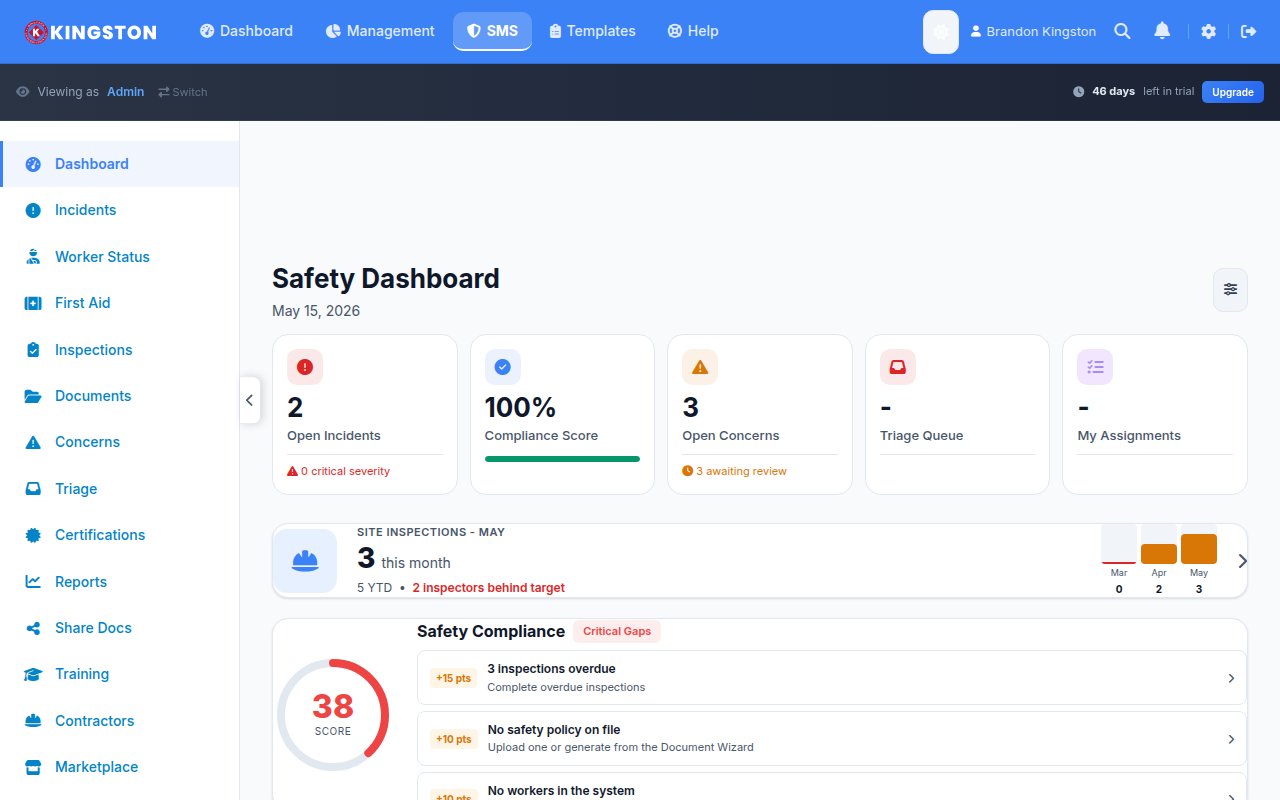
A centralized safety management platform integrates inspection management, incident reporting, training tracking and document control into a single system. This integration provides visibility into safety performance trends, automates compliance reminders and creates the audit trail that regulators expect.
Strengthen Your Chemical Plant Safety Program
Chemical plant safety is too important and too complex to manage with outdated tools. Every inspection gap, every undocumented change and every unreported near-miss increases the probability of a catastrophic event.
Make Safety Easy provides the digital infrastructure that chemical facilities need to manage process safety effectively. From mobile inspection checklists to automated compliance tracking, our platform is built for the demands of high-hazard environments.
Protect your workers and your community. Request a demo to see how Make Safety Easy supports chemical plant safety management. Or check out our pricing options to get started today.
Ready to simplify your safety program?
Make Safety Easy helps teams run toolbox talks, inspections, incident reports and more - all from one platform.
Start Your Free TrialNo credit card required. 14-day free trial.