Concrete and cement plant safety is the systematic approach to controlling the serious hazards found in cement manufacturing, ready-mix concrete production, precast operations and concrete pumping - including respirable crystalline silica dust exposure, moving machinery entanglement, thermal burns from kiln operations, chemical burns from wet cement and vehicle traffic in congested plant yards. These hazards cause hundreds of injuries and illnesses annually across North America, many of which are preventable with proper engineering controls, training and safety management systems.
Whether you operate a cement kiln, a ready-mix batch plant, a precast facility or a concrete pumping service, this guide covers the critical safety elements your operation needs to protect workers and meet regulatory requirements.
Understanding Cement and Concrete Industry Hazards
The concrete and cement industry spans a broad range of operations - from raw material extraction and clinker production in massive rotary kilns to the mixing, transport and placement of concrete at construction sites. Each stage presents distinct hazards that require targeted controls.
Free Download: 5 Safe Work Procedures
Choose from 112 professionally written SWPs. No credit card required.
Get Free SWPsRespirable Crystalline Silica Exposure
Silica dust is the most significant occupational health hazard in the concrete and cement industry. Portland cement contains crystalline silica and many concrete aggregates (sand, crushed stone, gravel) are silica-rich. Cutting, grinding, drilling and crushing concrete and cement products generates respirable dust particles that penetrate deep into the lungs.
Prolonged exposure to respirable crystalline silica causes silicosis - an irreversible and progressive lung disease. Silica exposure is also linked to lung cancer, chronic obstructive pulmonary disease (COPD) and kidney disease. OSHA's silica standard (29 CFR 1910.1053 for general industry) establishes a permissible exposure limit of 50 micrograms per cubic meter as an 8-hour time-weighted average.
Compliance with the silica standard requires exposure assessments, engineering controls (water suppression, enclosed cabs, ventilation systems, dust collection), respiratory protection where engineering controls are insufficient, medical surveillance for exposed workers and a written exposure control plan.
Cement Burns and Chemical Exposure
Wet portland cement is highly alkaline, with a pH of 12 to 13. Prolonged skin contact causes chemical burns that can be severe enough to require skin grafts. The insidious nature of cement burns is that workers often do not feel the initial irritation through their work clothes and significant damage occurs before symptoms become obvious.
Provide waterproof gloves, long-sleeved shirts, full-length pants and waterproof boots to all workers who handle wet concrete. Ensure eyewash stations and emergency showers are accessible in mixing and placement areas. Train workers to recognize early signs of cement dermatitis and to wash exposed skin immediately.
Moving Machinery and Equipment
Cement plants and ready-mix operations use extensive mechanical systems including conveyors, mixers, crushers, kilns, bucket elevators, screw conveyors and rotating drums. Entanglement, crushing and struck-by hazards are present wherever workers interact with this equipment.
Machine guarding is the primary control. All rotating components, nip points, pinch points and moving parts within reach must be properly guarded per OSHA's machine guarding standard (29 CFR 1910.212). Lockout/tagout procedures (29 CFR 1910.147) must be followed before any maintenance, cleaning, unjamming or adjustment work on machinery.
Thermal Hazards
Cement manufacturing involves extreme temperatures. Rotary kilns operate at temperatures exceeding 2,700 degrees Fahrenheit (1,480 degrees Celsius). Clinker coolers, preheaters and other process equipment create burn hazards from direct contact, radiant heat and hot material spills.
Insulate all hot surfaces within reach. Establish exclusion zones around kiln discharge areas and clinker handling equipment. Provide heat-resistant PPE for workers who must perform tasks near hot process equipment. Monitor workers for heat stress during maintenance outages when extended work near hot equipment is required.
Vehicle and Mobile Equipment Traffic
Concrete plant yards are busy environments with ready-mix trucks, front-end loaders, forklifts, cement tankers and delivery vehicles operating in close proximity to pedestrian workers. Struck-by incidents in plant yards are a leading cause of fatal injuries.
Separate pedestrian walkways from vehicle traffic wherever possible. Establish speed limits and one-way traffic patterns. Require all mobile equipment to have functional backup alarms and cameras. Use spotters when backing in congested areas. High-visibility clothing is mandatory for all workers in the plant yard.
Confined Spaces
Cement silos, mixer drums, hoppers, tanks and process vessels are permit-required confined spaces. Oxygen depletion, engulfment in cement powder or aggregate and toxic atmosphere from cleaning chemicals are potential hazards during entry.
Follow OSHA's permit-required confined space standard (29 CFR 1910.146) for all entries. Test the atmosphere before entry and continuously monitor during occupancy. Establish rescue procedures and ensure rescue equipment is on site and rescue-trained personnel are available.
Safety Management for Concrete Operations
Inspection Programs
Regular safety inspections are the backbone of a concrete plant safety program. Inspect equipment guarding, dust collection systems, PPE condition, vehicle safety features, confined space equipment and emergency systems on a scheduled basis.
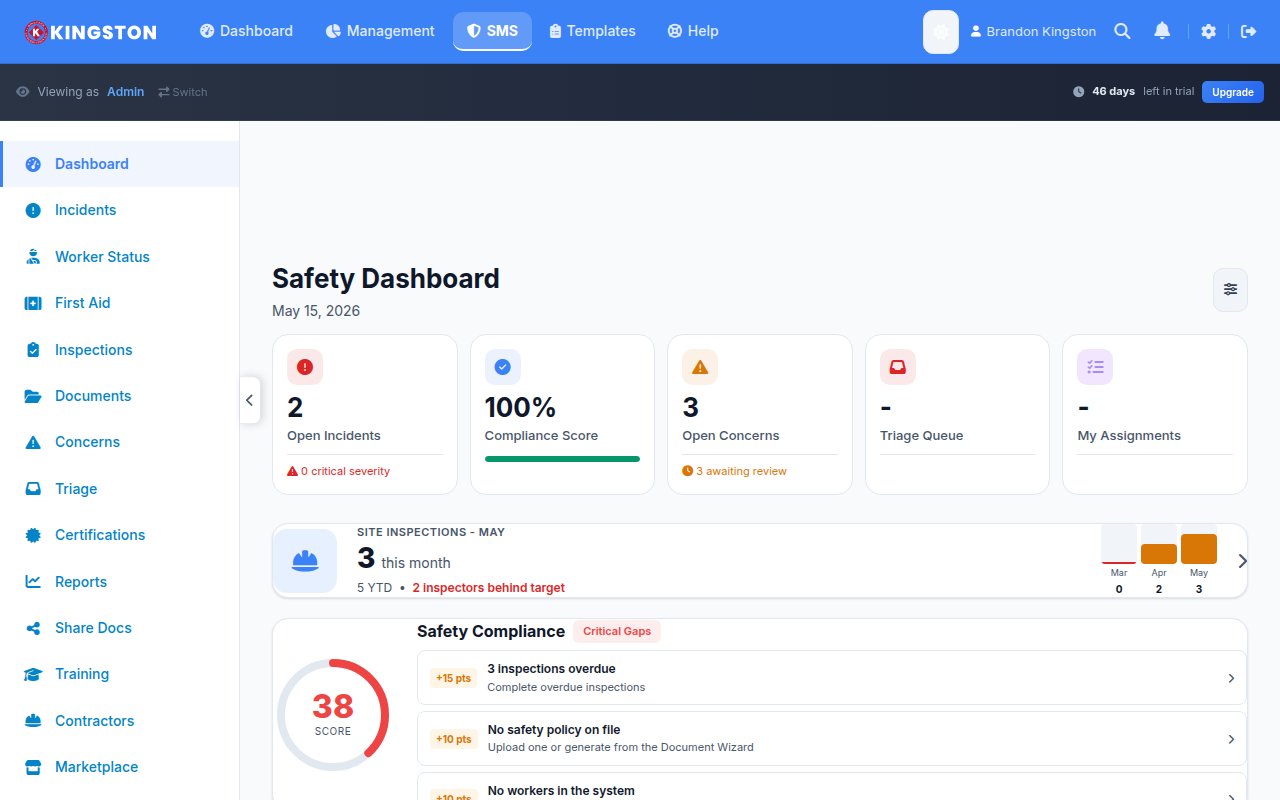
Digital inspection platforms allow plant supervisors and safety personnel to complete standardized checklists on a tablet or phone, photograph deficiencies and route corrective actions to maintenance teams. This produces consistent documentation and faster deficiency resolution than paper-based inspection programs.
Silica Exposure Monitoring and Control
Conduct initial exposure assessments for all job tasks that may generate silica dust. Use personal air sampling to measure worker exposure levels and compare results to the PEL. Based on assessment results, implement the appropriate hierarchy of controls:
- Elimination/substitution: Use pre-mixed materials or low-silica alternatives where feasible
- Engineering controls: Water suppression on cutting and grinding operations, enclosed transfer points, local exhaust ventilation, dust collection systems on batch plants
- Administrative controls: Job rotation to limit individual exposure duration, restricted access to high-dust areas, housekeeping procedures that avoid dry sweeping
- PPE: Respiratory protection (minimum N95 filtering facepiece, upgraded to half-face or full-face respirator based on exposure levels)
Document all exposure assessments, control measures and monitoring results. The silica standard requires medical surveillance for workers exposed above the action level of 25 micrograms per cubic meter for 30 or more days per year.
Ready-Mix Truck Safety
Ready-mix concrete delivery trucks present unique safety challenges. Drivers operate heavy vehicles on public roads and construction sites, work with rotating drum mechanisms, manage chute positioning and often work around active construction zones with their own hazards.
Pre-trip inspections must cover the vehicle, drum, chutes, water system, lights and safety equipment. Drivers must be trained in defensive driving, load securement, site access evaluation (including overhead clearance and ground conditions) and emergency procedures for rollovers and spills.
Washout procedures generate slurry waste with the same high-pH burn potential as fresh concrete. Designate washout areas, contain runoff and ensure drivers have PPE for washout operations.
Training Requirements
Concrete and cement plant workers need training on multiple hazard categories:
- Silica hazard awareness and exposure control procedures
- Machine guarding and lockout/tagout
- Confined space entry procedures
- Chemical hazard communication (cement, admixtures, curing compounds)
- Mobile equipment and traffic safety
- Fall protection for work at heights on plant structures
- Heat illness prevention
- Emergency response and evacuation procedures
Document all training and maintain records that demonstrate compliance during OSHA inspections. Refresher training should be conducted at least annually and whenever new hazards or procedures are introduced.
Incident Reporting and Corrective Action
Every injury, near-miss, equipment malfunction and environmental event at a concrete operation should be reported and investigated. Silica exposure incidents - such as dust collection system failures, uncontrolled cutting without water suppression or respiratory protection failures - must be treated with the same urgency as traumatic injuries.
Track corrective action implementation and verify effectiveness through follow-up inspections. Share investigation findings and lessons learned across the organization to prevent recurrence at other facilities.
Environmental and Community Considerations
Cement plants and concrete batch operations generate air emissions (particulate matter, NOx, SO2), water discharge and noise that affect surrounding communities. Environmental compliance is closely linked to worker safety - the engineering controls that protect workers from dust exposure also reduce community emissions.
Maintain compliance with EPA National Emission Standards for Hazardous Air Pollutants (NESHAP) for portland cement manufacturing, state air quality permits and stormwater management requirements. Environmental violations can trigger increased regulatory scrutiny of the entire facility, including worker safety practices.
Strengthen Your Concrete Plant Safety Program
Concrete and cement operations generate dust, noise and physical hazards every day. Managing these risks with outdated tools means gaps in protection for your workers and gaps in documentation when regulators visit.
Make Safety Easy provides concrete operations with digital inspection management, compliance tracking and centralized safety documentation. From silica exposure monitoring records to equipment inspection logs, every element of your safety program lives in one accessible platform.
Build safer concrete operations from the ground up. Request a demo to see how Make Safety Easy supports cement and concrete plant safety. Or visit our pricing page to get started today.
Ready to simplify your safety program?
Make Safety Easy helps teams run toolbox talks, inspections, incident reports and more - all from one platform.
Start Your Free TrialNo credit card required. 14-day free trial.