Concrete safety encompasses the hazard identification, engineering controls and safe work practices required to protect workers who mix, pour, finish and cut concrete and masonry products. The primary concrete work hazards include respirable crystalline silica exposure, caustic chemical burns from wet cement, musculoskeletal injuries, struck-by hazards from concrete delivery equipment and fall risks from elevated pours. Implementing layered controls for each hazard is essential to preventing the serious injuries and occupational diseases common in concrete operations.
Why Concrete Work Is Uniquely Hazardous
Concrete is the most widely used construction material in the world and the workers who handle it face a complex combination of health and safety risks. Unlike many construction tasks where a single hazard dominates, concrete work presents simultaneous chemical, physical and ergonomic exposures that require a multi-layered safety approach.
The construction industry accounts for a disproportionate share of silicosis cases, dermatitis claims and musculoskeletal injuries - many of which trace directly back to concrete operations. Understanding each hazard category and its corresponding controls is the foundation of an effective concrete safety program.
Free Download: 5 Safe Work Procedures
Choose from 112 professionally written SWPs. No credit card required.
Get Free SWPsSilica Exposure from Concrete Work
Respirable crystalline silica is the most significant long-term health hazard in concrete work. Concrete contains 25-70% silica by weight depending on the aggregate used. When workers cut, grind, drill or demolish concrete, they generate fine dust particles that penetrate deep into lung tissue.
Health Effects of Silica Exposure
Prolonged silica exposure causes silicosis, an irreversible and progressive lung disease. Workers with silicosis face increased risk of:
- Chronic obstructive pulmonary disease (COPD)
- Lung cancer
- Kidney disease
- Tuberculosis
- Autoimmune disorders
Silicosis has no cure. The only effective strategy is exposure prevention, which makes engineering controls and respiratory protection critical for every concrete operation that generates dust.
OSHA Silica Standards
OSHA's crystalline silica standards (29 CFR 1926.1153 for construction) set a permissible exposure limit (PEL) of 50 micrograms per cubic meter of air averaged over an 8-hour shift. The standard also requires employers to use engineering controls to reduce exposure, provide medical surveillance for workers exposed above the action level of 25 micrograms and develop a written exposure control plan.
Silica Control Measures for Concrete Work
The hierarchy of controls applies directly to silica management:
- Elimination/substitution: Use pre-cast concrete elements where possible to minimize on-site cutting
- Engineering controls: Wet cutting methods, integrated vacuum dust collection systems (Table 1 controls), enclosed cabs with filtration for heavy equipment
- Administrative controls: Rotate workers to limit exposure duration, schedule dust-generating tasks when fewer workers are present, post warning signage around active cutting zones
- PPE: NIOSH-approved N95 or higher respirators when engineering controls cannot reduce exposure below the PEL
OSHA's Table 1 in the construction silica standard provides specific engineering controls for common tasks like concrete sawing, grinding and drilling. Following Table 1 creates a presumption of compliance, meaning employers do not need to conduct air monitoring if they implement the specified controls correctly.
Chemical Burns from Wet Concrete
Wet concrete and cement products are highly alkaline with a pH between 12 and 13. Prolonged skin contact causes chemical burns that range from mild irritation to full-thickness tissue destruction. These injuries are deceptively dangerous because symptoms may not appear until hours after exposure, by which time significant damage has occurred.
Common Exposure Scenarios
- Kneeling in wet concrete during finishing operations
- Concrete seeping into boots or under clothing
- Splashes to face and eyes during pouring or mixing
- Handling dry cement without gloves (moisture from sweat activates the alkaline reaction)
Prevention Strategies
- Waterproof gloves that extend past the wrist
- Rubber boots that are tall enough to prevent concrete from entering over the top
- Long-sleeved shirts and full-length pants with no gaps at boots or gloves
- Safety goggles or face shields during pouring and mixing operations
- Immediate skin washing stations accessible within the work area
- Worker training on recognizing early symptoms of cement burns
Struck-By Hazards in Concrete Operations
Concrete delivery and placement involve heavy mobile equipment, suspended loads and high-pressure pumping systems - all of which create struck-by hazards.
High-Risk Equipment and Scenarios
- Concrete mixer trucks: Rear-over incidents during backing, chute swing injuries
- Concrete pump trucks: Boom collapse, hose whip from blockages, pipeline blowouts
- Concrete buckets: Suspended load hazards during crane-assisted pours
- Form collapse: Improperly braced or overloaded formwork failure
Controls for Struck-By Hazards
- Designated spotters for all concrete truck backing operations
- Exclusion zones around pump truck booms and hose discharge points
- Pre-pour formwork inspections by a competent person
- High-visibility vests for all ground personnel during concrete delivery
- Communication protocols between pump operators, crane operators and ground crews
Ergonomic Hazards and Musculoskeletal Injuries
Concrete work is physically demanding. Workers routinely perform tasks that involve heavy lifting, sustained awkward postures and repetitive motions - the three primary risk factors for musculoskeletal disorders (MSDs).
Common Ergonomic Risks
- Manual handling of concrete blocks, forms and rebar
- Extended kneeling during slab finishing
- Vibration exposure from concrete saws, grinders and vibrators
- Overhead reaching during form stripping and placement
- Shoveling and raking wet concrete, which is extremely heavy (approximately 150 pounds per cubic foot)
Ergonomic Controls
- Mechanical aids for lifting forms, rebar bundles and concrete blocks
- Knee pads and kneeling boards for finishing work
- Anti-vibration gloves and tool rotation schedules to limit vibration exposure
- Concrete pumping instead of manual wheelbarrow transport where feasible
- Scheduled rest breaks proportional to physical intensity and ambient temperature
Fall Hazards During Concrete Work
Elevated concrete pours, form construction and post-tensioning operations expose workers to significant fall risks. Unprotected edges on elevated slabs, incomplete stairwells and openings for mechanical penetrations are common fall hazard sources.
Fall protection during concrete work must comply with OSHA 1926 Subpart M. Leading edge work during concrete placement may qualify for a controlled access zone (CAZ) in lieu of conventional fall protection under specific conditions, but this exception has strict requirements that many contractors misunderstand or misapply.
Concrete Safety Toolbox Talks
Regular toolbox talks focused on concrete-specific hazards keep safety awareness high during active pours and finishing operations. Effective concrete safety toolbox topics include:
- Silica dust awareness and wet-cutting procedures
- Cement burn recognition and first aid response
- Concrete pump safety and exclusion zones
- Formwork inspection requirements
- PPE requirements for different concrete tasks
- Heat stress prevention during summer pours
Delivering these talks immediately before concrete operations begin - rather than at a general morning meeting - ensures the information is fresh and relevant to the day's work.
Heat Stress and Environmental Hazards
Concrete pours frequently occur in extreme heat conditions and the physical demands of the work compound heat stress risk. Wet concrete has a limited working window before it begins to set, which creates schedule pressure that discourages rest breaks - exactly when workers need them most.
Supervisors must monitor the heat index and implement a work-rest schedule based on OSHA's heat illness prevention guidelines. Provide shade structures, hydration stations within the immediate work zone and acclimatization schedules for new or returning workers. Watch for signs of heat exhaustion including heavy sweating, weakness, nausea, dizziness and confusion. Heat stroke is a medical emergency requiring immediate cooling and EMS activation.
Cold weather introduces its own concrete hazards. Concrete that freezes before it cures loses structural integrity, which may require demolition and re-pour - creating additional exposure to silica dust and physical hazards. Workers in cold environments face hypothermia risk, reduced dexterity that increases tool-related injury rates and slip hazards from ice and frost on forms and work surfaces.
Building a Concrete Safety Program
A comprehensive concrete safety program integrates hazard-specific controls into a cohesive system. The essential elements include:
- Written silica exposure control plan covering every concrete task performed
- Job hazard analyses (JHAs) for concrete pouring, finishing, cutting and demolition
- Pre-task planning that addresses weather conditions, site-specific hazards and emergency response
- Equipment inspection protocols for pumps, forms, saws and PPE
- Medical surveillance for workers exposed to silica above the action level
- Incident investigation procedures that capture lessons learned from near misses and injuries
Managing all these components on paper is impractical for any operation handling more than a few concrete pours per month. Digital safety management platforms centralize documentation, automate inspection schedules and ensure nothing falls through the cracks during fast-moving concrete operations.
Protect Your Concrete Crews with Better Tools
Concrete work will always involve significant hazards, but the injuries and illnesses associated with those hazards are preventable. The difference between a safe concrete operation and a dangerous one is the quality of the systems behind it - the inspection checklists, the training delivery, the corrective action tracking and the data analysis that drives continuous improvement.
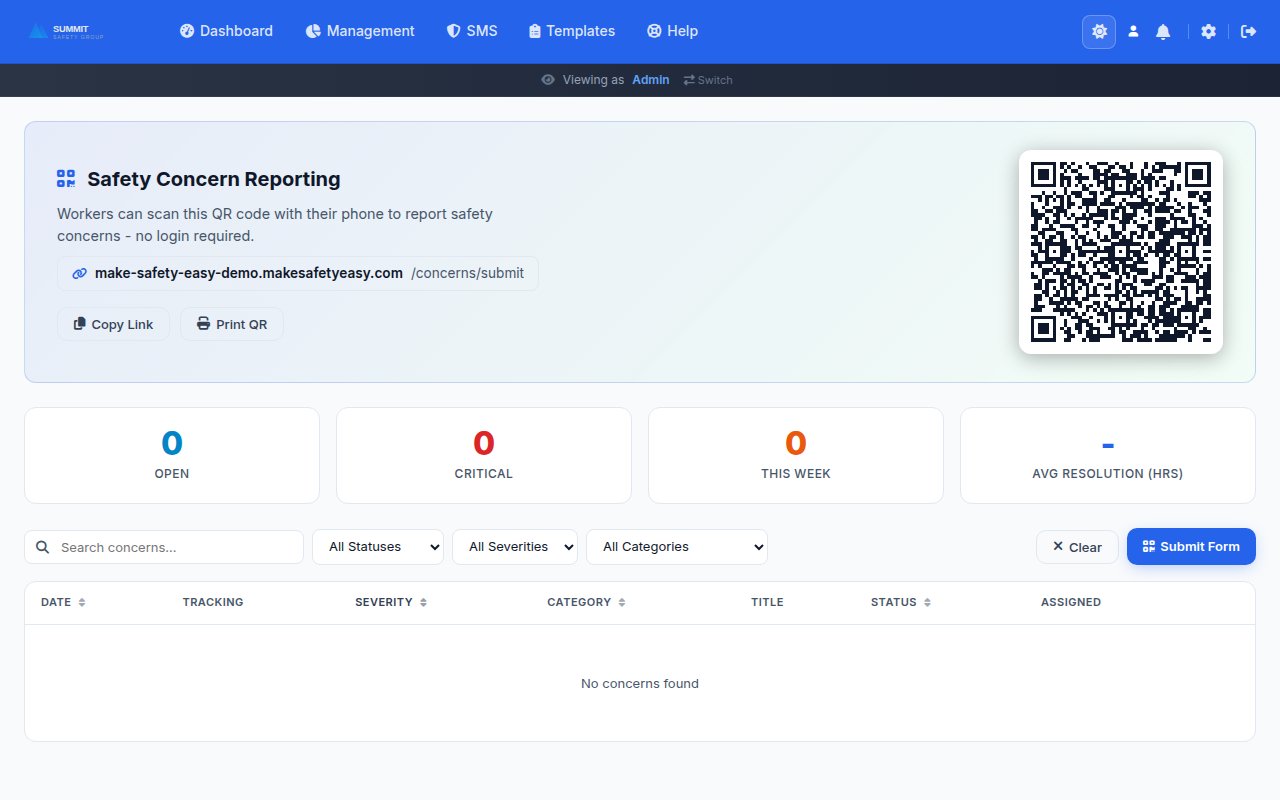
Ready to strengthen your concrete safety program? Schedule a demo to see how Make Safety Easy helps construction teams manage silica compliance, toolbox talks and inspections in one platform, or view pricing to find your plan.
Ready to simplify your safety program?
Make Safety Easy helps teams run toolbox talks, inspections, incident reports and more - all from one platform.
Start Your Free TrialNo credit card required. 14-day free trial.