Every year, workplace injuries cost Canadian businesses a staggering $29 billion. That number is not a typo. According to the Association of Workers' Compensation Boards of Canada (AWCBC) and updated 2026 data from provincial WCB agencies, the average cost per workplace injury now sits between $39,000 and $47,000 - and that only accounts for direct costs.
If you manage safety for a construction crew, a marine terminal, or a manufacturing floor, these numbers should be on your radar. Here's a breakdown of what a single workplace injury actually costs your organization.
Direct Costs: The Tip of the Iceberg
Direct costs are the expenses you can see on a balance sheet immediately after an incident:
Free Download: 5 Safe Work Procedures
Choose from 112 professionally written SWPs. No credit card required.
Get Free SWPs- Workers' Compensation Board (WCB) premiums: In BC alone, the average accepted time-loss claim costs employers approximately $43,000 in direct WCB charges (WorkSafeBC 2025 Annual Report).
- Medical expenses: Ambulance transport, emergency room visits, physiotherapy, specialist referrals.
- Wage replacement: Provincial WCB agencies typically cover 90% of net earnings, but the administrative cost of managing the claim falls on the employer.
- Equipment damage: Incidents frequently involve damaged tools, vehicles, or machinery.
For most employers, direct costs represent only 20-30% of the total financial impact of a workplace injury.
Indirect Costs: The Hidden Multiplier
Research from the National Safety Council and multiple Canadian studies consistently shows that indirect costs run 2x to 10x higher than direct costs, depending on the severity. The widely cited Heinrich ratio (updated by Bird and Germain) suggests a conservative 4:1 indirect-to-direct cost ratio for serious injuries.
Indirect costs include:
- Lost productivity: The injured worker is off the job and their crew often slows down or stops entirely during and after the incident.
- Overtime and temporary labour: Someone has to cover the work. Overtime premiums and contractor rates add up fast.
- Investigation time: Supervisors, safety officers and sometimes legal counsel spend hours documenting and investigating.
- Training replacement workers: New or temporary workers need onboarding and their productivity is lower during ramp-up.
- Administrative burden: Filing WCB claims, managing return-to-work programs and updating safety documentation.
- Reputation and morale: High injury rates affect recruitment, retention and team morale - all of which have real dollar impacts.
The $29 Billion National Picture
The AWCBC reports over 225,000 accepted time-loss claims annually across Canada. When you multiply the average claim cost by the volume - and add indirect costs - the national total approaches $29 billion per year. British Columbia alone accounts for roughly $2.8 billion annually.
Industries with the highest per-claim costs include:
- Construction: $51,000+ average per claim (high severity, falls and struck-by incidents)
- Oil & Gas: $48,000+ (remote locations increase response and recovery costs)
- Marine Terminals: $45,000+ (heavy equipment, chemical exposure risks)
- Manufacturing: $41,000+ (repetitive strain and machine-related injuries)
What One Preventable Injury Actually Costs You
Let's run a realistic scenario for a mid-size BC construction company:
| Cost Category | Estimated Amount |
|---|---|
| WCB claim (direct) | $43,000 |
| Lost productivity (crew downtime) | $12,000 |
| Overtime to cover shifts | $8,500 |
| Investigation & admin | $4,000 |
| Training replacement worker | $3,500 |
| Equipment repair/replacement | $2,000 |
| Total estimated cost | $73,000 |
That single incident costs more than many companies spend on their entire annual safety program.
The ROI of Prevention
The International Social Security Association (ISSA) calculated a return on prevention ratio of 2.2:1 - meaning every dollar invested in workplace safety returns $2.20 in reduced injury costs, lower insurance premiums and improved productivity.
For a company experiencing even 3-5 recordable injuries per year, the math is clear: investing in proper safety management - digital incident tracking, regular toolbox talks, proactive inspections - pays for itself many times over.
Take Action Now
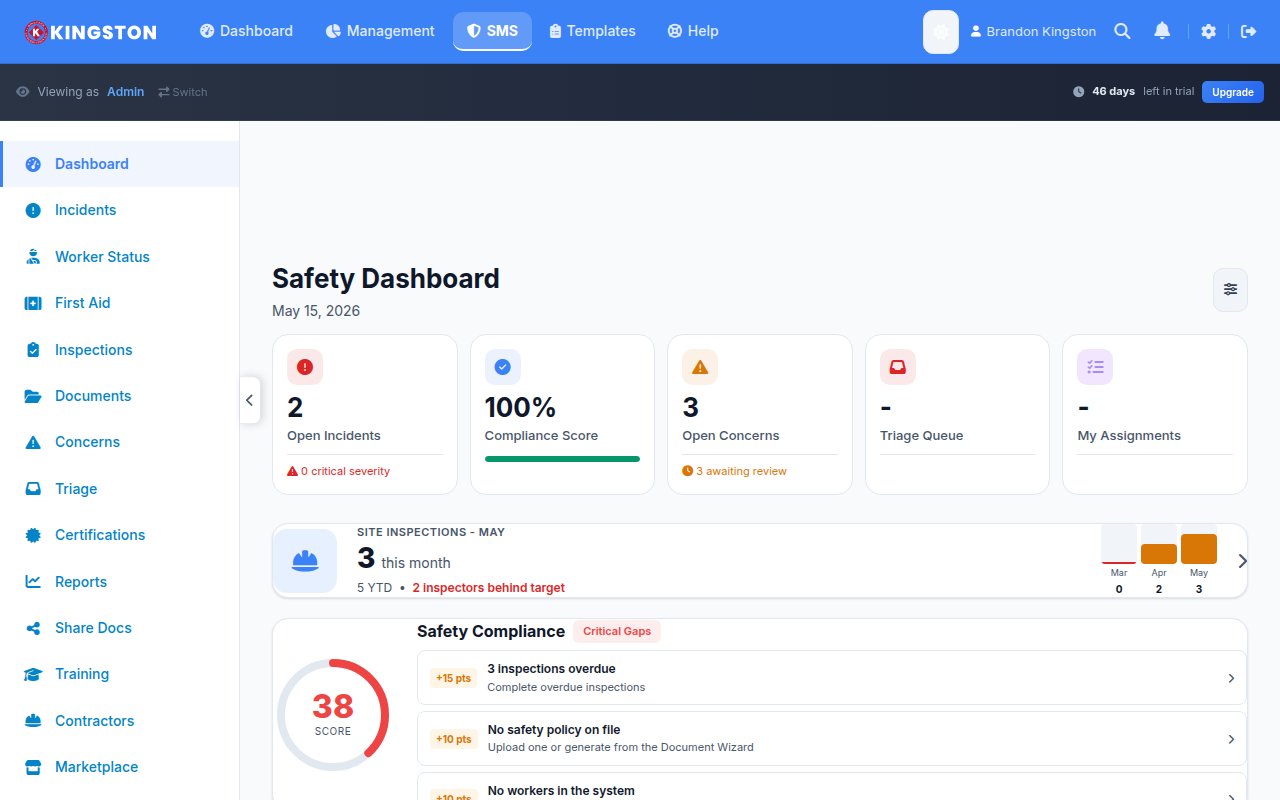
If your safety program still runs on paper binders and spreadsheets, you're leaving money on the table and putting workers at risk. Modern incident reporting and toolbox talk management tools can help you catch hazards before they become injuries.
Start your free trial of Make Safety Easy and see how digital safety management can reduce your incident costs from day one.