An effective safety meeting starts with a clear agenda, focuses on hazards relevant to the current work, keeps the session under 15 minutes for daily/weekly talks, encourages two-way discussion and ends with documented action items. Whether you call them toolbox talks, tailgate meetings, or safety briefings, these sessions are your most consistent touchpoint with workers on safety topics. When done right, they reduce incidents, improve hazard awareness and build a culture where safety is a conversation - not a lecture. When done wrong, they're a check-the-box exercise that nobody pays attention to. This guide shows you how to run meetings that actually work, with agenda templates you can use starting tomorrow.
Let's be honest. You've sat through safety meetings where someone reads a generic handout about slip-and-fall prevention while the crew mentally plans their lunch order. Everyone signs the attendance sheet. Nobody changes their behavior. That meeting was a waste of everyone's time - and it might actually make things worse by teaching workers that safety is performative rather than practical.
The fix isn't complicated, but it does require intention. You need relevant topics, the right format, genuine engagement and follow-through on what gets discussed.
Free Download: 5 Safe Work Procedures
Choose from 112 professionally written SWPs. No credit card required.
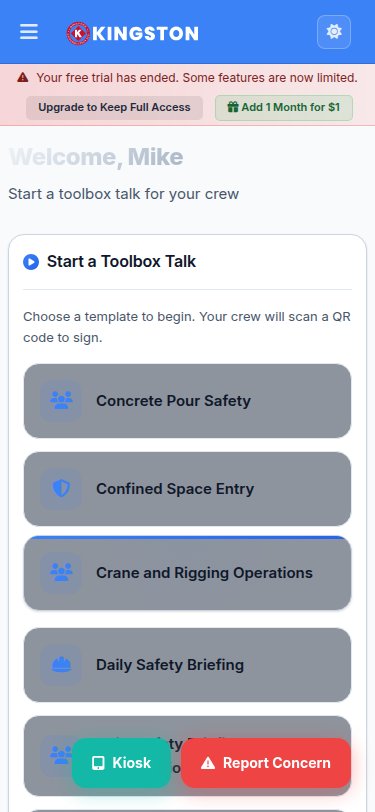
Get Free SWPsNeed a library of ready-to-deliver safety meeting topics with built-in tracking? Make Safety Easy's toolbox talk feature gives you hundreds of pre-built topics, customizable templates and automatic attendance documentation - all from a phone or tablet.
Types of Safety Meetings
Not every safety meeting serves the same purpose. Match the format to the goal.
Daily Pre-Shift Briefing (5-10 Minutes)
A quick, focused huddle before work begins. Covers the specific hazards of the day's tasks, any changes from the previous shift, weather conditions and a single safety topic. This is the most impactful meeting format for frontline workers.
Weekly Toolbox Talk (10-15 Minutes)
A slightly deeper dive into a single safety topic relevant to current operations. Includes discussion, questions and worker input. The backbone of most safety meeting programs.
Monthly Safety Meeting (30-60 Minutes)
A comprehensive review that covers incident trends, inspection findings, corrective action updates, regulatory changes and upcoming hazards. Typically involves supervision, the Joint Health and Safety Committee (JHSC), and sometimes external presenters.
Annual Safety Review
A strategic session that evaluates the entire safety program, reviews annual incident data, sets goals for the coming year and updates policies and procedures. This is where leadership engagement matters most.
Run your safety meetings without the paperwork.
Make Safety Easy turns your agenda into a digital toolbox talk: attendees sign off by scanning a QR code, and every record is stored automatically.
Start Your Free TrialFree 14-day trial · No credit card required
The Anatomy of an Effective Safety Meeting
Regardless of format, every effective safety meeting shares these five elements:
- A specific, relevant topic - tied to the work being done today or this week, not a random selection from a binder
- A clear structure - opening, key points, discussion, action items, close
- Worker participation - the meeting leader talks less than 50% of the time
- Documented outcomes - attendance, topics covered and any action items assigned
- Follow-through - action items from last meeting are reviewed and closed out
Safety Meeting Agenda Template: Weekly Toolbox Talk
This template works for a 10-15 minute session. Adapt the topic each week.
| Time | Agenda Item | Details |
|---|---|---|
| 2 min | Opening / Attendance | Record who is present. Reference any follow-up items from the previous meeting. |
| 1 min | Incident/Near-Miss Review | Briefly share any incidents or near-misses from the past week. Keep it factual and non-punitive. |
| 5 min | Topic Presentation | Present the week's safety topic. Use real examples, photos, or a short demonstration. Avoid reading from a script. |
| 4 min | Discussion / Q&A | Ask open-ended questions. "Where on our site could this hazard exist?" or "Has anyone experienced this?" Encourage worker stories. |
| 2 min | Action Items / Close | Summarize key takeaways. Assign any action items with names and deadlines. Thank the team. |
Safety Meeting Agenda Template: Monthly Review
This template works for a 30-60 minute session involving supervisors and safety committee members. Make Safety Easy's monthly review tools automate the data collection for this agenda, pulling incident stats, inspection results and open corrective actions into a single dashboard.
| Time | Agenda Item | Details |
|---|---|---|
| 5 min | Opening / Previous Minutes | Review action items from last month's meeting. Confirm status: completed, in progress, or overdue. |
| 10 min | Incident & Near-Miss Summary | Review all incidents and near-misses from the past month. Identify patterns or repeat hazards. Discuss root causes and corrective actions. |
| 10 min | Inspection Findings | Summarize results from workplace inspections, equipment inspections and any regulatory inspections. Highlight deficiencies and corrective action status. |
| 10 min | Safety Topic Deep Dive | A focused presentation on a single topic - seasonal hazards, new equipment, regulatory changes, or a trend from incident data. |
| 10 min | Worker Concerns / Open Floor | Invite concerns, suggestions and feedback from all attendees. Document every item raised - even if it can't be addressed immediately. |
| 5 min | Action Items / Next Steps | Assign owners and deadlines for all new action items. Confirm the date and topic focus for next month. |
50 Safety Meeting Topics by Category
Struggling to come up with topics? Here's a categorized list to keep your meetings relevant year-round.
General Safety
- Hazard recognition and reporting
- Near-miss reporting: why it matters
- The hierarchy of controls
- How to read a Safety Data Sheet (SDS)
- Emergency evacuation procedures
- First aid basics and AED use
- Housekeeping and workplace organization
- New employee safety orientation
Physical Hazards
- Fall protection and working at heights
- Ladder safety
- Scaffold safety
- Struck-by hazards and overhead work
- Caught-in/between hazards
- Noise exposure and hearing conservation
- Hand and power tool safety
- Electrical safety and arc flash awareness
- Forklift and mobile equipment safety
Health Hazards
- Heat stress prevention
- Cold stress and hypothermia
- Respiratory protection
- Silica dust exposure
- Asbestos awareness
- Ergonomics and manual material handling
- Fatigue management and shift work
- Mental health and psychological safety
Procedures and Programs
- Lockout/tagout procedures
- Confined space entry
- Hot work permits
- Workplace violence prevention
- Impairment in the workplace
- Contractor safety management
- Incident investigation basics
- Return-to-work and modified duties
Seasonal Topics
- Spring: slip hazards from snowmelt, allergen awareness
- Summer: heat illness, UV exposure, insect-borne illness
- Fall: reduced daylight, wet leaves, driving conditions
- Winter: ice and snow removal, cold stress, carbon monoxide from heaters
How to Keep Workers Engaged
The difference between a meeting workers tolerate and one they value comes down to engagement techniques. Here are proven approaches:
Make It Interactive
- Start with a question, not a statement. "What's the biggest hazard you noticed this week?" beats "Today we're going to talk about hazard recognition."
- Use real incidents from your workplace. A near-miss that happened on your site last Tuesday is ten times more impactful than a generic statistic.
- Bring props. A damaged harness, a worn-out glove, a frayed sling - physical examples make abstract hazards concrete.
- Let workers lead. Rotate who facilitates the meeting. Workers teaching their peers creates ownership and deepens understanding.
Make It Relevant
- Match the topic to the work. If the crew is doing trenching this week, talk about excavation safety - not fire extinguisher types.
- Address recent events. If there was a near-miss on Tuesday, discuss it on Wednesday. Timeliness is everything.
- Incorporate worker suggestions. Ask the team what they want to discuss. The best topic is often the one they bring to you.
Make It Brief
For weekly toolbox talks, 10-15 minutes is the sweet spot. Longer sessions produce diminishing returns. If you can't cover it in 15 minutes, it belongs in a monthly meeting or a dedicated training session - not a toolbox talk.
Documentation and Compliance
Every safety meeting must be documented. At minimum, record:
- Date, time and location
- Topic(s) covered
- Facilitator name
- Attendee names (signatures or digital attendance)
- Key discussion points and worker concerns raised
- Action items with assigned owners and deadlines
This documentation serves multiple purposes. It demonstrates due diligence in the event of a regulatory inspection or legal proceeding. It tracks which topics have been covered and which are overdue. And it creates accountability for action items that would otherwise be forgotten by next week.
OSHA does not mandate a specific safety meeting frequency for most industries, but many state plans and Canadian provincial regulations do. Joint Health and Safety Committees (JHSCs) in Canada typically must meet at least quarterly, with some provinces requiring monthly meetings. Regardless of what's legally required, weekly toolbox talks are considered best practice across industries.
Digital toolbox talk tools eliminate the paper shuffle. Facilitators deliver the talk from a phone or tablet, workers sign in digitally and the record is automatically stored - searchable, auditable and never lost in a truck cab.
Measuring Safety Meeting Effectiveness
How do you know if your safety meetings are actually working? Track these metrics:
- Attendance rate - Are workers showing up? Consistently low attendance signals a relevance or scheduling problem.
- Action item closure rate - Are action items from meetings being completed on time? A low closure rate undermines credibility.
- Hazard report volume - Effective meetings increase hazard reporting. If reports spike after you improve your meetings, you're on the right track.
- Incident trends - Over time, consistent safety communication should correlate with a reduction in incidents related to covered topics.
- Worker feedback - Periodically ask workers if the meetings are useful. Their honest assessment is the most valuable data point you have.
Common Mistakes to Avoid
- Reading from a script. Eye contact and conversation beat a monotone reading every time.
- Same person always leads. Rotate facilitators. Different perspectives keep things fresh.
- No follow-through on action items. If workers raise a concern and nothing happens, they'll stop raising concerns.
- Topics disconnected from actual work. Talking about confined space safety when nobody on your team does confined space work is wasted effort.
- Punitive tone. Safety meetings should be collaborative, not disciplinary. The moment a meeting feels like a scolding, engagement evaporates.
- Skipping meetings when things are busy. That's exactly when meetings are most needed - busy periods produce the most incidents.
Your next safety meeting could be the one that prevents a serious injury. Make Safety Easy provides the toolbox talk library, meeting templates, attendance tracking and monthly review dashboards your team needs to run meetings that actually make a difference. Book a demo or explore our pricing to see how it works.
Ready to simplify your safety program?
Make Safety Easy helps teams run toolbox talks, inspections, incident reports and more - all from one platform.
Start Your Free TrialNo credit card required. 14-day free trial.