Fire extinguisher inspections must be performed at least once per month by a designated employee and annually by a certified professional - that is the baseline set by OSHA standard 29 CFR 1910.157 and NFPA 10. A monthly fire extinguisher check takes less than two minutes per unit, yet skipping it is one of the most commonly cited violations during OSHA workplace inspections. This guide covers every step of the inspection process, from visual checks to fire extinguisher tags, so your program meets both OSHA and NFPA requirements.
Why Fire Extinguisher Inspections Matter
Portable fire extinguishers are the first line of defense in the critical seconds before a fire grows beyond control. According to NFPA data, portable extinguishers successfully put out or contain fires in the vast majority of cases when they are properly maintained and accessible. But an extinguisher that is missing, discharged or obstructed is worse than useless - it gives occupants a false sense of security.
OSHA requires employers to provide and maintain portable fire extinguishers in the workplace under 29 CFR 1910.157. NFPA 10 (Standard for Portable Fire Extinguishers) provides the detailed technical requirements that most fire marshals and inspectors reference. Together, these standards create a three-tier maintenance system: monthly inspections, annual maintenance and periodic internal examinations or hydrostatic testing.
Free Download: 5 Safe Work Procedures
Choose from 112 professionally written SWPs. No credit card required.
Get Free SWPsMonthly Fire Extinguisher Inspection Checklist
Monthly inspections are visual and physical checks that any trained employee can perform. NFPA 10, Section 7.2.1 requires these inspections at intervals not exceeding 31 days. Here is what to check on every unit:
Location and Access
- Visibility: Is the extinguisher in its designated location and clearly visible?
- Accessibility: Is the path to the extinguisher free of obstructions, boxes or equipment?
- Mounting height: Units weighing 40 lbs or less should be mounted so the top is no more than 5 feet above the floor; units over 40 lbs should have the top no higher than 3.5 feet
- Signage: Is there clear signage indicating the extinguisher location, especially where visibility is limited?
Physical Condition
- Pressure gauge: Confirm the needle is in the green (charged) zone. A reading in the red indicates the unit needs recharging or replacement
- Safety pin and tamper seal: Verify the pull pin is in place and the tamper seal is intact. A missing seal suggests the unit may have been partially discharged
- Hose and nozzle: Check for cracks, blockages or deterioration in the discharge hose
- Cylinder condition: Look for dents, rust, corrosion or physical damage to the shell
- Weight (cartridge-operated units): Lift or weigh cartridge-operated extinguishers to confirm they are at proper weight
- Operating instructions: Ensure the label is legible and facing outward
Documentation
Record the date, inspector's initials and the condition of each extinguisher. This is where fire extinguisher tags come into play. Every unit should have a tag attached showing the date and initials for each monthly inspection. Many organizations also log inspections digitally using an inspection management platform to maintain audit-ready records without relying on paper tags that fade or get torn off.
Understanding Fire Extinguisher Tags
Fire extinguisher tags serve as the physical record that inspections have been completed. A standard inspection tag typically includes:
- 12 rows for monthly inspection entries (one per month)
- A space for the inspector's initials and date on each row
- A section on the reverse for annual maintenance records
- The year the tag was placed in service
Tags should be replaced annually, usually during the professional maintenance visit. When a fire marshal or OSHA inspector checks your extinguishers, the tag is the first thing they look at. Missing tags, blank rows or tags that are more than a year old will trigger questions and potentially citations.
Common Tag Mistakes to Avoid
- Leaving months blank because "it looked fine last time"
- Pre-filling future months instead of inspecting each month individually
- Using illegible initials or skipping the date
- Keeping an old tag after annual maintenance instead of attaching a new one
Annual Professional Maintenance
Once a year, a certified fire protection technician must perform a thorough maintenance examination on every extinguisher. This goes well beyond the monthly visual check. Annual maintenance under NFPA 10, Section 7.3 includes:
- Internal examination of certain extinguisher types
- Verification of the agent charge by weight or pressure
- Examination of all mechanical parts including the handle, valve and pick-up tube
- Replacement of any damaged or worn components
- Re-tagging the unit with a new annual maintenance tag or collar
The technician must attach a verification-of-service collar around the neck of the extinguisher after each annual maintenance. This collar is a tamper indicator - it can only be placed when the unit is fully reassembled, proving the internal inspection was completed.
Extended Maintenance and Hydrostatic Testing
Beyond annual maintenance, NFPA 10 mandates extended service intervals depending on the extinguisher type:
6-Year Internal Examination
Stored-pressure extinguishers that use water, foam, AFFF, FFFP or dry chemical agents must undergo an internal examination every 6 years. This involves discharging the unit, inspecting the interior for corrosion or damage and recharging it.
12-Year Hydrostatic Testing
Most extinguisher cylinders must be hydrostatically tested every 12 years to verify the structural integrity of the shell. CO2 extinguishers require hydrostatic testing every 5 years. Units that fail hydrostatic testing must be removed from service and destroyed.
Maintenance Schedule Summary
| Interval | Action | Performed By |
|---|---|---|
| Monthly (max 31 days) | Visual inspection | Trained employee |
| Annually | Professional maintenance | Certified technician |
| Every 6 years | Internal examination (stored-pressure) | Certified technician |
| Every 12 years | Hydrostatic testing | Certified technician |
OSHA Requirements vs. NFPA 10
OSHA's fire extinguisher standard (29 CFR 1910.157) establishes the legal requirement for employers but does not spell out every technical detail. Instead, OSHA frequently references NFPA 10 as the recognized consensus standard. In practice, this means:
- OSHA mandates monthly inspections and annual maintenance
- NFPA 10 provides the specific procedures and criteria
- OSHA compliance officers will cite you based on NFPA 10 standards during inspections
- Both standards require written or documented inspection records
For a broader look at fire prevention in the workplace, including emergency action plans and hot work procedures, see our workplace fire safety guide.
Selecting the Right Extinguisher Types
Part of a compliant fire extinguisher program is ensuring you have the correct types for your workplace hazards. Extinguishers are classified by the type of fire they can fight:
- Class A: Ordinary combustibles (wood, paper, cloth)
- Class B: Flammable liquids (gasoline, oil, grease)
- Class C: Energized electrical equipment
- Class D: Combustible metals
- Class K: Cooking oils and fats (commercial kitchens)
Most general workplaces use multi-purpose ABC dry chemical extinguishers. However, facilities with specialized hazards - such as laboratories, commercial kitchens or metalworking shops - need class-specific units. Placing the wrong extinguisher type can make a fire worse, particularly using water-based units on electrical or grease fires.
Placement and Travel Distance Requirements
OSHA and NFPA 10 specify maximum travel distances to extinguishers based on the hazard class:
- Class A hazards: Maximum 75-foot travel distance
- Class B hazards: Maximum 50-foot travel distance
- Class C hazards: Based on the Class A or B hazard present
- Class D hazards: Maximum 75-foot travel distance
- Class K hazards: Maximum 30-foot travel distance
Travel distance is measured as the actual walking path an employee would take to reach the extinguisher - not a straight line through walls. When laying out extinguisher placements, walk the floor and measure the route an employee would realistically follow.
Training Requirements
Providing extinguishers without training defeats the purpose. OSHA requires that employees designated to use fire extinguishers receive training upon initial assignment and at least annually thereafter (29 CFR 1910.157(g)). Training should cover:
- How to identify fire types and select the correct extinguisher
- The PASS technique (Pull, Aim, Squeeze, Sweep)
- When to fight a fire and when to evacuate
- Location of all extinguishers in the work area
- How to perform monthly visual inspections
Hands-on training with live fire or training extinguishers is the most effective method, though classroom instruction combined with video demonstrations also meets the OSHA standard.
Frequently Asked Questions
Who can perform monthly fire extinguisher inspections?
Any employee who has been trained on what to look for can perform the monthly visual inspection. You do not need a certified technician for monthly checks - only for annual maintenance and beyond.
What happens if a fire extinguisher fails a monthly inspection?
Remove the unit from service immediately and replace it with a functioning extinguisher. Tag the failed unit as out-of-service and arrange for repair, recharge or replacement by a certified technician.
Are digital inspection records acceptable?
Yes. OSHA and NFPA 10 require documentation but do not mandate paper tags specifically. Digital inspection records are acceptable as long as they capture the date, inspector identity and condition findings and are readily available for review during an inspection.
How long should I keep fire extinguisher inspection records?
OSHA does not specify a retention period for extinguisher inspection records, but most safety professionals recommend keeping records for at least three years. Check your local fire code for any specific retention requirements in your jurisdiction.
Streamline Your Inspection Program
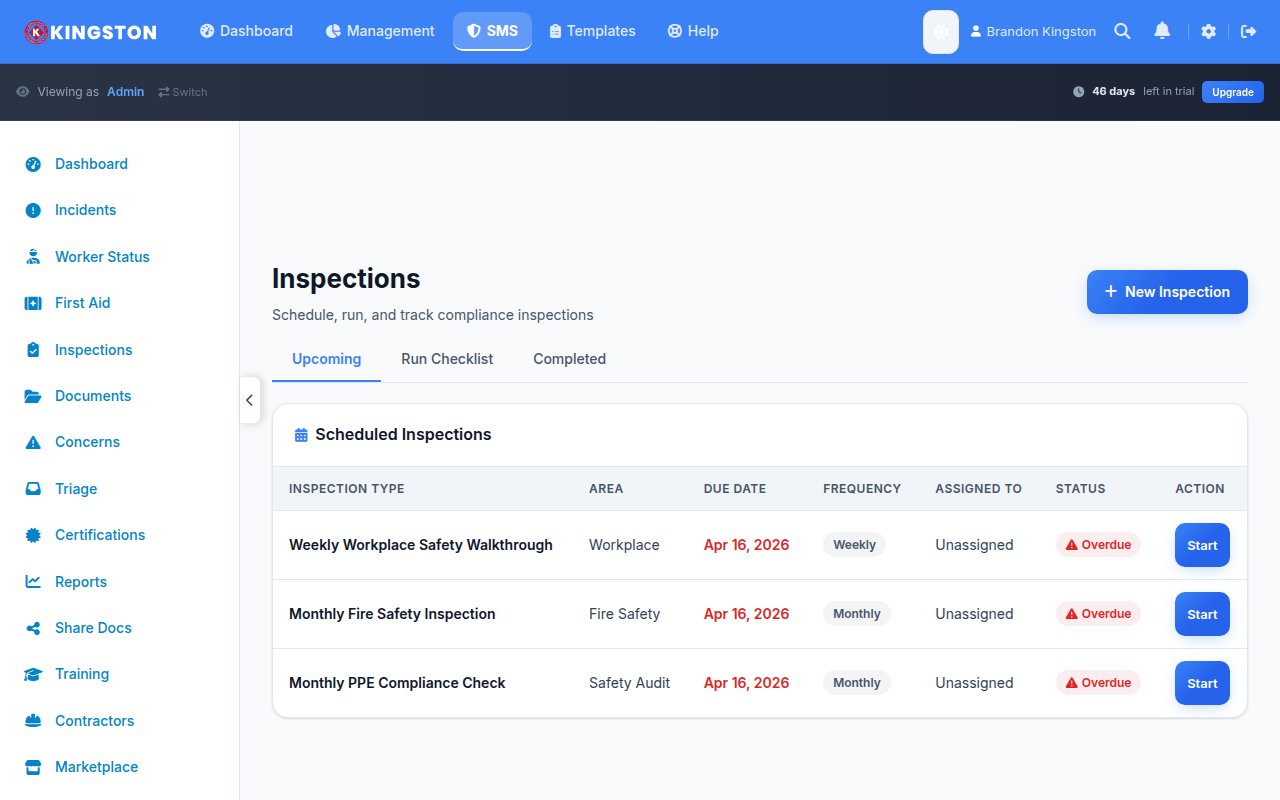
Paper tags get wet, ripped and lost. Manual spreadsheets fall out of date the moment someone forgets to update them. Make Safety Easy replaces all of that with a digital inspection platform that lets your team complete monthly fire extinguisher checks on a phone, automatically timestamps every entry and alerts you when inspections are overdue. Schedule a demo to see how it works, or check our pricing to get started today.
Ready to simplify your safety program?
Make Safety Easy helps teams run toolbox talks, inspections, incident reports and more - all from one platform.
Start Your Free TrialNo credit card required. 14-day free trial.