Food Processing Plant Safety: HACCP, Sanitation and Worker Protection
Food processing plant safety is the integrated discipline of protecting workers from occupational hazards while maintaining the sanitation and food safety standards required by HACCP, FDA, CFIA and OSHA regulations. The food manufacturing sector employs over 1.7 million workers in the United States alone and consistently ranks among the top industries for occupational injuries, with an incidence rate roughly 30% higher than the all-industry average. Cuts, amputations, chemical burns, slips and falls, musculoskeletal disorders and temperature-related illnesses are daily risks on the production floor.
What makes food processing uniquely challenging is the constant tension between food safety and worker safety. Wet floors are necessary for sanitation but create slip hazards. Chemical sanitizers protect consumers but burn workers' skin and lungs. High-speed cutting and grinding equipment produces food efficiently but can amputate fingers in a fraction of a second. Mastering food plant safety means resolving these tensions through engineering, procedures and culture rather than accepting one type of risk as the cost of managing another.
Understanding the Hazard Landscape in Food Processing
Food processing facilities combine elements of manufacturing, chemical handling, cold storage and logistics into a single operation. The hazard profile varies by product type, but several categories are universal.
Free Download: 5 Safe Work Procedures
Choose from 112 professionally written SWPs. No credit card required.
Get Free SWPsMachinery and Equipment Hazards
Food processing equipment is designed to cut, grind, slice, mix, press and package at high speeds. Meat processing lines use band saws, grinders and deboning equipment with exposed blades. Bakery operations involve industrial mixers, dough sheeters and ovens. Canning lines run at hundreds of units per minute with pinch points at every transition.
Amputations remain a persistent problem. OSHA's amputation reporting data shows food manufacturing consistently accounts for a disproportionate share of workplace amputations. The root causes are predictable: missing or bypassed machine guards, inadequate lockout/tagout during cleaning and maintenance, workers reaching into operating equipment to clear jams and insufficient training on safe operating procedures.
- Machine guarding: Every point of operation, power transmission component and nip point must be guarded per OSHA 29 CFR 1910.212
- Lockout/tagout (LOTO): Written energy control procedures for every piece of equipment, with annual audits per 29 CFR 1910.147
- Sanitary design: Equipment should be designed for safe cleaning without guard removal where possible
- Emergency stops: Clearly marked and accessible e-stops on all production lines
Slips, Trips and Falls
Wet, greasy floors are inherent to food processing. Blood, fat, oils, wash water, condensation and product spillage create walking surfaces that are treacherously slick. The Bureau of Labor Statistics consistently ranks slips, trips and falls among the top three injury causes in food manufacturing. These are not minor incidents. Falls on wet concrete can produce traumatic brain injuries, broken hips and spinal cord damage.
Controlling this hazard requires a layered approach: slip-resistant flooring materials and coatings, adequate floor drainage with proper slope, immediate spill cleanup protocols, slip-resistant footwear requirements (not just recommendations), anti-fatigue mats in standing work areas and clear walkway markings that separate pedestrian paths from forklift traffic.
Chemical Exposure from Sanitizers and Cleaning Agents
Food plants use powerful chemical agents to meet sanitation standards. Chlorine-based sanitizers, quaternary ammonium compounds, peracetic acid, caustic soda (sodium hydroxide), and phosphoric acid are common. These substances cause chemical burns on skin contact, respiratory irritation or damage when inhaled and serious eye injuries from splashes. Mixing incompatible chemicals, particularly chlorine bleach with acidic cleaners, can produce toxic chlorine gas.
OSHA's Hazard Communication Standard (HazCom/GHS) requires Safety Data Sheets (SDS) for every chemical, proper labeling and worker training. Beyond compliance, best practices include automated chemical dispensing systems that minimize manual handling, appropriate PPE matched to specific chemicals (not generic gloves for everything), ventilation in areas where chemicals are mixed or applied and emergency eyewash stations and showers within 10 seconds of travel time from any chemical use area.
Temperature Extremes
Food processing spans a wide thermal range. Cooking areas with ovens, fryers and retorts expose workers to heat stress and burn hazards. Cold storage facilities and blast freezers operate at temperatures as low as -40 degrees Fahrenheit, creating risks of hypothermia, frostbite and reduced manual dexterity that increases injury rates on other tasks. Workers frequently transition between these extremes multiple times per shift, which compounds physiological stress.
Ergonomic and Repetitive Motion Hazards
Food processing involves highly repetitive tasks: deboning poultry, trimming meat, packing products, applying labels and sorting items on conveyor lines. Workers perform the same motion thousands of times per shift, often in cold environments that reduce blood flow to extremities. Carpal tunnel syndrome, tendinitis, rotator cuff injuries and back disorders are endemic. These injuries develop gradually, making them easy to ignore until they become disabling.
HACCP and Worker Safety: Two Systems, One Goal
HACCP (Hazard Analysis and Critical Control Points) is the food safety management system mandated by the FDA and CFIA for most food processing operations. While HACCP focuses on product safety rather than worker safety, the two systems are deeply interconnected.
Where HACCP and OHS Intersect
Sanitation Standard Operating Procedures (SSOPs) required by HACCP directly affect worker safety. The chemicals used, the cleaning methods employed and the frequency of sanitation activities all create occupational exposures. Critical Control Points (CCPs) such as cooking temperatures, metal detection and chemical treatment often involve equipment and processes that present worker hazards.
Smart operations integrate their HACCP and OHS management systems rather than running them in parallel. When a HACCP audit identifies a sanitation deficiency, the corrective action should be evaluated for worker safety implications before implementation. When an OHS inspection identifies a machine guarding issue, the corrective action should consider food safety implications such as contamination risk from guard materials or designs.
Building an Integrated Management System
An integrated food safety and worker safety management system shares common elements:
- Hazard analysis: Evaluate both product contamination risks and worker injury risks for each process step
- Standard operating procedures: Write SOPs that address food safety and worker safety requirements simultaneously
- Monitoring and verification: Combine food safety checks and safety inspections where practical to reduce audit fatigue
- Corrective actions: Ensure corrective actions for food safety issues do not create new worker safety hazards and vice versa
- Documentation: Maintain records that satisfy both food safety regulators and OHS inspectors
- Training: Cross-train workers on both food safety and personal safety requirements for their specific tasks
Regulatory Framework for Food Processing Plant Safety
United States
Food processing plants in the U.S. face oversight from multiple agencies. OSHA regulates worker safety under the General Duty Clause and specific standards including machine guarding (29 CFR 1910.212), lockout/tagout (29 CFR 1910.147), hazard communication (29 CFR 1910.1200), PPE (29 CFR 1910 Subpart I), and walking-working surfaces (29 CFR 1910 Subpart D). The FDA and USDA regulate food safety aspects. Ammonia refrigeration systems are covered under OSHA's Process Safety Management standard (29 CFR 1910.119) and EPA's Risk Management Program.
Canada
Canadian food processing plants fall under provincial OHS legislation for worker safety and CFIA (Canadian Food Inspection Agency) for food safety. The Safe Food for Canadians Regulations (SFCR) require preventive control plans that parallel HACCP. Provincial OHS regulations cover machine guarding, WHMIS (Workplace Hazardous Materials Information System) for chemical safety and general workplace safety requirements.
Best Practices for Food Processing Plant Safety Management
Prioritize Incident Reporting and Investigation
Food processing injuries often follow patterns. The same machine injures workers repeatedly. The same floor section causes falls every wet season. The same task produces ergonomic injuries across multiple workers. But these patterns only become visible when incidents are reported, documented and analyzed.
Implement a digital incident reporting system that captures near-misses, first aid cases and observations alongside recordable injuries. Make reporting easy enough that a worker on the production floor can submit a report in under two minutes. Then actually investigate. Root cause analysis should extend beyond "worker error" to examine system failures in equipment design, procedures, training and supervision.
Conduct Regular, Structured Inspections
Food processing plants already conduct food safety inspections regularly. Layering worker safety inspections onto existing routines increases coverage without doubling the workload. A pre-shift walkthrough should check machine guards, floor conditions, PPE availability, chemical labeling and emergency equipment alongside food safety items like temperature logs and sanitation verification.
Digital inspection platforms with standardized checklists ensure every inspector covers the same items, every finding is documented with photos and every corrective action is tracked to completion. Over time, inspection data reveals which areas, shifts and equipment generate the most findings, directing resources where they have the most impact.
Invest in Ergonomic Improvements
Musculoskeletal disorders account for a significant portion of workers' compensation costs in food processing. Ergonomic interventions, while sometimes requiring upfront investment, typically deliver strong returns through reduced injury rates, lower turnover and improved productivity. Effective interventions include adjustable-height workstations, anti-fatigue floor mats, tool redesign to reduce grip force and awkward postures, job rotation to distribute repetitive task exposure and mechanical assists for lifting and carrying tasks.
Address the Unique Needs of a Diverse Workforce
Food processing employs a workforce that is frequently multilingual, may include temporary or contract workers and experiences high turnover. Safety communication must reach everyone regardless of language proficiency. This means multilingual signage and training materials, visual and pictographic communication for critical safety information, buddy systems that pair experienced workers with new hires and verification that training was understood rather than simply delivered.
Manage Contractor and Temporary Worker Safety
Many food processing operations use temporary workers and maintenance contractors. These workers face elevated injury risk due to unfamiliarity with the specific facility, equipment and procedures. A robust contractor management program includes site-specific orientation before any work begins, clear communication of facility-specific hazards and rules, supervision and monitoring of contractor activities and integration of contractor incidents into facility safety metrics. Explore how manufacturing safety solutions can streamline this process.
Emergency Preparedness in Food Processing Facilities
Food processing plants present specific emergency scenarios that require tailored planning:
- Ammonia releases: Facilities using ammonia refrigeration must have emergency response plans covering leak detection, evacuation routes away from ammonia-dense areas, wind sock monitoring and coordination with local HAZMAT teams
- Chemical spills: Spill response kits appropriate to the chemicals in use, trained spill response teams and containment procedures
- Fires: Kitchen and processing area fires involving oils and grease require Class K extinguishing agents. Automated suppression systems over fryers and cookers are essential
- Confined space rescue: Silos, tanks, mixers and ovens are permit-required confined spaces that need rescue plans and trained rescue teams or arrangements with local emergency services
Strengthen Your Food Processing Safety Program Today
Food processing plant safety demands excellence on two fronts: keeping workers safe from occupational hazards and keeping products safe from contamination. These goals are not competing priorities. They are complementary outcomes of a well-managed facility with strong systems, trained people and a culture that treats every hazard as solvable.
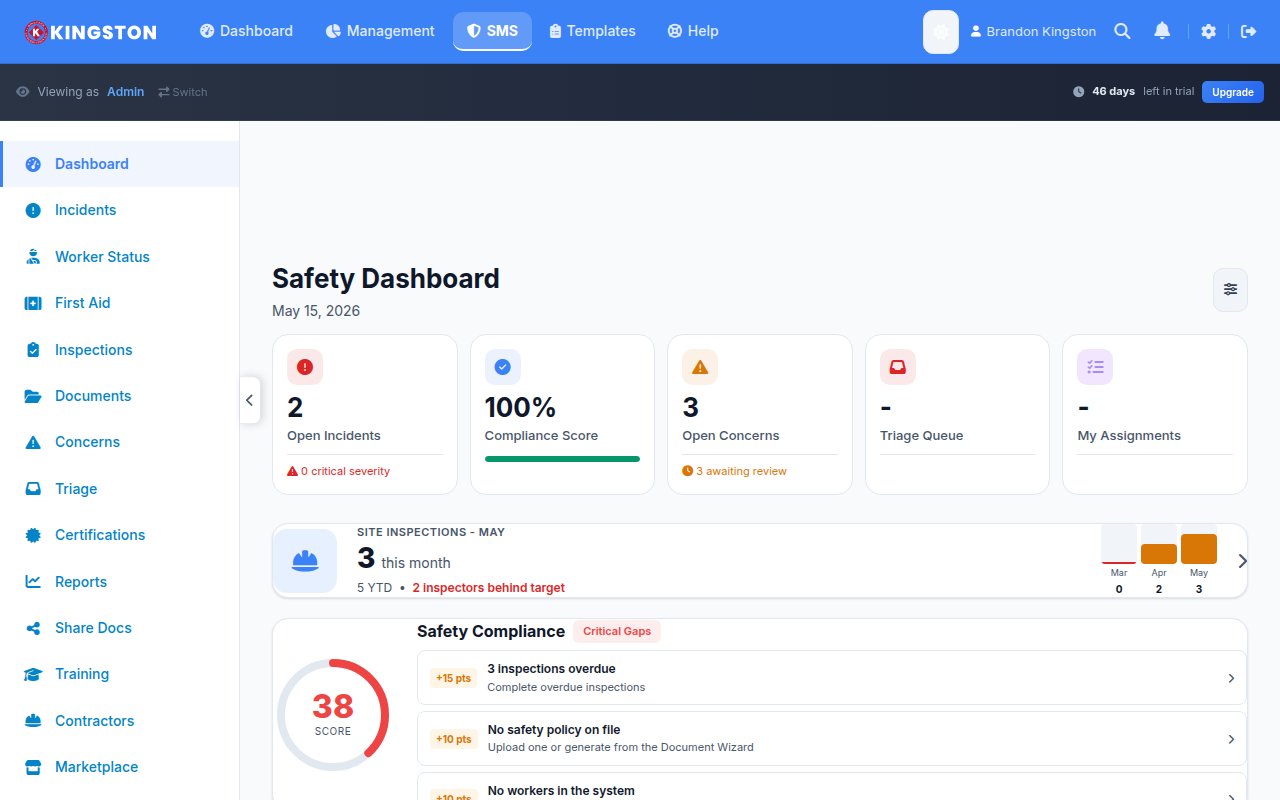
If your plant is managing food safety with rigorous digital systems but still tracking worker safety on paper clipboards and spreadsheets, you have a gap that is costing you injuries, turnover and compliance risk. Make Safety Easy gives food processing operations the digital tools for inspections, incident reporting, and safety management that match the rigor of your HACCP program.
Learn more about how Make Safety Easy serves the food processing safety industry with purpose-built safety tools.
Request a demo to see how our platform works in food manufacturing environments, or check our pricing to get started today.
Ready to simplify your safety program?
Make Safety Easy helps teams run toolbox talks, inspections, incident reports and more - all from one platform.
Start Your Free TrialNo credit card required. 14-day free trial.