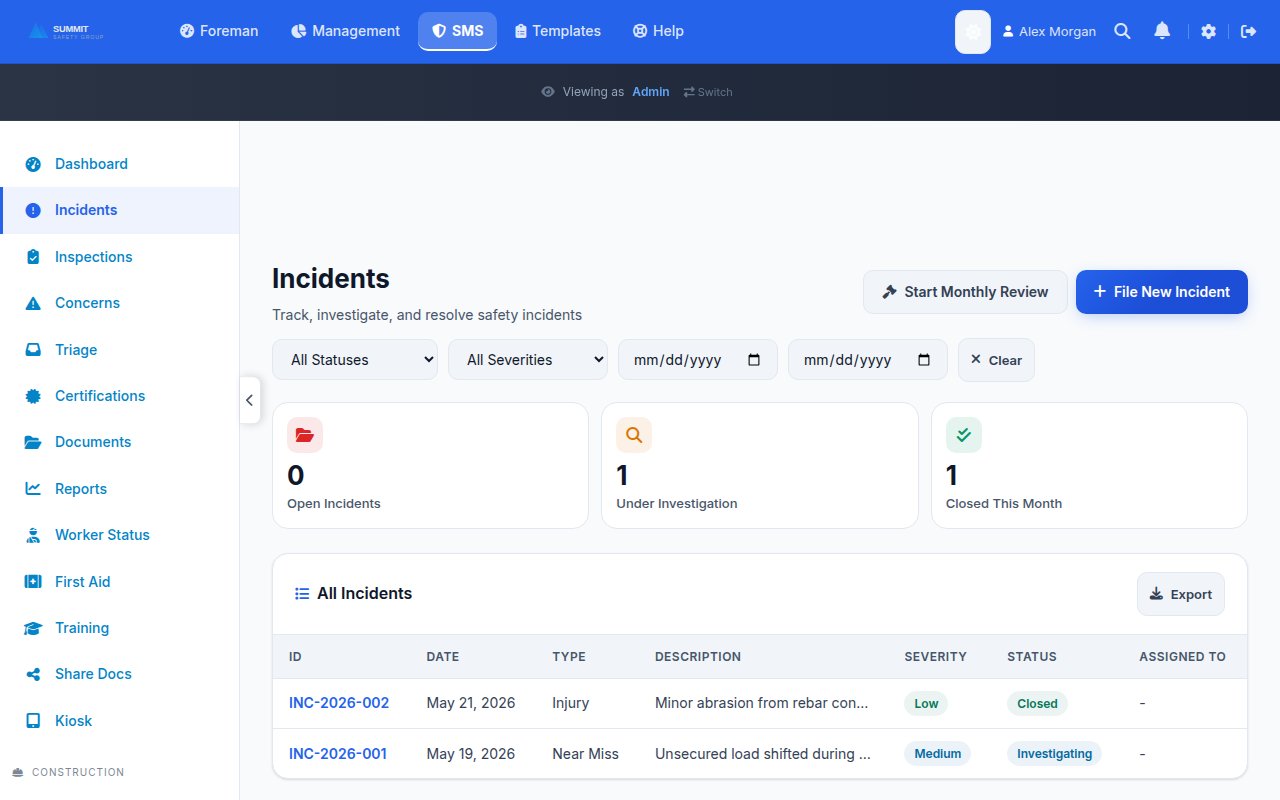
When a workplace incident occurs, the incident report you file becomes a legal document. It can be subpoenaed in court, reviewed by WorkSafeBC investigators, referenced in WCB claim disputes and scrutinized during COR audits. A poorly written report can cost your company tens of thousands of dollars. A well-written one protects your organization and drives meaningful safety improvements.
Here's how to write incident reports that hold up under scrutiny.
Why Incident Reports Matter More Than You Think
Most safety managers understand that incident reports are required. Fewer understand the downstream implications:
Free Download: 5 Safe Work Procedures
Choose from 112 professionally written SWPs. No credit card required.
Get Free SWPs- Legal protection: In litigation, a detailed, timely incident report demonstrates that your company responded appropriately and took reasonable precautions.
- WCB claim management: Accurate reports help manage claim costs and prevent fraudulent claims from inflating your premiums.
- Trend identification: Aggregated incident data reveals patterns - specific tasks, times of day, or locations where incidents cluster.
- Regulatory compliance: WorkSafeBC requires employers to investigate incidents and document findings. Failure to do so can result in penalties of $700 to $725,000+.
What Every Incident Report Must Include
1. Basic Information (The 5 W's)
- Who was involved? (injured worker, witnesses, supervisor on duty)
- What happened? (factual description of the event)
- When did it happen? (exact date, time - not "around lunchtime")
- Where did it happen? (specific location - building, floor, bay, equipment)
- Why did it happen? (contributing factors - to be determined through investigation)
2. Injury Details
- Nature of injury (laceration, sprain, fracture, chemical exposure)
- Body part affected
- First aid provided on scene
- Medical treatment sought (clinic, hospital, ambulance)
- Modified duties or time loss
3. Witness Statements
Collect statements from all witnesses as soon as possible - memory degrades rapidly. Each statement should be:
- In the witness's own words
- Signed and dated
- Focused on what they saw, heard, or did - not opinions or assumptions
4. Root Cause Analysis
Go beyond the obvious. A worker slipped and fell is what happened. Why they slipped is what matters:
- Was the floor wet? Why? Was there a spill? Was the drain blocked?
- Was the worker wearing appropriate footwear?
- Was the area properly lit?
- Had this hazard been reported before?
5. Corrective Actions
Every incident report should end with specific, assigned and time-bound corrective actions:
- Immediate: What was done right away to prevent recurrence? (e.g., "Wet floor signs placed, drain cleared")
- Short-term: What changes will be implemented this week? (e.g., "Install anti-slip mats in loading bay")
- Long-term: What systemic changes are needed? (e.g., "Add weekly drain inspection to maintenance checklist")
5 Common Mistakes That Weaken Your Report
- Delaying the report: File within 24 hours. Memory fades, details get confused and regulators notice late filings. WorkSafeBC requires reporting of serious injuries within 24 hours.
- Using vague language: "The worker was being careless" is an opinion and potentially grounds for a grievance. "The worker was observed operating the forklift without a seatbelt" is a factual observation.
- Assigning blame: Incident reports document facts, not fault. Blame language can be used against you in legal proceedings and discourages future reporting.
- Skipping photos: A photograph of the scene, the equipment and the conditions is worth a thousand words in an investigation. Take photos immediately - before cleanup.
- No follow-up on corrective actions: A corrective action that's never implemented is worse than no corrective action - it demonstrates that your company identified a hazard and chose not to fix it.
Digital vs. Paper Incident Reports
Paper incident reports create friction that discourages timely filing. Workers have to find a form, fill it out by hand, track down a supervisor for review and deliver it to the office. By the time it reaches the safety manager, critical details may be missing or days old.
Digital incident reporting tools solve this by allowing workers to:
- File reports from their phone, on-site, in real time
- Attach photos and GPS coordinates automatically
- Trigger automatic notifications to supervisors and safety managers
- Enforce required fields so nothing gets missed
- Create a timestamped, tamper-proof record
Get Started
A good incident report doesn't just protect your company - it protects your workers by ensuring that every incident leads to meaningful change. The best time to improve your incident reporting process is before the next incident happens.
Try Make Safety Easy free for 14 days and see how streamlined incident reporting can transform your safety program.
Go Digital with Make Safety Easy
Replace paper checklists with digital forms your crew can complete on any device. QR code sign-off, automatic compliance tracking and instant PDF reports.
Start Your Free TrialFrequently asked questions
How do you write an incident report at the workplace?
To write a workplace incident report: 1) Record the date, time and exact location. 2) Identify all people involved (injured worker, witnesses, supervisor). 3) Describe what happened in factual, chronological order. 4) Document injuries and first aid provided. 5) Note contributing factors and root causes. 6) List immediate corrective actions taken. 7) Recommend preventive measures. 8) Include photos and diagrams if applicable.
How to write an incident report example?
Example: On April 10, 2026 at 2:15 PM in Warehouse B, Aisle 3, worker John Smith (MAN #4521) slipped on a wet floor while carrying a 25-lb box. He fell backward, striking his right elbow on the concrete floor. First aid was administered (ice pack, wound cleaning). Contributing factor: floor was wet from a leaking roof panel. Corrective action: area cordoned off, maintenance notified, temporary drip tray installed.
What should be included in an incident report?
An incident report should include: date/time/location, names and roles of people involved, detailed narrative of what happened, type and severity of injuries, witnesses and their statements, root cause analysis, immediate actions taken, photos or diagrams, corrective actions recommended and supervisor sign-off. Include near-misses and property damage, not just injuries.