Portable ladder inspection criteria are the specific checkpoints used to evaluate whether a ladder is safe for use. OSHA requires that portable ladders be inspected before each use and that defective ladders be immediately removed from service (29 CFR 1926.1053 for construction and 29 CFR 1910.23 for general industry). Falls from ladders account for approximately 20 percent of fatal falls in the workplace each year. A thorough pre-use inspection takes less than two minutes and is one of the simplest ways to prevent a serious injury or fatality.
This guide provides detailed inspection criteria for every type of portable ladder, explains what defects to look for, when to remove a ladder from service and how to document inspections for OSHA compliance.
Types of Portable Ladders
Before diving into inspection criteria, it helps to understand the common types of portable ladders found on worksites. Each type has unique inspection points based on its design.
Free Download: 5 Safe Work Procedures
Choose from 112 professionally written SWPs. No credit card required.
Get Free SWPsStepladders
Self-supporting ladders with flat steps and a hinged design. Available in heights from 3 to 20 feet. Used when a wall or structure is not available to lean a ladder against.
Single (Straight) Ladders
Non-self-supporting ladders consisting of a single section. Must be leaned against a stable support structure. Available in lengths up to 30 feet.
Extension Ladders
Non-self-supporting ladders with two or more sections that slide to adjust length. The fly section extends above the base section using a rope and pulley system. Available in extended lengths up to 60 feet for certain types.
Combination Ladders
Ladders that can be configured as a stepladder, extension ladder, scaffold platform or other arrangement. Popular on jobsites due to their versatility.
Platform Ladders
Similar to stepladders but with a larger platform at the top instead of a step. Designed for tasks requiring extended standing at height.
OSHA Portable Ladder Inspection Requirements
OSHA's ladder standards establish clear inspection obligations for employers.
General Industry (29 CFR 1910.23)
- Ladders must be inspected before use on each work shift
- Ladders with structural or other defects must be immediately tagged "Dangerous - Do Not Use" or with similar language and removed from service
- Defective ladders must be repaired to meet original design criteria or destroyed
Construction (29 CFR 1926.1053)
- Ladders must be inspected by a competent person for visible defects on a periodic basis and after any occurrence that could affect safe use
- Defective ladders must be immediately marked or tagged and withdrawn from service
- Ladders must not be loaded beyond their maximum intended load rating
The key difference: general industry requires inspection before each shift, while construction requires periodic inspection by a competent person and inspection after incidents. In practice, most safety programs require pre-use inspection regardless of the standard that applies - and this is the recommended approach. For a comprehensive overview of ladder safety, see our ladder safety and OSHA inspection guide.
Portable Ladder Inspection Criteria
The following criteria apply to all portable ladder types unless otherwise noted. Inspect every item before each use.
Side Rails
- No cracks, splits or breaks in the side rails
- No bends, dents or deformations (metal ladders)
- No signs of corrosion or oxidation that weakens the structure (metal ladders)
- No rot, decay or insect damage (wooden ladders)
- No delamination, cracking or UV damage (fiberglass ladders)
- No missing or loose rivets, bolts or welds at connection points
- Rails are straight and parallel - not twisted or bowed
- No unauthorized modifications, patches or splices
Rungs and Steps
- All rungs and steps are present - none are missing
- Rungs and steps are firmly attached to both side rails with no movement
- No cracks, bends or deformations in rungs or steps
- Rung surfaces are slip-resistant (not worn smooth, coated with grease or covered with mud)
- Rung spacing is uniform and correct (standard is 12 inches center-to-center for most types)
- Rungs are level when the ladder is in the use position
Feet and Base
- Non-slip feet (rubber or other grip material) are present and in good condition
- Feet are not worn through, cracked or missing
- Swivel feet (if equipped) rotate freely and lock in position
- Base is not damaged, bent or corroded
Hardware and Fittings
- All bolts, rivets and screws are tight and present
- Spreader bars (stepladders) lock fully open and hold firm
- Rung locks (extension ladders) engage properly and hold the fly section
- Rope and pulley system (extension ladders) is intact with no fraying, cuts or excessive wear
- Hinges operate smoothly without excessive play
- Braces and brackets are securely attached
Labels and Markings
- Duty rating label is present and legible (Types IA, I, II, III or IAA)
- Maximum load rating is readable
- Manufacturer name and model information are visible
- Safety instruction labels are present and legible
- ANSI compliance marking is visible
Material-Specific Criteria
Fiberglass Ladders
- No chalking (white powdery residue indicating UV degradation)
- No exposed fibers or delamination
- No cracks, chips or deep scratches in the surface coating
- Fiberglass color is consistent (discoloration may indicate heat damage or chemical exposure)
Aluminum Ladders
- No dents deeper than 1/4 inch
- No sharp bends or kinks in rails or rungs
- No significant corrosion (surface oxidation is generally acceptable; pitting is not)
- No weld cracks at connection points
Wooden Ladders
- No rot, decay or fungus growth
- No insect damage (termites, carpenter ants)
- Wood is not painted (paint hides defects - only clear sealant is acceptable)
- No large knots, checks or splits that could compromise strength
Extension Ladder-Specific Inspection Points
Extension ladders have additional components that require inspection:
- Rung locks: Test both locks by extending the fly section and applying downward pressure. The locks must engage automatically and hold the fly section without slipping
- Halyard rope: Check the full length for fraying, cuts, abrasion, UV damage and knots. The rope must be securely attached to the fly section and the pulley
- Pulley: Must rotate freely without binding. The pulley housing must be securely attached
- Guide brackets: The brackets that hold the fly section against the base section must be present and functional. The fly section must slide smoothly without binding or excessive play
- Overlap: When extended, the overlap between sections must meet manufacturer specifications (typically 3 feet minimum for ladders up to 36 feet extended)
When to Remove a Ladder from Service
Remove a portable ladder from service immediately if any of the following conditions exist:
- Structural damage to side rails, rungs or steps
- Missing or broken hardware (rivets, bolts, rung locks, spreader bars)
- Bent or twisted rails
- Excessive corrosion or material degradation
- Damaged or missing feet
- Extension ladder rope or locks are defective
- Duty rating label is missing or illegible
- The ladder has been exposed to fire, chemicals or excessive heat
- The ladder has been involved in a fall or impact event
Tag the ladder immediately with "Danger - Do Not Use" or remove it from the worksite entirely. Do not leave a defective ladder where someone might use it.
Documenting Ladder Inspections
While OSHA does not explicitly require written documentation of every pre-use ladder inspection, documented inspections provide critical evidence of compliance during audits and investigations. Best practices include:
- Using a standardized ladder inspection form or checklist
- Recording the date, inspector name, ladder identification number and findings
- Documenting any defects found and the corrective actions taken
- Maintaining records digitally for easy retrieval during inspections
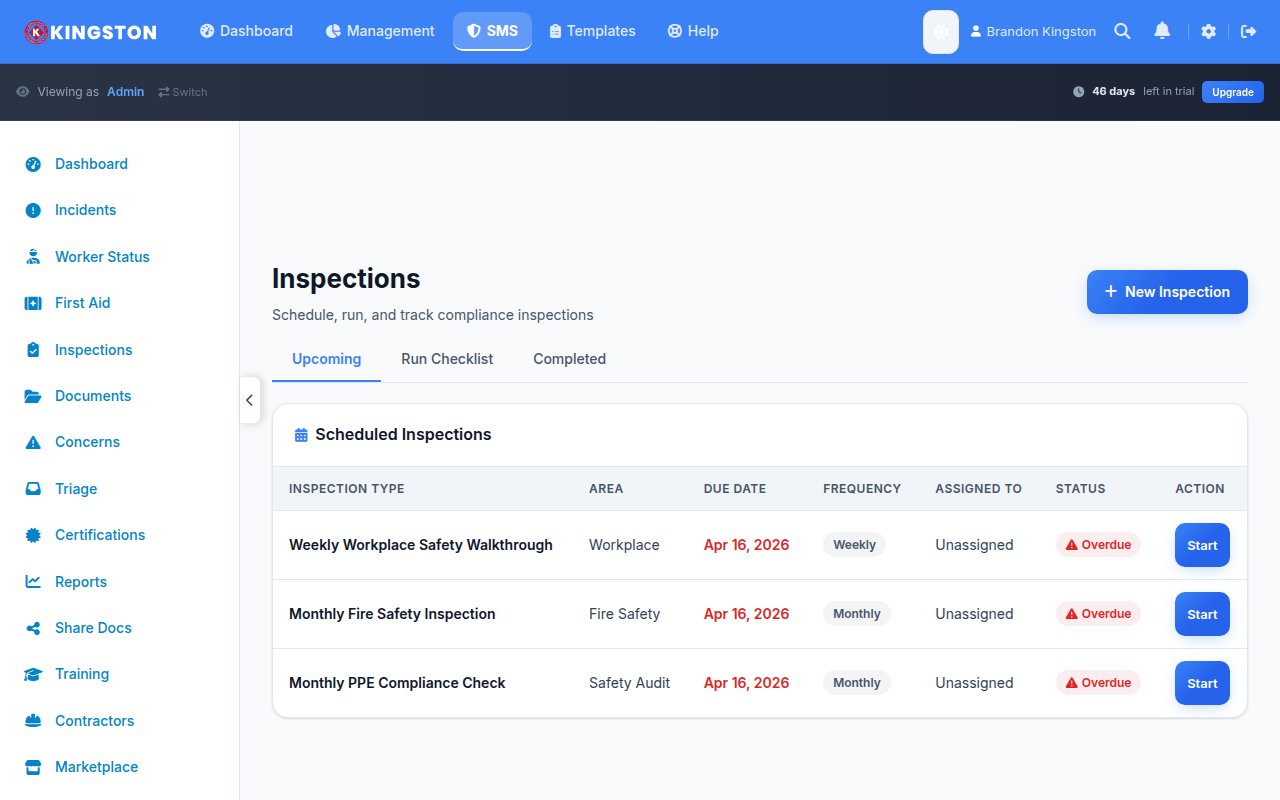
A digital inspection platform makes this process fast and consistent. Inspectors complete the checklist on a mobile device, attach photos of defects and submit the record to a centralized system - all in under two minutes.
Ladder Inspection Frequency Summary
- Before each use: Quick visual and physical inspection by the user
- Periodic formal inspection: Monthly or quarterly detailed inspection by a competent person (recommended even where not explicitly required)
- After incidents: Inspect immediately after a fall, impact, exposure to chemicals or any event that could affect structural integrity
- After storage: Inspect before returning to service after extended storage, especially if stored outdoors
Ladder Duty Ratings
Understanding duty ratings is essential for inspection because using a ladder beyond its rating is a violation - regardless of its physical condition.
- Type IAA: 375 pounds (special duty)
- Type IA: 300 pounds (extra heavy duty)
- Type I: 250 pounds (heavy duty)
- Type II: 225 pounds (medium duty)
- Type III: 200 pounds (light duty - household use only)
The rated load includes the weight of the user plus all tools, materials and equipment carried on the ladder. Most industrial and construction applications require Type IA or Type IAA ladders.
Make Ladder Inspections Consistent and Auditable
Portable ladder inspections are one of the fastest, simplest safety checks your team can perform - and one of the most impactful. Consistent inspections catch defects before they cause falls, demonstrate OSHA compliance and build a culture where pre-use safety checks are automatic.
Make Safety Easy provides digital inspection checklists, photo documentation and centralized record storage to make your ladder inspection program bulletproof. Book a demo to see the platform in action, or view our pricing to find the right plan for your team.
Ready to simplify your safety program?
Make Safety Easy helps teams run toolbox talks, inspections, incident reports and more - all from one platform.
Start Your Free TrialNo credit card required. 14-day free trial.