Railroad safety encompasses the regulations, training programs and operational controls that protect workers from the hazards of track maintenance, rail yard switching, rolling stock repair and train operations. The Federal Railroad Administration (FRA) recorded thousands of railroad-related injuries annually in the United States, with track workers, yard crews and maintenance-of-way employees facing the highest risk levels. Rail safety is not just a regulatory obligation - it is a life-or-death discipline that demands constant vigilance.
Whether you operate a Class I freight railroad, a short line, a commuter rail system or an industrial rail facility, the fundamental safety principles remain consistent. This guide covers the critical hazards, regulatory requirements and management strategies that define an effective railroad safety program.
The Unique Hazards of Railroad Work
Railroad operations present hazards that are fundamentally different from most other industries. Workers operate in close proximity to trains that can weigh thousands of tons and travel at speeds where stopping distances are measured in miles, not feet. The combination of massive moving equipment, electrical systems, hazardous materials and outdoor environmental exposure creates a risk profile that demands specialized safety management.
Free Download: 5 Safe Work Procedures
Choose from 112 professionally written SWPs. No credit card required.
Get Free SWPsStruck-By and Caught-Between Hazards
Being struck by trains or rolling stock is the most catastrophic hazard facing railroad workers. Trains are quieter than most people expect, particularly in rail yards where multiple tracks and background noise mask approaching movements. Rail cars can move unexpectedly when humping operations, remote-controlled locomotives or grade conditions cause unplanned motion.
FRA's Roadway Worker Protection regulations (49 CFR Part 214, Subpart C) establish the framework for protecting workers on or near active tracks. These regulations require on-track safety through one of several methods: exclusive track occupancy, train approach warning, individual train detection or watchman/lookout protection.
Every track worker must understand which form of on-track safety is in effect before fouling any track. Miscommunication about track authority has been a contributing factor in numerous fatal incidents.
Rail Yard Switching Hazards
Rail yards are among the most hazardous work environments in the railroad industry. Switching operations - the process of assembling and disassembling trains - involve coupling and uncoupling cars, throwing switches and riding equipment at low speeds. Workers operate on uneven ballast, between cars and across multiple tracks in all weather conditions.
Common yard injuries include slips, trips and falls on ballast and equipment surfaces, caught-between injuries during coupling operations and struck-by incidents involving unexpected car movements. Remote control locomotive (RCL) operations have changed yard work dynamics significantly, with operators controlling locomotive movements from hand-held devices rather than the locomotive cab.
Electrical Hazards
Electrified railroads - including commuter rail, subway systems and some freight corridors - present electrocution risks from catenary wires (typically 12,500 to 25,000 volts AC) or third rail systems (typically 600 to 750 volts DC). Contact with or proximity to these systems can be fatal.
Workers must maintain minimum approach distances and follow strict procedures for working near energized systems. Power removal and grounding procedures must be verified before any work begins within the danger zone.
Hazardous Materials Transportation
Railroads transport significant quantities of hazardous materials including crude oil, chlorine, ammonia, ethanol and sulfuric acid. Derailments involving hazmat cars can create toxic release zones affecting workers and surrounding communities - as demonstrated by high-profile incidents in recent years.
Train crews and emergency responders must be trained to recognize hazmat placards, consult the Emergency Response Guidebook (ERG) and establish appropriate isolation distances. Rail yards that handle hazmat cars need emergency response plans that address spill containment, vapor dispersion and evacuation procedures.
FRA Regulatory Framework
The Federal Railroad Administration enforces safety regulations across the U.S. railroad industry. Key regulatory areas include:
- 49 CFR Part 213: Track safety standards covering geometry, rail integrity, ties, ballast and inspection requirements
- 49 CFR Part 214: Railroad workplace safety including roadway worker protection and bridge worker safety
- 49 CFR Part 217: Railroad operating rules covering train handling, speed restrictions and employee responsibilities
- 49 CFR Part 218: Railroad operating practices including blue signal protection for workers on or under rolling stock
- 49 CFR Part 219: Control of alcohol and drug use, including post-accident and random testing requirements
- 49 CFR Part 225: Railroad accident/incident reporting requirements
- 49 CFR Part 243: Training, qualification and oversight requirements for railroad safety-related employees
In Canada, Transport Canada enforces the Railway Safety Act and associated regulations. The Canadian Rail Operating Rules (CROR) establish operating procedures that differ from U.S. rules in several important respects and workers operating cross-border must understand both systems.
Building an Effective Railroad Safety Program
Job Briefings
Job briefings are the foundation of daily railroad safety. Before any work activity, the crew must conduct a briefing that covers the scope of work, hazards present, protective measures in effect, emergency procedures and the responsibilities of each team member.
Effective job briefings are not just a formality - they are a dynamic communication tool. When conditions change during the work shift, an updated job briefing must be conducted. FRA regulations require job briefings to be thorough and to include all workers in the discussion.
Incident Reporting and Investigation
FRA Part 225 requires railroads to report certain categories of accidents, injuries and occupational illnesses. However, a strong safety program goes beyond minimum reporting requirements. Every near-miss, close call and unsafe condition should be captured through a robust incident reporting system.
Root cause investigation should drive corrective actions. If a track worker was nearly struck because train approach warning was inadequate for the sight distance at a particular location, the corrective action might involve changing the form of on-track safety at that location - not just reminding workers to pay attention.
Training and Qualification
FRA Part 243 requires railroads to develop and submit training programs for safety-related employees. Training must cover initial qualification, ongoing proficiency and skills evaluation. The standard applies to a broad range of employee classifications including train crews, signal maintainers, track workers and dispatchers.
Supplement formal training with regular toolbox talks that address seasonal hazards, recent incidents, regulatory updates and operational changes. Short, focused safety communications keep critical information fresh.
Track and Equipment Inspections
FRA track safety standards require regular inspections based on track class and traffic volume. Higher-class tracks carrying faster trains require more frequent inspections. Inspections must evaluate gauge, alignment, surface, rail condition, joint bars, ties and ballast.
Equipment inspections - including air brake tests, car inspection requirements (49 CFR Part 215) and locomotive safety standards (49 CFR Part 229) - are equally critical. Defective equipment entering service creates risks for both workers and the public.
Digital inspection platforms allow inspectors to complete standardized checklists, photograph defects and route findings for corrective action - all from a mobile device in the field. This approach produces better documentation and faster response times than paper-based systems.
Blue Signal Protection
Blue signal protection (49 CFR Part 218, Subpart B) is a specialized railroad safety procedure that protects workers who are on, under or between rolling stock. When a blue signal (flag, light or sign) is displayed, equipment must not be coupled to or moved. Only the worker or group that applied the blue signal can remove it.
Violations of blue signal protection have resulted in fatalities where equipment was moved while workers were underneath cars performing repairs. Strict compliance and clear communication are non-negotiable.
Fatigue Management in Railroad Operations
Fatigue is a persistent safety challenge in the railroad industry. Train crews and maintenance workers often work irregular schedules, extended shifts and overnight hours. The Hours of Service Act limits on-duty time for train crews, signal employees and dispatchers, but fatigue management requires more than regulatory compliance.
Implement fatigue risk management systems that include schedule design optimization, sleep disorder screening, fatigue awareness training and a process for workers to report when they are too fatigued to work safely. Technology solutions including alertness monitoring devices and predictive fatigue modeling can supplement these programs.
Emergency Preparedness
Railroad emergency scenarios include derailments, grade crossing collisions, hazmat releases, fires and medical emergencies in remote locations. Emergency response plans must address each scenario with specific procedures, resource requirements and coordination protocols.
Conduct joint exercises with local fire departments, hazmat teams and emergency medical services. Many communities near rail corridors lack experience with railroad-specific emergencies and joint training builds the coordination that saves lives during real events.
Modernize Your Railroad Safety Program
Railroad safety management generates enormous volumes of data - inspection records, incident reports, training documentation, regulatory filings and operating rule compliance records. Managing this data with paper forms and disconnected systems creates gaps that put workers at risk.
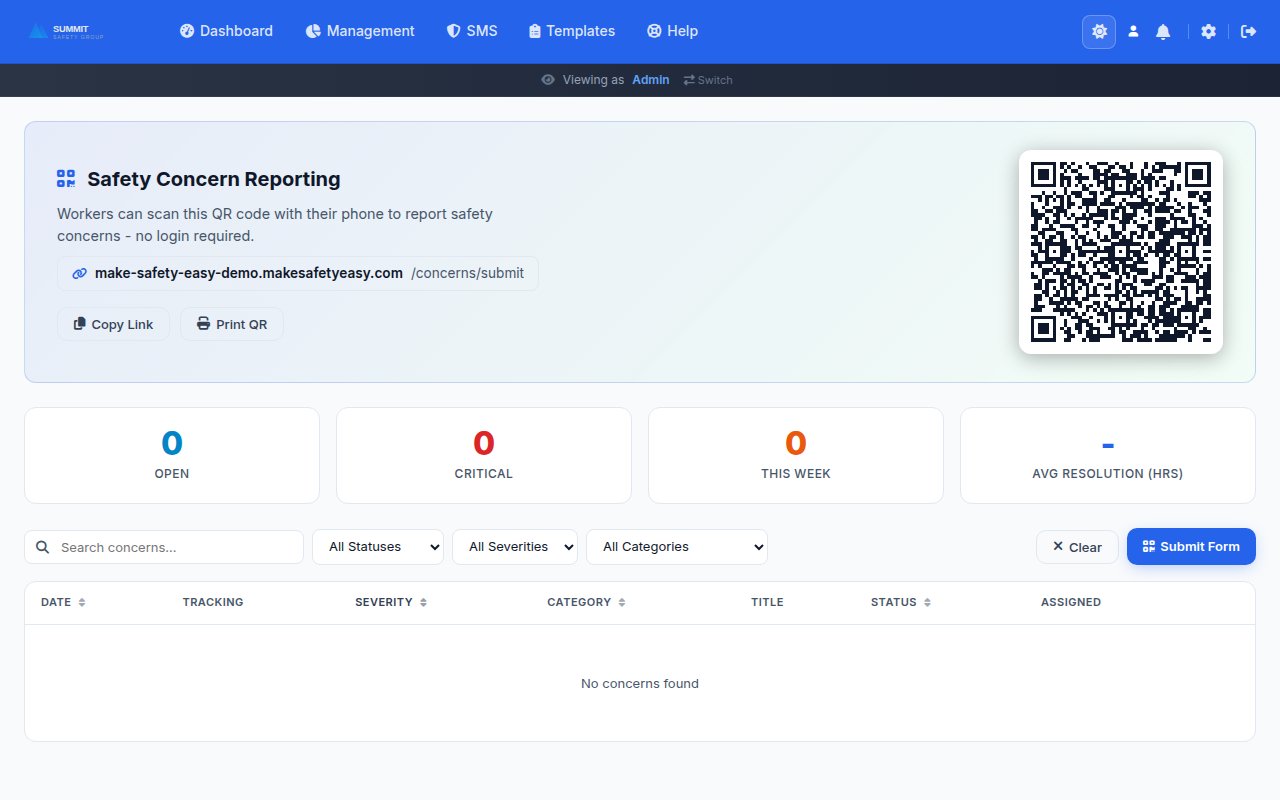
Make Safety Easy provides rail operations with digital tools for incident reporting, safety communications and compliance documentation - accessible from any location along your rail network.
Keep your rail workers safe with better tools. Schedule a demo to see how Make Safety Easy supports railroad safety management. Or visit our pricing page to explore plans for your operation.
Ready to simplify your safety program?
Make Safety Easy helps teams run toolbox talks, inspections, incident reports and more - all from one platform.
Start Your Free TrialNo credit card required. 14-day free trial.