Safety program budget planning is the process of allocating financial resources across training, equipment, technology, compliance activities and personnel to prevent workplace injuries and meet regulatory requirements. The question is never whether you can afford a safety program - it is whether you can afford not to have one. The National Safety Council estimates that the average cost of a workplace injury requiring medical consultation is over $42,000, while a fatality costs an employer more than $1.3 million in direct and indirect expenses. A properly funded safety budget prevents losses that dwarf the investment.
What Does a Safety Program Actually Cost
Safety program costs vary enormously based on industry, company size, hazard profile and regulatory requirements. However, most programs share common budget categories that allow for meaningful benchmarking.
Typical Cost Categories
- Personnel - Salaries and benefits for safety managers, coordinators, industrial hygienists and occupational health professionals. This is typically the largest line item, representing 40% to 60% of the total safety budget.
- Training - Course fees, instructor costs, materials, travel and lost productivity during training hours. Budget 5% to 15% of the total.
- Personal protective equipment - Hard hats, safety glasses, gloves, hearing protection, respirators, fall protection gear and specialized PPE. Budget 10% to 20%.
- Technology and software - Safety management platforms, inspection tools, incident reporting systems and analytics dashboards. Budget 5% to 10%.
- Engineering controls - Machine guards, ventilation systems, noise barriers, fall protection systems and similar physical safeguards. Costs vary widely by industry.
- Compliance activities - Air monitoring, noise surveys, medical surveillance, regulatory filings and audit preparation. Budget 5% to 10%.
- Consultants and third-party services - Industrial hygiene testing, ergonomic assessments, mock OSHA inspections and legal review. Budget 3% to 8%.
Industry Benchmarks
While every company's needs differ, general industry benchmarks provide a useful starting point:
Free Download: 5 Safe Work Procedures
Choose from 112 professionally written SWPs. No credit card required.
Get Free SWPs- Construction - Safety spending typically runs 2.5% to 6% of total project costs, depending on project complexity and regulatory jurisdiction.
- Manufacturing - Established manufacturers often spend $1,500 to $3,000 per employee annually on comprehensive safety programs.
- Oil and gas - High-hazard environments drive safety spending to 3% to 8% of operating budgets.
- General industry - Companies with moderate hazard profiles typically invest $500 to $1,500 per employee per year.
These figures are averages. Your specific budget should be driven by your hazard assessment, injury history and regulatory requirements - not by what other companies spend.
How to Build a Safety Budget from Scratch
If you are creating a safety budget for the first time or rebuilding one that has been neglected, follow this step-by-step process.
Step 1: Assess Your Current State
Before you can plan where to spend, you need to know where you stand. Gather the following data:
- Your OSHA 300 log for the past three to five years - identify injury trends, severity rates and recurring incident types
- Workers' compensation claims and costs for the same period
- Current Experience Modification Rate (EMR) and its trend
- Results of any recent safety audits, OSHA inspections or insurance carrier reviews
- Existing safety expenditures - what are you already spending and on what
This baseline tells you where the most significant risks and costs are concentrated, which is where your budget should focus first.
Step 2: Identify Regulatory Requirements
Some budget items are non-negotiable because regulations demand them. Review the OSHA standards that apply to your operations and list every requirement that carries a cost:
- Required training programs (HAZWOPER, confined space, lockout-tagout, fall protection, etc.)
- PPE that must be provided at employer expense
- Medical surveillance programs (audiometric testing, respiratory fit testing, lead monitoring, etc.)
- Written safety programs that must be developed and maintained
- Exposure monitoring and industrial hygiene testing
Fund these items first. They are not optional and the penalties for non-compliance far exceed the cost of compliance.
Step 3: Prioritize by Risk and ROI
After covering regulatory requirements, allocate remaining funds based on where they will prevent the most harm and generate the greatest return. For a detailed framework on quantifying safety returns, see our guide on calculating safety ROI metrics.
Prioritize investments that address:
- High-frequency, high-severity hazards - If falls are your leading injury type, investing in better fall protection systems will yield the highest return.
- Leading indicators - Programs that improve near-miss reporting, hazard observation rates and inspection completion rates prevent injuries before they happen.
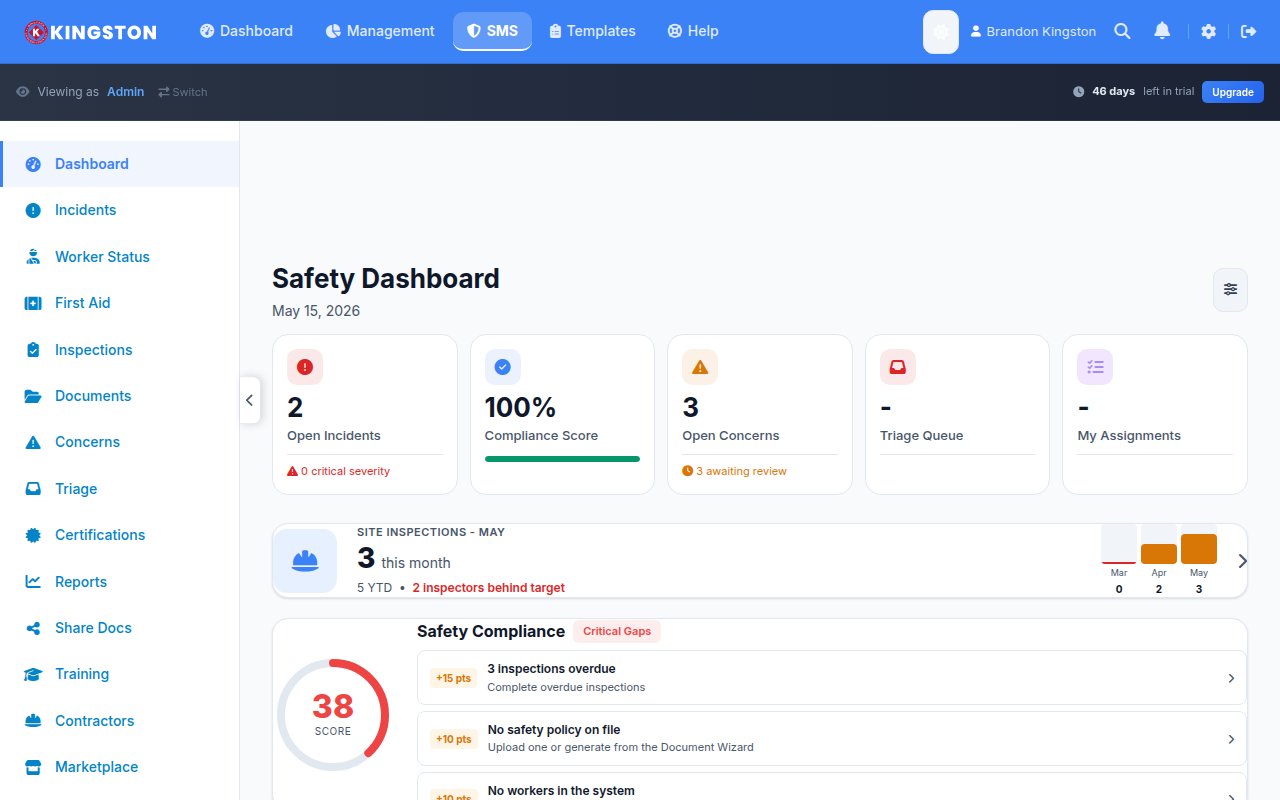
- Technology that multiplies effort - A safety management platform that automates inspections, tracks corrective actions and generates compliance reports lets your safety team accomplish more without adding headcount.
Step 4: Build in Contingency
Safety budgets need a contingency fund for unplanned expenses: emergency equipment replacement, unscheduled training after an incident, regulatory changes that require new compliance measures and incident investigation costs. A 10% to 15% contingency is standard practice.
Making the Business Case for Safety Spending
Getting budget approval requires speaking the language of business leadership. CFOs and executives respond to financial data, not safety statistics in isolation. Here is how to frame your budget request.
Calculate the Cost of Doing Nothing
Quantify what injuries are currently costing your organization. Include:
- Direct costs - Workers' compensation premiums, medical expenses, legal fees and OSHA penalties.
- Indirect costs - Lost productivity, overtime to cover injured workers, hiring and training replacements, equipment damage and project delays. Indirect costs typically run two to four times higher than direct costs.
- EMR impact - Show how your Experience Modification Rate affects workers' compensation premiums. A company with a 1.3 EMR is paying 30% more in premiums than a company at 1.0. Every dollar spent reducing injuries pushes the EMR down and generates premium savings for years.
Present ROI Projections
For every major budget item, project the expected return. For example:
- A $50,000 investment in a fall protection system could prevent one serious fall injury that would cost $150,000 to $250,000 in direct and indirect expenses - a 3:1 to 5:1 return.
- A $15,000 annual investment in a safety management platform that reduces administrative time by 20 hours per week frees $30,000 or more in labor value annually - a 2:1 return in year one, improving every year after.
- A $10,000 training program that reduces your recordable incident rate by two points could lower your EMR enough to save $20,000 to $40,000 in annual workers' compensation premiums.
Use Competitor Benchmarking
If competitors in your industry are investing more in safety and winning contracts because of lower EMRs, better safety records and stronger prequalification scores, that data makes a compelling argument for budget increases. Many clients in construction, oil and gas and manufacturing require contractors to meet minimum safety performance thresholds - an underfunded safety program can lock you out of revenue.
Where Technology Delivers the Best Value
Safety technology is one of the highest-ROI categories in a safety budget because it amplifies every other investment you make. A safety management platform does not replace your safety team - it makes each person on that team dramatically more effective.
What a Modern Safety Platform Replaces
- Paper inspection forms - Digital inspections save time, eliminate illegibility and create searchable records automatically.
- Spreadsheet tracking - Corrective action tracking, training logs and compliance calendars that live in spreadsheets are fragile, siloed and impossible to audit efficiently.
- Manual report generation - Pulling OSHA 300 logs, incident trends and leading indicator dashboards from paper records takes hours. A platform generates them in seconds.
- Disconnected communication - Toolbox talks, safety alerts and policy updates distributed through email, bulletin boards and word of mouth are inconsistent. A platform ensures every worker receives and acknowledges the information.
Use Make Safety Easy's Monthly Reviews feature to track program performance against your budget assumptions and adjust spending in real time based on actual results.
Annual Budget Review Process
Your safety budget should be reviewed and revised at least annually, ideally as part of your broader business planning cycle. The review should examine:
- Spending vs. plan - Where did you overspend or underspend and why?
- Outcome metrics - Did injury rates decrease? Did near-miss reporting increase? Did inspection completion rates improve?
- Regulatory changes - Are new OSHA standards or state regulations creating new compliance costs?
- Organizational changes - New locations, new employees, new processes or new equipment may require budget adjustments.
- Workers' compensation performance - Has your EMR improved? Are premium savings materializing as projected?
Document your review findings and present them to leadership alongside next year's budget request. Showing that previous spending delivered measurable results builds credibility for future requests.
Budget Pitfalls to Avoid
- Funding training but not follow-up - Training without reinforcement fades within weeks. Budget for toolbox talks, refresher sessions and competency verification, not just initial courses.
- Ignoring leading indicators - Spending everything on lagging indicator response (injury investigation, claims management) and nothing on prevention is like budgeting for fire trucks but not sprinklers.
- Cutting safety during downturns - Economic pressure often leads to safety budget cuts. But reduced staffing, deferred maintenance and skipped training during downturns create the conditions for the incidents that make the next upturn even more expensive.
- One-time spending without sustainability - Buying equipment without budgeting for maintenance, training and replacement creates a false sense of security that degrades over time.
Start Planning Smarter Today
A well-structured safety program budget is not an expense - it is an investment with measurable, often dramatic returns. The companies that fund safety properly spend less on injuries, pay lower insurance premiums, win more contracts and retain better employees.
Make Safety Easy gives you the technology foundation that maximizes every dollar in your safety budget. From inspections and incident reporting to toolbox talks and compliance tracking, our platform eliminates the administrative overhead that drains safety budgets without improving safety outcomes. Book a demo to see the platform in action, or visit our pricing page to find a plan that fits your budget.
Ready to simplify your safety program?
Make Safety Easy helps teams run toolbox talks, inspections, incident reports and more - all from one platform.
Start Your Free TrialNo credit card required. 14-day free trial.