A safety stand-down is a planned, voluntary work stoppage during which employers talk directly with employees about specific safety hazards, company safety policies and protective measures. OSHA's most prominent stand-down event is the annual National Safety Stand-Down to Prevent Falls in Construction, but stand-downs can be organized by any employer in any industry at any time. The goal is simple: stop work, focus on safety and create a two-way conversation that reduces injuries and fatalities.
What Is a Safety Stand-Down?
Unlike a formal safety training session, a stand-down is designed to be a focused, relatively brief event - typically lasting 15 minutes to an hour. It is not a replacement for required OSHA training programs. Instead, it serves as a targeted awareness tool that reinforces key safety messages, addresses recent incidents or near misses and gives workers a chance to ask questions and voice concerns.
OSHA encourages stand-downs because they demonstrate visible management commitment to safety. When leadership physically stops production to talk about worker protection, it sends a message that no amount of email memos can replicate.
Free Download: 5 Safe Work Procedures
Choose from 112 professionally written SWPs. No credit card required.
Get Free SWPsWhen Should You Hold a Safety Stand-Down?
There is no wrong time to hold a stand-down, but certain situations make them especially valuable:
- After a serious incident or near miss: Address what happened, why it happened and what changes are being implemented
- At the start of a high-risk season: Heat illness prevention before summer, fall protection before roofing season, winter driving before the first freeze
- During OSHA's National Safety Stand-Down: Typically held in May each year, this event focuses on fall prevention in construction but can be adapted to any hazard
- When introducing new equipment or processes: Ensure every worker understands new hazards and controls before work begins
- When incident trends are moving in the wrong direction: Use data to identify the problem and dedicate a stand-down to addressing it
Step-by-Step Planning Guide
Step 1: Define Your Objective
Every stand-down needs a clear, specific focus. Avoid trying to cover "everything about safety." Instead, choose one topic and go deep. Examples:
- Fall protection: harness inspection and proper anchor points
- Lockout/tagout procedures for a specific machine
- Heat illness recognition and response
- Proper lifting techniques to reduce back injuries
- Lessons learned from a recent incident
Step 2: Get Leadership Buy-In
A stand-down loses its impact if management treats it as a check-the-box exercise. Secure commitment from senior leadership to:
- Attend and participate visibly
- Authorize the production stoppage
- Follow through on any commitments made during the event
Step 3: Schedule and Communicate
Choose a time that allows maximum participation. For multi-shift operations, plan to repeat the stand-down for each shift. Communicate the schedule at least one week in advance through:
- Posters in break rooms and at clock-in stations
- Supervisor announcements at daily huddles
- Digital notifications through your safety management platform
- Email reminders to managers and team leads
Step 4: Prepare Your Content
The most effective stand-downs are interactive, not lectures. Prepare materials that encourage engagement:
- Visual aids: Photos of correct vs incorrect practices, short video clips of real-world examples
- Hands-on demonstrations: Show how to inspect a harness, demonstrate proper PPE donning or walk through an inspection checklist
- Discussion prompts: Ask open-ended questions like "What is the biggest safety concern you see on this job?" or "Has anyone experienced a situation where this could have gone wrong?"
- Toolbox talk materials: Use structured toolbox talk content as a foundation for your stand-down discussion
Step 5: Conduct the Stand-Down
On the day of the event:
- Stop all work activities for the duration of the stand-down
- Gather workers in a comfortable, distraction-free location
- Open with a statement from leadership about why this topic matters
- Present the content using your prepared materials
- Open the floor for questions and discussion - this is the most important part
- Close with specific, actionable takeaways
Step 6: Document Everything
Documentation serves two purposes: it proves you held the event (important for regulatory inquiries) and it creates a record you can reference for future planning. Capture:
- Date, time and location
- Topic covered
- Presenter names
- Attendance (names and signatures or digital check-in)
- Key discussion points and questions raised
- Action items and responsible parties
- Photos (optional but helpful for internal communications)
If workers raise concerns or report hazards during the stand-down, log them in your incident reporting system and assign follow-up actions immediately. Failing to act on concerns raised during a stand-down erodes trust faster than almost any other management failure. Workers remember when they spoke up and nothing changed.
Step 7: Follow Through
The stand-down is only valuable if it leads to action. Within one week of the event:
- Address every question and concern that was raised
- Complete any promised corrective actions
- Communicate outcomes back to the workforce
- Update policies or procedures if gaps were identified
OSHA's National Safety Stand-Down to Prevent Falls
OSHA's annual fall prevention stand-down, typically held during the first week of May, is the largest stand-down event in North America. Falls remain the leading cause of death in construction and OSHA uses this event to rally industry-wide attention to fall hazards.
Participation is voluntary but strongly encouraged. Employers who participate can obtain a certificate of participation from OSHA's website. The event is open to all industries, not just construction - any workplace with fall hazards can benefit.
Stand-Down Topics by Industry
Construction
- Fall protection systems (guardrails, safety nets and personal fall arrest)
- Scaffold safety and inspection
- Trenching and excavation hazards
- Struck-by hazards from cranes and heavy equipment
Manufacturing
- Machine guarding and lockout/tagout
- Forklift and pedestrian interaction
- Chemical exposure and SDS review
- Ergonomic hazards and repetitive motion injuries
Oil and Gas
- Hydrogen sulfide (H2S) awareness
- Confined space entry procedures
- Process safety management
- Dropped object prevention
Healthcare
- Needlestick and sharps injury prevention
- Patient handling and ergonomics
- Workplace violence de-escalation
- Bloodborne pathogen exposure protocols
Multi-Site and Multi-Shift Stand-Down Logistics
Organizations with multiple locations or around-the-clock operations face additional planning challenges. The stand-down message and materials must be consistent across every site, even when different supervisors or safety professionals are delivering the content. Create a facilitator guide that includes talking points, key messages, demonstration instructions and discussion questions so that every session delivers the same core information.
For multi-shift operations, schedule the stand-down at a time that catches shift overlap if possible. If overlap scheduling is not feasible, plan separate sessions for each shift with the same materials and the same level of leadership presence. Night shift and weekend crews should receive the same quality stand-down experience as day shift employees. Document attendance by shift so you can verify full coverage.
Organizations with remote or field-based workers can use video conferencing to include distributed teams. Record the session (with permission) for employees who were unavailable due to travel, vacation or leave. Follow up individually with any worker who missed the stand-down to ensure they receive the same information.
Measuring Stand-Down Effectiveness
Do not assume the stand-down worked just because people showed up. Measure effectiveness through:
- Pre- and post-event surveys: Test knowledge before and after to quantify learning
- Behavioral observation: Monitor the targeted behavior in the weeks following the event
- Incident and near-miss data: Track whether incidents related to the stand-down topic decrease over the following quarter
- Participation rates: Aim for 100% of the affected workforce
Frequently Asked Questions
Is a safety stand-down required by OSHA?
No. Safety stand-downs are voluntary events. However, OSHA strongly encourages participation and many employers find them effective at reducing incidents and demonstrating a commitment to worker safety.
How long should a stand-down last?
Most stand-downs last between 15 minutes and one hour. The key is quality over quantity. A focused 20-minute discussion is more effective than a rambling 90-minute lecture.
Can a stand-down replace required OSHA training?
No. A stand-down is a supplemental awareness activity. It does not satisfy OSHA's formal training requirements for topics like hazard communication, fall protection or forklift operation.
Do I need to pay workers for stand-down time?
Yes. If employees are required to attend, the time must be compensated. Since the stand-down occurs during work hours and replaces active work, it is considered paid time.
What if workers are reluctant to speak up during a stand-down?
Start by asking specific, low-stakes questions rather than broad ones. Instead of "Does anyone have a safety concern?" try "Has anyone had a close call with this type of hazard in the last month?" You can also distribute anonymous comment cards or set up a digital suggestion box. The more consistently leadership responds to feedback, the more workers will trust the process and participate openly over time.
Make Your Next Stand-Down Count
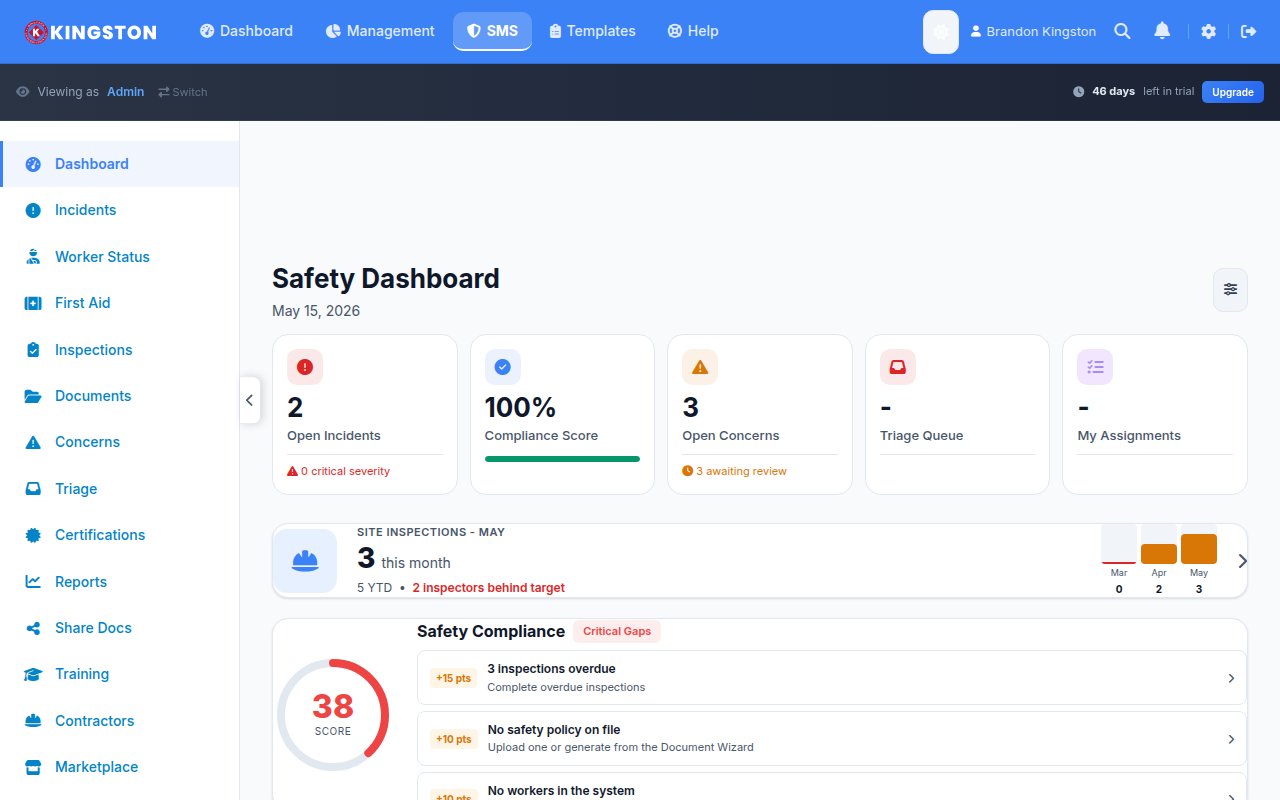
Planning a stand-down should not mean scrambling for materials the night before. Make Safety Easy gives you access to ready-made toolbox talk content, digital attendance tracking and incident reporting tools that turn stand-down discussions into documented action items. Request a demo to see how it works.
Ready to simplify your safety program?
Make Safety Easy helps teams run toolbox talks, inspections, incident reports and more - all from one platform.
Start Your Free TrialNo credit card required. 14-day free trial.