Safety awards workplace programs are structured recognition systems that celebrate workers and teams who demonstrate outstanding commitment to safety. A well-designed safety recognition program motivates participation in safety activities, reinforces desired behaviors and builds the cultural foundation that sustains long-term injury prevention. However, designing these programs requires careful attention to OSHA's guidelines on incentive programs to ensure that recognition efforts do not inadvertently discourage injury reporting. This guide covers external safety excellence awards worth pursuing, internal recognition program design and the regulatory considerations every employer should understand.
Why Safety Recognition Matters
Recognition is one of the most powerful tools for shaping workplace behavior. Research in organizational psychology consistently shows that positive reinforcement is more effective at sustaining behavior change than punishment or negative consequences alone.
In a safety context, recognition programs accomplish several objectives:
Free Download: 5 Safe Work Procedures
Choose from 112 professionally written SWPs. No credit card required.
Get Free SWPs- Reinforce proactive behaviors: Recognizing hazard identification, near-miss reporting and safety suggestions encourages workers to engage actively rather than passively
- Build social norms: Public recognition signals to the entire workforce that safety engagement is valued and expected
- Increase participation: Workers are more likely to attend safety meetings, complete training and participate in inspections when those activities are acknowledged
- Reduce turnover: Workers who feel valued for their contributions to safety are more satisfied and less likely to leave
- Demonstrate management commitment: Recognition programs show that leadership takes safety seriously enough to invest time and resources in celebrating it
External Safety Excellence Awards
Several organizations offer prestigious safety awards that recognize companies demonstrating exceptional safety performance. Pursuing these awards provides external validation, benchmarking against peers and marketing value.
National Safety Council Awards
The National Safety Council (NSC) offers multiple award categories:
- Occupational Excellence Achievement Award: Recognizes organizations with injury and illness rates below the Bureau of Labor Statistics national average for their industry
- Million Work Hours Award: Honors organizations that complete one million or more employee hours without a lost-time injury
- Perfect Record Award: Recognizes organizations with no occupational injuries or illnesses during the award period
- Robert W. Campbell Award: The most prestigious NSC award, recognizing organizations that have fully integrated EHS management into business operations
VPPPA (Voluntary Protection Programs Participants' Association)
OSHA's Voluntary Protection Programs (VPP) recognize workplaces that go beyond minimum compliance to implement comprehensive safety and health management systems. VPP Star status is considered one of the highest safety achievements a facility can earn. Participants typically maintain injury rates 50% or more below their industry average.
Industry-Specific Awards
Most industries have their own safety recognition programs:
- Construction: AGC Safety Awards, ABC STEP Safety Management System
- Manufacturing: OSHA SHARP (Safety and Health Achievement Recognition Program) for small employers
- Mining: MSHA Sentinels of Safety Awards
- Oil and Gas: API Pipeline Safety Excellence Awards
- Transportation: ATA Safety Awards from the American Trucking Associations
Pursuing external awards requires maintaining detailed safety records, demonstrating continuous improvement and often submitting applications with supporting documentation. Use your monthly safety reviews to compile the data and narrative these applications require.
Designing an Internal Safety Recognition Program
Internal programs give you complete control over what you recognize, how frequently and at what level of investment. The most effective programs recognize both individual behaviors and team performance.
What to Recognize
Focus recognition on leading indicators and proactive behaviors rather than lagging indicators like zero-injury streaks. Behaviors worth recognizing include:
- Identifying and reporting hazards before they cause an incident
- Submitting near-miss reports that lead to corrective actions
- Completing safety training on time and with demonstrated competency
- Participating in safety committees, inspections or audits
- Coaching co-workers on safe work practices
- Suggesting safety improvements that are implemented
- Consistently using required PPE and following safe work procedures
- Leading effective toolbox talks or safety meetings
Recognition Tiers
Effective programs operate at multiple levels to maintain engagement over time:
Immediate recognition: On-the-spot verbal praise, thank-you cards or small tokens when a supervisor observes outstanding safety behavior. This is the most frequent and often the most impactful form of recognition because it connects the behavior directly to the acknowledgment.
Monthly recognition: Highlight individuals or teams during safety meetings, company newsletters or digital communication channels. Consider "Safety Champion of the Month" awards based on nominations from peers and supervisors.
Quarterly recognition: Larger awards such as gift cards, branded merchandise or team events for departments meeting safety milestones. Tie these to measurable goals like inspection completion rates, training compliance or hazard report volume.
Annual recognition: Year-end awards for sustained safety excellence. Categories might include Most Valuable Safety Contributor, Best Safety Improvement Project, Most Impactful Near-Miss Report and Leadership in Safety Culture.
Making Recognition Meaningful
The value of recognition comes from sincerity and specificity, not from the monetary value of the award. A $10 gift card presented publicly with a specific description of what the worker did and why it mattered is more motivating than a $100 bonus deposited silently into a paycheck.
Best practices for meaningful recognition include:
- Be specific about the behavior being recognized, not just "good safety"
- Deliver recognition as close to the behavior as possible
- Make recognition public to amplify its cultural impact
- Include peer-to-peer recognition, not just top-down acknowledgment
- Vary the recognition methods to prevent staleness
- Ensure all shifts and locations have equal access to recognition opportunities
OSHA Considerations for Safety Incentive Programs
OSHA has issued clear guidance on the difference between legitimate safety recognition programs and programs that may discourage injury reporting. Understanding this distinction is critical for staying compliant.
What OSHA Prohibits
OSHA's recordkeeping regulation (29 CFR 1904.35(b)(1)(iv)) prohibits employers from retaliating against workers who report injuries or illnesses. Programs that penalize workers or withhold benefits when an injury is reported can constitute retaliation, even if that was not the intent. Examples of problematic programs include:
- Team bonuses that are canceled when any team member reports an injury
- Prizes or rewards tied exclusively to zero-injury periods
- Disciplinary points assessed for reporting injuries regardless of fault
- Public shaming or loss of status when an injury occurs on a team
These structures create pressure for workers to hide injuries, which leads to delayed medical treatment, inaccurate OSHA logs and a false sense of safety performance.
What OSHA Allows and Encourages
OSHA supports recognition programs that reward proactive safety behaviors and participation. Programs structured around the following are compliant:
- Recognition for reporting hazards and near-misses
- Awards for completing safety training and certifications
- Incentives for participating in safety audits, inspections and committees
- Recognition for safety improvement suggestions
- Team awards based on leading indicators (inspection completion, training rates, hazard reports submitted)
If you do include outcome-based metrics (such as injury rates), OSHA requires that the program also includes adequate mechanisms to ensure that reporting is not discouraged. This means robust anti-retaliation policies, multiple reporting channels and prompt investigation of every report.
For more detail on structuring compliant programs, see our guide on safety incentive programs and OSHA compliance.
Measuring Recognition Program Effectiveness
A safety recognition program should produce measurable results. Track these metrics to evaluate whether your program is working:
- Participation rates: Are more workers engaging in recognizable safety behaviors over time?
- Hazard and near-miss reporting volume: An effective program should increase, not decrease, reporting rates
- Training completion rates: Monitor whether recognition drives timely completion
- Employee survey results: Measure perceptions of safety culture, management commitment and recognition fairness
- Leading indicator trends: Inspection completion, corrective action closure rates and safety meeting attendance
- Lagging indicator trends: While not the primary measure, declining injury rates alongside increasing reporting rates indicate a healthy program
Common Mistakes in Safety Recognition Programs
Avoid these pitfalls that undermine recognition program effectiveness:
- Recognizing only outcomes: Focusing solely on injury-free periods ignores the behaviors that create safety and creates pressure to underreport
- Inconsistent application: If recognition is only given to certain departments, shifts or roles, it breeds resentment rather than motivation
- Stale programs: The same monthly pizza party loses its motivational power after a few cycles. Rotate recognition methods and keep them fresh
- Delayed recognition: Awards given months after the behavior lose the connection between action and acknowledgment
- Management exclusion: When leaders are exempt from safety recognition criteria, it signals that safety is for the frontline only
- No budget commitment: Programs that rely entirely on verbal praise without any tangible investment signal low organizational priority
Building a Culture of Safety Excellence
Safety awards and recognition programs are not standalone solutions. They are accelerators that amplify the impact of your existing safety management system. When workers see that safety engagement is noticed, valued and celebrated, participation in every other safety activity increases.
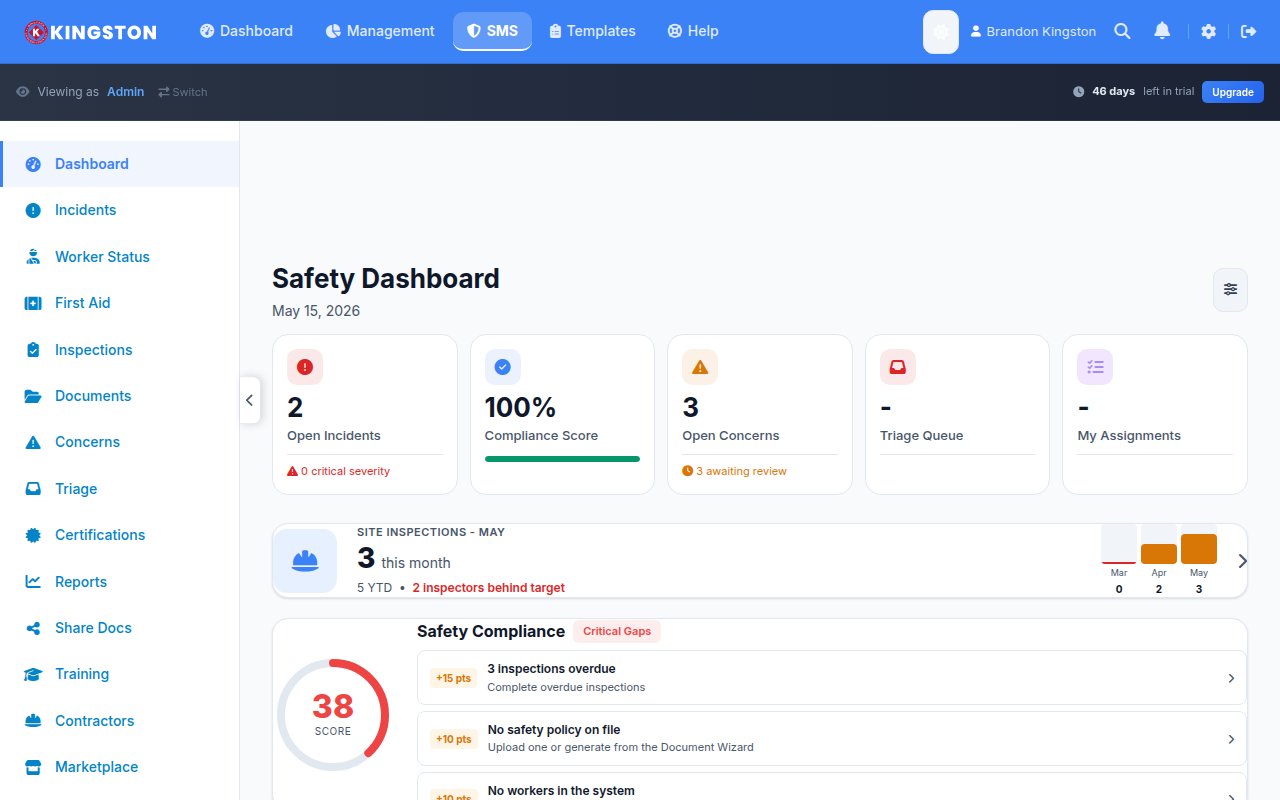
Make Safety Easy helps you track the leading indicators that drive meaningful recognition. From monthly safety performance reviews to training completion tracking, you will have the data you need to identify and celebrate the workers who make your workplace safer every day.
Request a demo to see how Make Safety Easy supports your safety recognition program, or view our pricing to start building a culture worth celebrating.
Ready to simplify your safety program?
Make Safety Easy helps teams run toolbox talks, inspections, incident reports and more - all from one platform.
Start Your Free TrialNo credit card required. 14-day free trial.