WorkSafeBC doesn't just investigate workplace injuries - it actively enforces compliance through inspections, orders and financial penalties. In 2026, penalty amounts have been updated to reflect inflation adjustments and WorkSafeBC's renewed focus on high-hazard industries.
If you're an employer in British Columbia, here's what you need to know to stay on the right side of the regulations.
How WorkSafeBC Penalties Work
WorkSafeBC can impose penalties under the Workers Compensation Act and the Occupational Health and Safety Regulation. Penalties are calculated based on:
Free Download: 5 Safe Work Procedures
Choose from 112 professionally written SWPs. No credit card required.
Get Free SWPs- Severity of the violation: Was there a risk of serious injury or death?
- Employer's compliance history: First offense? Or a repeat pattern?
- Employer's assessable payroll: Larger employers face larger penalties.
- Degree of culpability: Was this negligence, recklessness, or a deliberate violation?
The cheapest way to avoid a WorkSafeBC penalty is good documentation.
Make Safety Easy keeps a timestamped record of every inspection, toolbox talk and corrective action, the proof of due diligence that keeps penalties down.
Start Your Free TrialFree 14-day trial · No credit card required
2026 Penalty Ranges
WorkSafeBC's penalty structure for 2026:
| Violation Type | Penalty Range | Examples |
|---|---|---|
| Minor (low risk) | $1,400 - $7,000 | Incomplete safety records, minor PPE violations |
| Moderate (elevated risk) | $7,000 - $70,000 | Missing fall protection, inadequate lockout/tagout |
| Serious (high risk) | $70,000 - $350,000 | Confined space violations, asbestos exposure |
| Willful/Repeat | $175,000 - $725,000+ | Deliberate non-compliance, ignoring prior orders |
Note: These are per violation. A single inspection that identifies three separate violations can result in three separate penalties.
The Most Common Violations in BC
Based on WorkSafeBC's 2025 enforcement data, the most frequently penalized violations are:
- Fall protection failures (30%): Missing guardrails, workers not tied off, improperly secured scaffolding. This has been the #1 violation category for over a decade.
- Lack of safe work procedures (18%): No written procedures for high-risk tasks, or procedures that exist but aren't followed.
- Inadequate training documentation (15%): Workers operating equipment without documented training. "They knew what they were doing" is not a defense.
- Failure to report incidents (12%): Not reporting serious injuries or near-misses as required. This is one of the easiest violations to avoid.
- WHMIS/chemical safety (10%): Missing Safety Data Sheets, improper chemical storage, unlabeled containers.
- Machine guarding deficiencies (8%): Removed or bypassed guards on industrial equipment.
- Other (7%): Noise exposure, ergonomics, electrical safety, housekeeping.
Beyond Penalties: The Premium Impact
Financial penalties are just one consequence. WorkSafeBC also adjusts your experience rating, which directly affects your annual WCB premiums:
- Experience rating surcharges: Employers with poor safety records can see premiums increase by up to 100% over the base rate.
- COR premium discounts at risk: Companies with a Certificate of Recognition (COR) receive a 10% premium discount. Losing COR due to non-compliance means losing that discount - often tens of thousands of dollars per year.
- Stop-work orders: In severe cases, WorkSafeBC can shut down operations entirely until violations are corrected. The lost revenue from a stop-work order can dwarf any penalty amount.
How to Protect Your Company
1. Document Everything
The most common reason employers get penalized isn't that they're doing unsafe work - it's that they can't prove they're doing safe work. Maintain records of:
- All safety training (who, what, when)
- Toolbox talks and attendance
- Workplace inspections and corrective actions
- Incident reports and investigations
- Equipment maintenance and certifications
2. Conduct Regular Inspections
Don't wait for WorkSafeBC to find hazards. Run your own workplace inspections on a regular schedule and document every finding and corrective action.
3. Keep Training Current
Ensure every worker has documented, up-to-date training for every task they perform. Track certification expiry dates and schedule renewals proactively.
4. Report Incidents Promptly
WorkSafeBC requires employers to report serious injuries (hospitalization, amputation, loss of consciousness) within 24 hours. Near-misses should be documented internally even when not reportable.
5. Digitize Your Safety Program
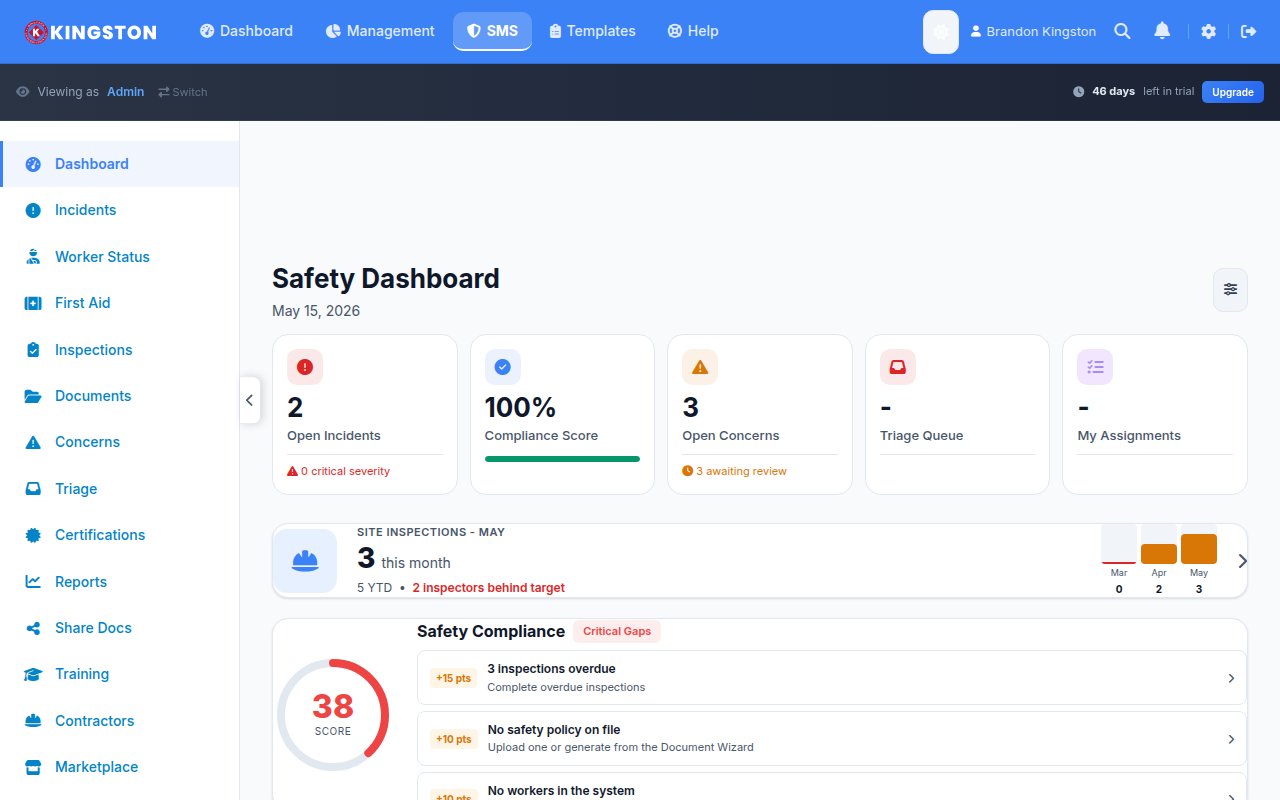
A digital safety management system makes compliance nearly automatic. Incident reports, toolbox talks, and inspection records are timestamped, signed and instantly retrievable for any audit or investigation.
Stay Compliant in 2026
WorkSafeBC's enforcement is getting stricter, not looser. The employers who avoid penalties are the ones who invest in proactive safety management - not the ones who scramble to fix problems after an inspection.
Start your free trial of Make Safety Easy and get your safety documentation audit-ready before the next inspection.