A confined space rescue plan is a documented procedure that describes how rescuers will extract a worker who is injured, unconscious or otherwise unable to self-rescue from a permit-required confined space. OSHA standard 29 CFR 1910.146 requires employers to develop and implement a rescue plan before any worker enters a permit-required confined space. Without a compliant plan in place, you risk citations starting at $16,550 per violation - and far worse, you risk lives.
Every year, confined space incidents claim roughly 100 lives in North American workplaces. Many of those fatalities are would-be rescuers who entered without a plan. A well-written rescue plan eliminates guesswork, assigns clear roles and ensures the right equipment is staged and ready before entry begins.
What OSHA Requires in a Confined Space Rescue Plan
Under 29 CFR 1910.146(d)(9), employers must designate rescue and emergency services. You have three options: an in-house rescue team, an outside rescue service (such as the local fire department) or a combination of both. Regardless of which option you choose, your plan must demonstrate that rescuers can reach the victim within an appropriate timeframe - typically interpreted as a few minutes, not hours.
Free Download: 5 Safe Work Procedures
Choose from 112 professionally written SWPs. No credit card required.
Get Free SWPsOSHA expects the plan to include the following elements at minimum:
- Identification of the confined space and its specific hazards
- Designation of rescue personnel and their qualifications
- Rescue equipment and its location
- Communication procedures between entrants, attendants and rescuers
- A method for summoning rescue services
- Procedures for non-entry rescue when feasible
- Practice rescue exercises at least annually
Confined Space Rescue Plan Template: Section by Section
The following template covers every component you need. Adapt it to your specific site conditions, equipment and workforce. Store the completed plan where it is immediately accessible to all involved personnel - never buried in a filing cabinet across the facility.
Section 1: Space Identification and Hazard Assessment
Start by documenting the exact location of each permit-required confined space. Include a physical description (dimensions, entry points, internal configuration) and every known hazard. Common hazards include oxygen-deficient or oxygen-enriched atmospheres, flammable gases, toxic substances, engulfment risks and mechanical hazards from adjacent equipment.
For each hazard, note the monitoring method (continuous gas detector, for example) and the acceptable entry limits. If atmospheric testing shows oxygen below 19.5% or above 23.5%, or any toxic gas above its permissible exposure limit, entry conditions have not been met.
Section 2: Rescue Team Designation
Name the rescue provider. If using an in-house team, list every team member by name, their training certifications and the date of their last practice drill. If using an outside service, document the service name, response time estimate and confirmation that they are willing and able to respond. OSHA requires employers to evaluate outside rescue services to ensure they can perform the rescue effectively - a signed agreement alone is not enough.
Key questions to answer for outside services:
- Can they arrive on site within the necessary timeframe?
- Are they equipped to handle the specific hazards present?
- Have they visited the site and practiced entry and retrieval?
- Do they have current confined space rescue training?
Section 3: Rescue Equipment Inventory
List every piece of rescue equipment and its storage location. Equipment typically includes:
- Mechanical retrieval system (tripod, davit arm or winch)
- Full-body harness with D-ring attachment for each entrant
- Retrieval line (lifeline)
- Self-contained breathing apparatus (SCBA) or supplied air respirator
- Multi-gas detector with calibration records
- First aid kit and AED
- Communication devices (two-way radios)
- Explosion-proof lighting
- Stokes basket or rescue stretcher
Assign someone to inspect this equipment on a regular schedule. Document each inspection with date, inspector name and condition notes. A digital document management system makes this far easier to maintain and audit.
Section 4: Non-Entry Rescue Procedures
OSHA strongly favors non-entry rescue. This means extracting the worker from outside the space using a retrieval system - the tripod and winch setup with an attached harness. Your plan should specify when non-entry rescue is feasible and when it is not (for example, spaces with internal obstructions or L-shaped configurations that prevent vertical retrieval).
Document the step-by-step procedure: the attendant activates the retrieval system, monitors the entrant during extraction and calls emergency services simultaneously. Non-entry rescue eliminates the risk of a rescuer becoming a second victim.
Section 5: Entry Rescue Procedures
When non-entry rescue is not possible, entry rescue becomes necessary. This section must be detailed and specific. Cover:
- Who authorizes the rescue entry
- How rescuers will be protected from the same hazards that incapacitated the entrant
- The sequence of actions from alarm to extraction
- Patient stabilization procedures
- How the victim will be moved through the space to the exit point
- Handoff procedures to EMS upon arrival
Never allow untrained personnel to attempt an entry rescue. The instinct to rush in after a fallen coworker is powerful but deadly. Your plan must explicitly address this and train all workers on the rule.
Section 6: Communication Protocol
Define how the entrant, attendant and rescue team will communicate before, during and after entry. Include primary and backup communication methods. Hand signals, radio channels and verbal commands should all be documented. Specify the exact alarm signal that triggers the rescue response.
Section 7: Training and Drill Requirements
OSHA requires rescue team members to be trained in CPR, first aid and the use of all rescue equipment. Additionally, they must practice making rescues from actual permit spaces or representative spaces at least once every 12 months. Document each drill with the date, participants, space used, scenario and lessons learned.
For deeper guidance on confined space entry procedures, see our complete guide on confined space entry safety.
Common Mistakes That Get Plans Rejected During Audits
After reviewing hundreds of confined space programs, certain errors appear repeatedly:
Relying on 911 without verification. Listing "call 911" as your rescue plan does not satisfy OSHA. Many local fire departments lack confined space rescue capability. You must verify response capability in writing.
No practice drills. A plan that has never been tested is just paper. Annual drills reveal logistical problems - equipment that does not fit through the entry point, retrieval systems that cannot reach the bottom of the space or communication dead zones.
Outdated personnel lists. When team members transfer or leave the company, update the plan immediately. An auditor will check whether the people named in the plan are still employed and currently trained.
Ignoring atmospheric changes. Conditions inside a confined space can shift rapidly. Your plan should address continuous monitoring during the rescue itself, not just during initial entry.
No backup plan. If your primary rescue service is unavailable (training day, another emergency), what happens? A robust plan includes a secondary rescue option.
Digital vs. Paper: Managing Your Rescue Plan
Paper-based rescue plans get lost, damaged and forgotten in binders. Digital document management allows you to push plan updates to every supervisor instantly, track acknowledgments and set automatic review reminders. When an OSHA inspector asks to see your plan, you can pull it up on a tablet in seconds rather than searching through filing cabinets.
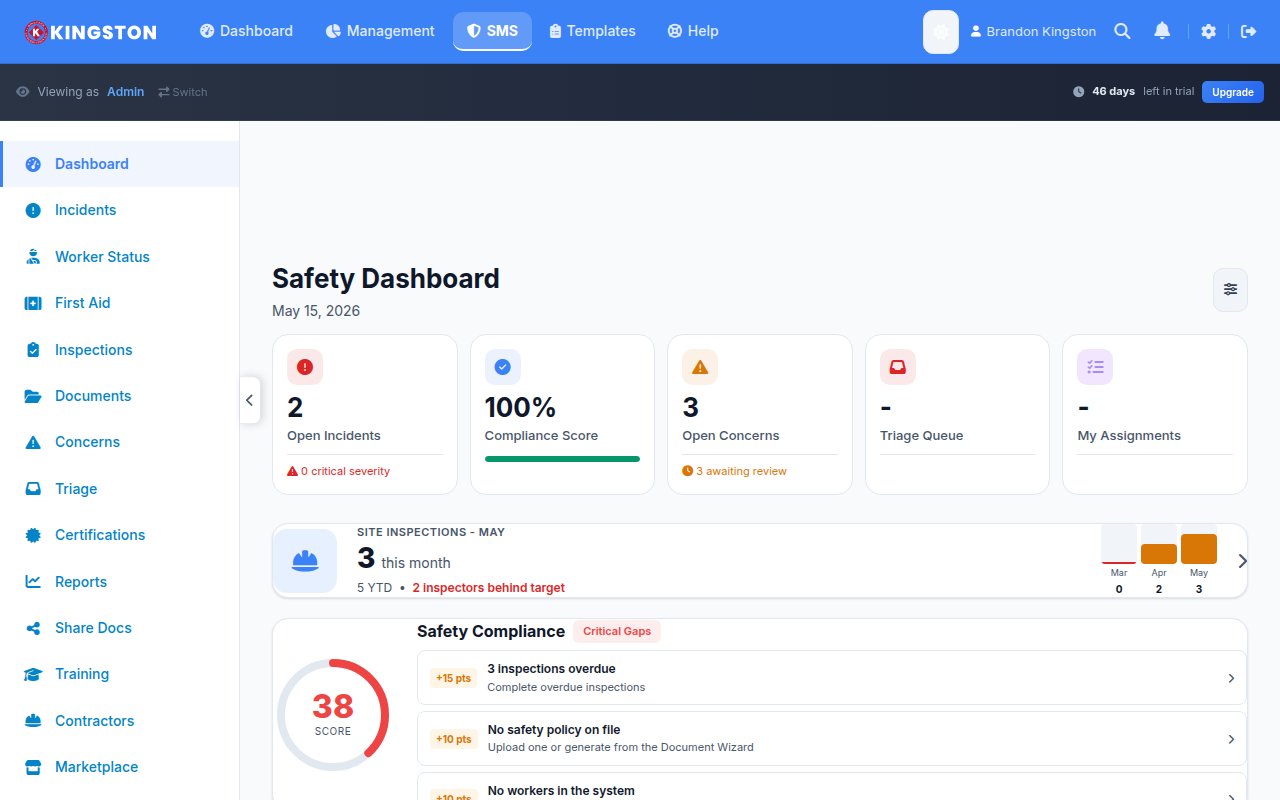
A platform like Make Safety Easy provides centralized document management that keeps your confined space rescue plan current, version-controlled and accessible from any device on the job site.
How Often Should You Review the Plan?
At minimum, review the rescue plan annually. Beyond that, review and update it whenever:
- A new confined space is added to your facility
- The hazards in an existing space change
- Rescue team personnel change
- New equipment is purchased or existing equipment is retired
- A drill or actual rescue reveals a deficiency
- Regulatory requirements are updated
Quick Reference: Rescue Plan Checklist
Use this checklist to verify your plan is complete before the next entry permit is issued:
- All permit-required confined spaces identified and assessed
- Rescue service designated and verified
- Equipment inventoried, inspected and staged
- Non-entry rescue procedures documented
- Entry rescue procedures documented (when non-entry is not feasible)
- Communication plan established with backup methods
- All rescue personnel currently trained and certified
- Annual practice drill completed and documented
- Plan reviewed and signed by the program administrator
Take the Guesswork Out of Confined Space Compliance
Building a confined space rescue plan from scratch takes time. Keeping it updated across multiple job sites takes even more. Make Safety Easy gives you digital templates, automated inspection scheduling and a centralized document hub so your plans are always current and always accessible. Book a free demo to see how it works, or check out our pricing plans to find the right fit for your team.
Ready to simplify your safety program?
Make Safety Easy helps teams run toolbox talks, inspections, incident reports and more - all from one platform.
Start Your Free TrialNo credit card required. 14-day free trial.