A contaminated site assessment is a systematic investigation used to determine whether soil, groundwater or surface water on a property has been impacted by hazardous substances, petroleum products or other pollutants. The process typically follows a phased approach - Phase I Environmental Site Assessment (desktop review and site inspection), Phase II (sampling and laboratory analysis) and Phase III (detailed delineation and risk assessment). Property buyers, developers, lenders and regulatory agencies rely on these assessments to evaluate environmental liability, plan remediation and protect human health.
Whether you are acquiring industrial land, redeveloping a brownfield site or responding to a regulatory order, understanding the contaminated site investigation process is essential. This guide covers every stage of assessment from initial screening through remediation verification, with practical checklists, sampling guidance and documentation requirements that apply across North American jurisdictions.
Why Contaminated Site Assessments Are Necessary
Environmental contamination from historical industrial activities, fuel storage, waste disposal and chemical handling affects millions of properties across North America. The U.S. EPA estimates that there are over 450,000 brownfield sites in the United States alone. In Canada, the Federal Contaminated Sites Inventory tracks thousands of properties requiring assessment or remediation.
Free Download: 5 Safe Work Procedures
Choose from 112 professionally written SWPs. No credit card required.
Get Free SWPsThe consequences of failing to assess contamination before purchasing or developing property can be severe:
- Strict liability for cleanup costs under CERCLA (Superfund) regardless of who caused the contamination
- Remediation costs ranging from tens of thousands to tens of millions of dollars
- Project delays of months or years during unexpected cleanup activities
- Health risks to construction workers, future occupants and neighboring communities
- Loss of property value and difficulty securing financing or insurance
A thorough assessment conducted early in the property transaction or development process protects all stakeholders and creates a clear path forward for managing any contamination that is discovered.
Overview of the Assessment Phases
Contaminated site assessments follow a phased approach that progressively increases in detail and cost. Each phase answers specific questions and informs the decision to proceed to the next level of investigation.
| Phase | Purpose | Key Activities | Typical Duration | Approximate Cost (USD) |
|---|---|---|---|---|
| Phase I ESA | Identify potential contamination through non-intrusive review | Records review, site inspection, interviews, regulatory database search | 2-4 weeks | $2,000 - $6,000 |
| Phase II ESA | Confirm presence and extent of contamination through sampling | Soil boring, groundwater monitoring wells, laboratory analysis | 4-8 weeks | $10,000 - $75,000+ |
| Phase III ESA / Remedial Investigation | Fully delineate contamination and assess risk | Detailed sampling grid, risk assessment, feasibility study | 3-12 months | $50,000 - $500,000+ |
| Remediation / Corrective Action | Remove or manage contamination to meet regulatory standards | Excavation, treatment, monitoring, institutional controls | Months to years | Highly variable |
Phase I Environmental Site Assessment
The Phase I ESA is the starting point for virtually all contaminated site investigations. Conducted in accordance with ASTM E1527-21 in the United States (or CSA Z768-01 in Canada), it is a non-intrusive assessment designed to identify Recognized Environmental Conditions (RECs) that suggest contamination may exist.
Core Components of a Phase I ESA
- Historical records review: Aerial photographs, fire insurance maps, city directories, building permits and land use records going back to the property's first developed use
- Regulatory database search: Federal, state/provincial and local environmental databases including NPL, RCRIS, LUST, ERNS and state equivalent registries
- Site reconnaissance: Physical inspection of the property for evidence of contamination including staining, stressed vegetation, drums, tanks, fill material and unusual odors
- Interviews: Discussions with current and past owners, operators, occupants, neighbors and local government officials
- Adjoining property assessment: Evaluation of neighboring properties that could be sources of contamination migrating onto the subject site
Phase I Outcomes
The Phase I report will classify findings as:
- Recognized Environmental Condition (REC): The presence or likely presence of contamination requiring further investigation
- Controlled REC (CREC): Contamination that has been addressed but remains on site subject to institutional or engineering controls
- Historical REC (HREC): A past release that has been remediated to regulatory standards with no further action required
- De minimis condition: A condition that does not represent a significant environmental concern
If RECs are identified, the assessor will recommend proceeding to a Phase II investigation. Maintaining clear records of all Phase I findings in a centralized document management system ensures critical information remains accessible throughout the project lifecycle.
Phase II Environmental Site Assessment
The Phase II ESA involves intrusive investigation to confirm whether contamination exists, determine the types and concentrations of contaminants present and provide a preliminary understanding of the extent of impact. This phase is governed by ASTM E1903 and state-specific guidance documents.
Sampling Strategies
Effective Phase II investigations require a sampling plan that targets areas of concern identified in the Phase I while also providing adequate coverage to detect unexpected contamination. Common sampling approaches include:
- Targeted sampling: Focused on specific areas of concern such as former tank locations, disposal areas or chemical storage zones
- Grid sampling: Systematic collection at regular intervals across the site to characterize overall conditions
- Biased sampling: Directed toward areas showing visual evidence of contamination during drilling or excavation
- Step-out sampling: Expanding outward from confirmed contamination to delineate the boundaries of the plume
Common Sampling Methods
| Method | Media Sampled | Best For | Limitations |
|---|---|---|---|
| Direct push (Geoprobe) | Soil, groundwater | Rapid screening, cost-effective investigation | Limited depth in hard formations |
| Hollow stem auger | Soil, groundwater | Monitoring well installation, deeper investigations | Slower, more expensive than direct push |
| Test pits / trenches | Soil | Visual assessment of fill and shallow contamination | Limited depth (typically 4-5 meters) |
| Groundwater monitoring wells | Groundwater | Long-term water quality monitoring | Requires development and repeat sampling |
| Soil vapor probes | Soil gas | Volatile organic compound assessment, vapor intrusion | Results vary with weather and soil conditions |
Laboratory Analysis
Samples collected during Phase II are submitted to accredited laboratories for analysis. The analytical program is tailored to the suspected contaminants but commonly includes:
- Petroleum hydrocarbons (TPH, BTEX)
- Volatile organic compounds (VOCs)
- Semi-volatile organic compounds (SVOCs)
- Metals (RCRA 8 metals, full metals scan)
- Polychlorinated biphenyls (PCBs)
- Pesticides and herbicides
- Per- and polyfluoroalkyl substances (PFAS) - an emerging contaminant of increasing regulatory focus
Results are compared against applicable regulatory screening levels such as EPA Regional Screening Levels (RSLs), state-specific cleanup standards or Canadian Council of Ministers of the Environment (CCME) guidelines.
Chain of Custody and Quality Assurance
Maintaining rigorous chain of custody procedures is critical to the legal and scientific defensibility of any contaminated site investigation. Every sample must be tracked from collection through laboratory analysis to ensure results are admissible in regulatory proceedings and court actions.
Key quality assurance / quality control (QA/QC) requirements include:
- Completed chain of custody forms accompanying every sample shipment
- Proper sample preservation (temperature, preservatives) per analytical method requirements
- Field duplicates, trip blanks and equipment blanks at a frequency of at least 1 per 20 samples
- Laboratory accreditation under NELAP or equivalent provincial program
- Data validation by a qualified third party for high-stakes investigations
Digital inspection and data collection tools with built-in chain of custody tracking reduce the risk of documentation errors that can undermine an entire investigation.
Phase III: Detailed Investigation and Risk Assessment
When Phase II results confirm contamination exceeding regulatory standards, a Phase III investigation (also called a Remedial Investigation or Detailed Site Investigation) fully characterizes the nature, extent and behavior of contamination on site.
Phase III Objectives
- Delineate the horizontal and vertical extent of contamination in all affected media
- Characterize hydrogeological conditions including groundwater flow direction and velocity
- Assess contaminant fate and transport mechanisms
- Evaluate exposure pathways and receptors through a human health and ecological risk assessment
- Develop remedial alternatives and conduct a feasibility study
Risk Assessment Framework
Risk assessments follow established frameworks such as the EPA's Risk Assessment Guidance for Superfund (RAGS) or provincial equivalents. The assessment evaluates:
- Contaminant sources and release mechanisms
- Transport pathways (groundwater migration, vapor intrusion, surface runoff, direct contact)
- Receptor populations (site workers, future residents, ecological receptors)
- Exposure frequency, duration and intake rates
- Toxicity values and acceptable risk thresholds (typically 1 x 10^-6 cancer risk for residential exposure)
Remediation Options
When contamination requires active cleanup, the remedial approach depends on the type and concentration of contaminants, site conditions, regulatory requirements, intended land use and budget. Common remediation technologies include:
| Technology | Applicable Contaminants | Relative Cost | Timeline |
|---|---|---|---|
| Excavation and disposal | Most soil contaminants | Moderate to high | Weeks to months |
| Soil vapor extraction (SVE) | VOCs in unsaturated soil | Moderate | Months to years |
| Pump and treat | Dissolved-phase groundwater contamination | Moderate to high | Years to decades |
| In-situ chemical oxidation (ISCO) | Organics in soil and groundwater | Moderate | Months to years |
| Bioremediation | Petroleum hydrocarbons, some chlorinated solvents | Low to moderate | Months to years |
| Monitored natural attenuation | Low-concentration dissolved plumes | Low | Years to decades |
| Capping / containment | Widespread contamination unsuitable for removal | Moderate | Weeks to months (construction); long-term monitoring required |
Contaminated Site Assessment Checklist
Use this checklist to ensure your investigation covers all critical elements.
Pre-Investigation Planning
- Define investigation objectives and regulatory framework
- Review all available Phase I and historical information
- Identify potential contaminants of concern based on site history
- Develop a sampling and analysis plan with appropriate QA/QC measures
- Obtain necessary permits (drilling permits, right-of-entry, utility locates)
- Select an accredited laboratory and confirm analytical methods and turnaround times
- Prepare health and safety plan for field investigators
Field Investigation
- Conduct utility clearance (call 811 / provincial equivalent) before any intrusive work
- Install monitoring points according to the sampling plan
- Log all soil borings with detailed lithological descriptions
- Collect samples using proper techniques and chain of custody procedures
- Screen samples in the field using PID or XRF as applicable
- Document all field observations with photographs and GPS coordinates
- Properly decommission any boreholes or wells not needed for ongoing monitoring
Reporting and Decision-Making
- Compare analytical results against applicable screening criteria
- Prepare scaled figures showing sample locations and analytical results
- Evaluate data gaps and determine if additional investigation is needed
- Conduct risk assessment if contamination exceeds screening levels
- Develop remedial action plan with cost estimates and timeline
- Submit reports to regulatory agency for review and approval
- Archive all data, reports and correspondence in a secure document repository
Regulatory Frameworks for Contaminated Site Assessment
The regulatory framework governing contaminated site assessments varies by jurisdiction, but several common programs apply across North America.
| Program | Jurisdiction | Key Features |
|---|---|---|
| CERCLA / Superfund | U.S. Federal | Strict, joint and several liability for cleanup; National Priorities List for worst sites; innocent landowner defense requires all appropriate inquiries |
| RCRA Corrective Action | U.S. Federal | Required for facilities with RCRA permits; covers solid waste management units and areas of concern |
| State Voluntary Cleanup Programs (VCPs) | Most U.S. states | Voluntary entry, regulatory oversight, liability protection upon completion (No Further Action or Comfort letters) |
| State LUST Programs | All U.S. states | Addresses petroleum releases from underground storage tanks; dedicated cleanup funds in many states |
| Federal Contaminated Sites Action Plan | Canada Federal | Assessment and remediation of contaminated sites on federal land; CSC classification system |
| Provincial Contaminated Sites Programs | Canadian provinces | Risk-based cleanup standards, certificates of compliance, liability management; varies by province |
Innocent Landowner Defense and All Appropriate Inquiries
Under CERCLA, parties who acquire contaminated property can be held liable for cleanup costs even if they did not cause the contamination. The Innocent Landowner Defense and Bona Fide Prospective Purchaser protections require the buyer to conduct "all appropriate inquiries" (AAI) before acquisition. A Phase I ESA conducted in accordance with ASTM E1527-21 satisfies the AAI requirement. Failing to conduct a Phase I before purchasing property effectively waives your defenses under Superfund law - a costly oversight that no due diligence process should allow.
Managing Assessment Data Effectively
Contaminated site investigations generate enormous volumes of data including field logs, laboratory reports, chain of custody records, photographs, correspondence and regulatory submittals. Organizing this information so it remains accessible and audit-ready throughout multi-year projects is a significant challenge.
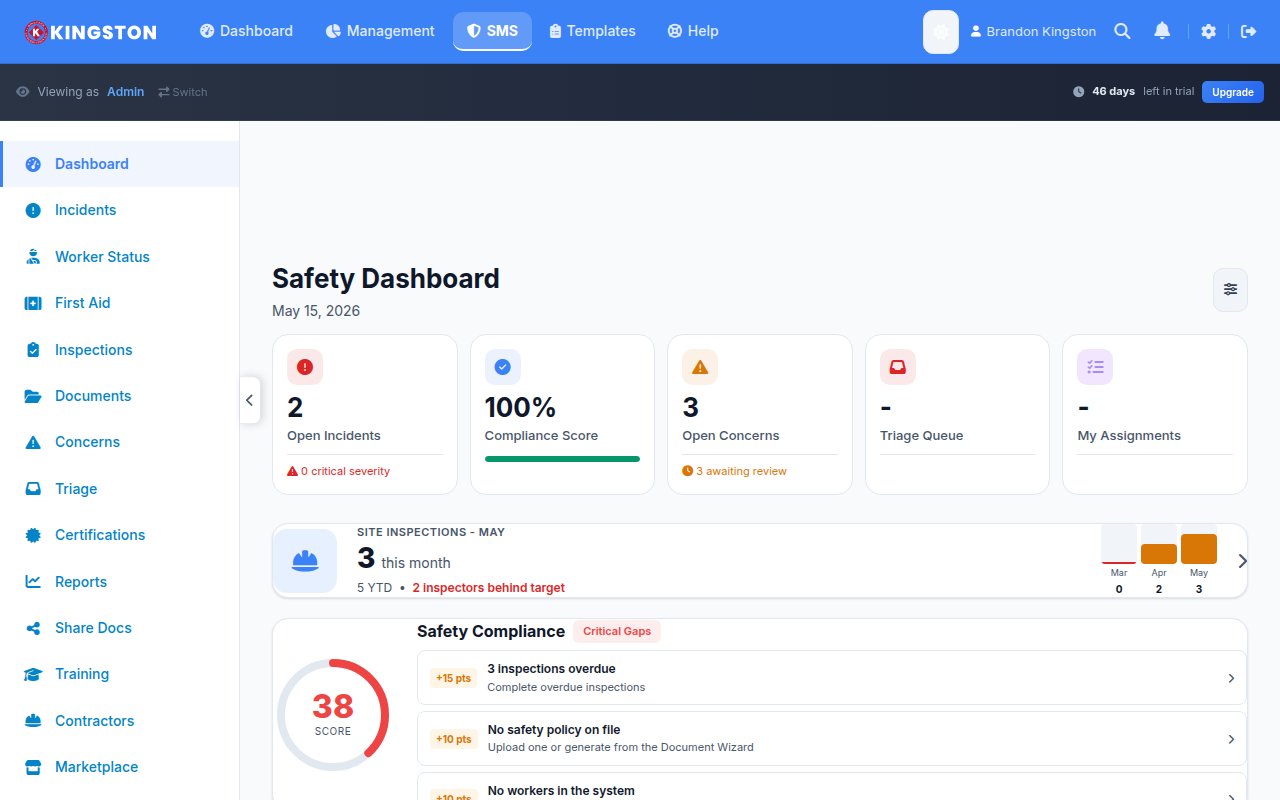
A purpose-built document management platform provides the structure needed to keep investigation records organized, searchable and secure. Combined with digital inspection tools for field data collection, you can maintain complete traceability from sample collection through regulatory closure.
Streamline Your Site Assessments
Contaminated site assessments demand precision in planning, execution and documentation. Whether you are managing a single Phase II investigation or overseeing environmental due diligence across a portfolio of properties, the right digital tools make the difference between a smooth process and a documentation nightmare.
Make Safety Easy helps environmental teams capture field data, manage chain of custody records and maintain audit-ready documentation from initial assessment through remediation closure. Request a demo to see the platform in action, or check our pricing to get started today.
Go Digital with Make Safety Easy
Replace paper checklists with one platform your whole team can use.