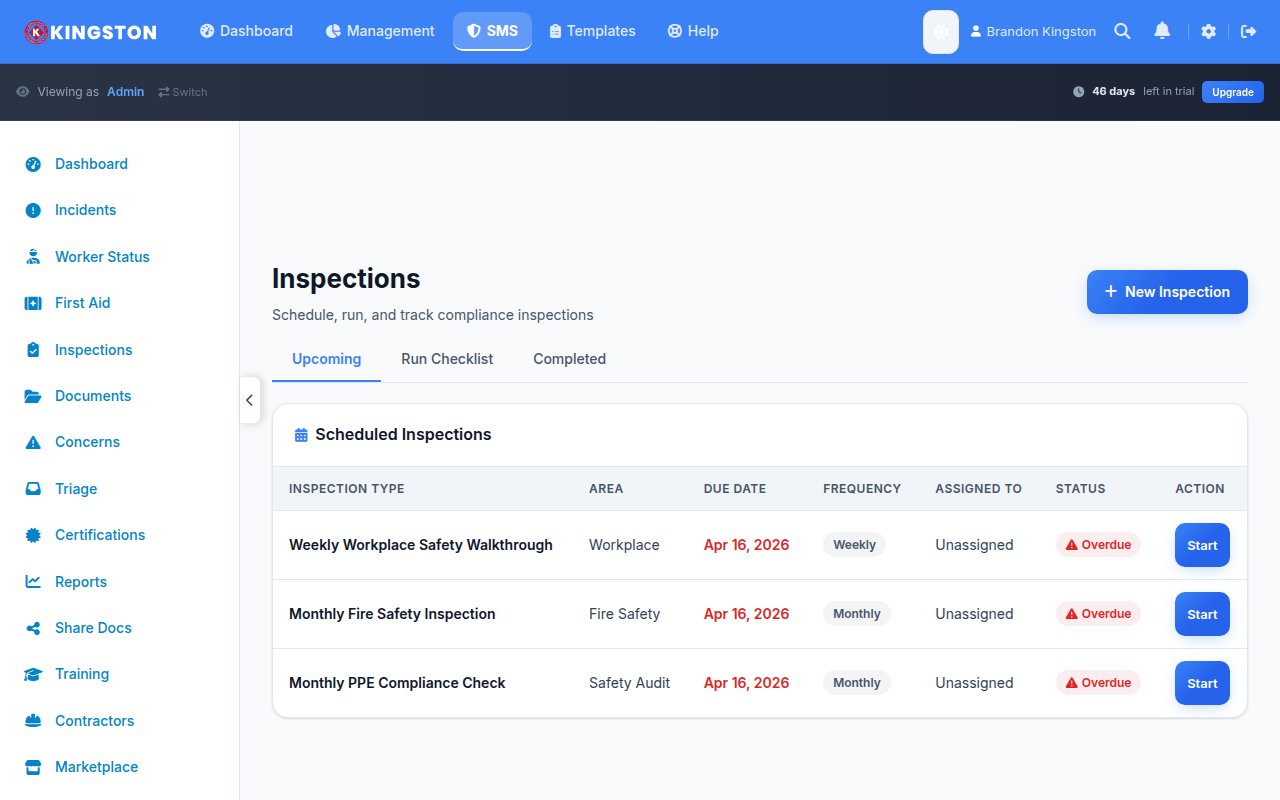
An environmental compliance checklist is a systematic document that itemizes every regulatory requirement an organization must meet to stay in compliance with federal, state/provincial and local environmental laws. A thorough checklist covers permits and authorizations, air emissions, water discharge, stormwater management, waste handling, chemical storage, spill prevention, record-keeping and reporting obligations. Using a well-structured environmental audit checklist prevents violations by ensuring nothing falls through the cracks between inspections, and it dramatically simplifies preparation for regulatory audits, third-party assessments and internal reviews.
This guide provides a comprehensive, multi-industry environmental compliance checklist that you can adapt to your specific operations - whether you manage a construction site, manufacturing facility, oil and gas operation or any other regulated activity. Each section includes the regulatory basis, key action items and documentation requirements that auditors and inspectors expect to see.
How to Use This Checklist
This checklist is organized by compliance area rather than by industry so that it applies to the widest possible range of operations. To adapt it for your organization:
Free Download: 5 Safe Work Procedures
Choose from 112 professionally written SWPs. No credit card required.
Get Free SWPs- Review each section and identify which requirements apply to your operations
- Remove items that do not apply to your industry or jurisdiction
- Add any state, provincial or local requirements specific to your location
- Assign responsibility for each item to a specific person or role
- Set inspection and review frequencies based on permit conditions and regulatory requirements
- Integrate the checklist into your digital inspection platform for consistent execution and documentation
Section 1: Permits and Authorizations
Every environmental compliance program starts with verifying that all required permits are current and that operations are conducted within permit conditions.
| Checklist Item | Regulatory Basis | Frequency | Status |
|---|---|---|---|
| All required environmental permits are obtained and current | Various (CWA, CAA, RCRA, state laws) | Annual review | |
| Permit conditions are documented and communicated to responsible personnel | All permits | Upon permit issuance/renewal | |
| Permit renewal applications submitted before expiration deadlines | Various | Per permit schedule (typically 180 days before expiration) | |
| Operations are within permitted limits (production rates, emission limits, discharge limits) | All permits | Ongoing / per monitoring schedule | |
| Permit modifications filed when operations change | Various | Before operational changes | |
| Copies of all permits accessible on-site | Various | Continuous |
Section 2: Air Emissions
General Air Quality
- Air emission sources inventoried and documented
- Emission calculations current and within permitted limits
- Air pollution control equipment maintained per manufacturer specifications
- Continuous emission monitoring systems (CEMS) calibrated and operating correctly (if applicable)
- Visible emission observations conducted per permit schedule
- Fugitive dust controls implemented and effective
- Equipment and vehicle emissions within applicable standards
Leak Detection and Repair (LDAR)
- Component inventory current and complete
- LDAR surveys conducted per schedule (quarterly, semi-annually or as required)
- All detected leaks documented with component ID, date and measured reading
- Repair attempts initiated within required timeframe
- Repair verification (re-monitoring) completed and documented
- Delay of repair documentation maintained for any components awaiting shutdown
Air Emission Record-Keeping
- Emission inventory reports submitted annually (or per schedule)
- Title V compliance certifications filed on time
- Greenhouse gas reports submitted if above reporting threshold
- All monitoring data retained for minimum required period (typically 5 years)
- Air quality incident reports filed for any exceedances or upsets
Section 3: Water Management
Stormwater
- Stormwater permit obtained (NPDES/SPDES or state equivalent)
- Stormwater Pollution Prevention Plan (SWPPP) developed, current and posted on-site
- Erosion and sediment controls installed and maintained
- Routine stormwater inspections conducted per permit schedule
- Post-storm event inspections completed within required timeframe
- Stormwater sampling conducted if required by permit (benchmark monitoring, effluent limits)
- All inspection and sampling records retained per permit requirements
Wastewater Discharge
- NPDES or pretreatment permit obtained for all point source discharges
- Discharge monitoring conducted per permit schedule
- Effluent limits met for all parameters
- Discharge Monitoring Reports (DMRs) submitted on time
- Process upset or bypass reported to permitting authority within required timeframe
Spill Prevention
- SPCC plan developed and PE-certified (if oil storage exceeds threshold)
- Secondary containment adequate and in good condition for all oil and chemical storage
- Spill kits available at all storage and transfer areas
- SPCC inspections conducted per plan schedule
- Spill response training completed annually for designated personnel
- All spill events documented and reported per applicable thresholds
Section 4: Waste Management
Hazardous Waste
- EPA ID number obtained (or state equivalent)
- Generator status determined (SQG, LQG) and verified annually
- All waste streams characterized with documentation (process knowledge or analytical testing)
- Hazardous waste stored in compatible, labeled, closed containers
- Storage area inspected weekly (LQG) or per permit schedule
- Accumulation time limits not exceeded (90 days LQG, 180/270 days SQG)
- Hazardous waste manifests completed for all off-site shipments
- Manifest exception reports filed for any discrepancies
- Biennial report submitted (LQG) on time
- Training records current for all personnel handling hazardous waste
- Contingency plan developed and maintained (LQG)
Non-Hazardous Solid Waste
- Waste streams identified and disposal methods documented
- Waste disposed at permitted facilities only
- Recycling program implemented where feasible
- Waste minimization efforts documented
- Disposal receipts retained for all shipments
Universal Waste
- Universal wastes (batteries, lamps, electronics, mercury devices) properly labeled and stored
- Accumulation start dates marked on containers
- One-year accumulation limit not exceeded
- Shipped to authorized destination facility with documentation
Section 5: Chemical Management
- Chemical inventory current and reconciled with on-site stocks
- Safety Data Sheets (SDS) available for all chemicals on-site
- Chemicals stored per SDS compatibility requirements
- Secondary containment provided for liquid chemicals
- Tier II reporting submitted annually if chemical quantities exceed thresholds
- Risk Management Plan (RMP) developed if extremely hazardous substances exceed threshold quantities
- TSCA compliance verified for any manufacturing, importing or processing of chemical substances
Section 6: Ecological and Natural Resource Protection
- Threatened and endangered species assessment completed for site activities
- Wetland delineation performed if site includes or abuts wetlands
- CWA Section 404 permit obtained if wetland fill is necessary
- Migratory bird protections implemented during nesting season
- Buffer zones maintained around sensitive habitats
- Tree and vegetation protection measures in place (if required by local ordinance)
- Invasive species management practices implemented
Section 7: Reporting and Record-Keeping
| Report / Record | Typical Frequency | Retention Period |
|---|---|---|
| Air emission inventories / annual reports | Annual | 5 years minimum |
| Discharge Monitoring Reports (DMRs) | Monthly or quarterly | 5 years minimum |
| Hazardous waste biennial report | Every 2 years (LQG) | 3 years minimum |
| SWPPP inspection logs | Weekly / post-storm | 3 years after permit termination |
| SPCC inspections | Per plan schedule | 3 years minimum |
| Tier II chemical inventory reports | Annual (March 1 deadline) | 3 years minimum |
| Training records | Per event | 3 years minimum or duration of employment |
| Waste manifests | Per shipment | 3 years minimum |
| Spill and incident reports | Per incident | 5+ years |
Section 8: Training and Awareness
- Environmental awareness training provided to all employees and contractors
- Hazardous waste management training completed annually for handlers (RCRA requirement)
- Stormwater pollution prevention training conducted for site personnel
- Spill response training completed for designated responders
- Air quality monitoring and LDAR training current for qualified technicians
- Emergency response training conducted per Contingency Plan or HAZWOPER requirements
- All training documented with attendee names, dates, topics and trainer qualifications
Section 9: Internal Audit and Management Review
- Annual internal environmental compliance audit scheduled and conducted
- Audit findings documented with corrective actions, responsible parties and deadlines
- Corrective actions tracked to completion with verification
- Management review of environmental compliance performance conducted at least annually
- Regulatory change monitoring process in place to identify new or amended requirements
- Environmental compliance metrics tracked and reported to leadership
- Continuous improvement opportunities identified and prioritized
Adapting This Checklist by Industry
While the checklist above is comprehensive, different industries will emphasize different sections. Here is a quick guide to the highest-priority areas by industry.
| Industry | Highest Priority Sections | Common Additional Requirements |
|---|---|---|
| Construction | Stormwater, waste management, dust control | SWPPP, erosion control, noise ordinances |
| Manufacturing | Air emissions, wastewater, hazardous waste | Title V permits, pretreatment permits, TRI reporting |
| Oil and gas | Air emissions (LDAR), water management, spill prevention | UIC permits, NSPS OOOOb/c, state commission rules |
| Mining | Water discharge, dust control, reclamation | SMCRA permits, acid mine drainage, bonding requirements |
| Transportation / logistics | Spill prevention, waste management, stormwater | SPCC plans, used oil management, fuel storage compliance |
Preparing for an Environmental Audit
Environmental audits - whether conducted by regulatory agencies, third-party assessors or internal teams - are the ultimate test of your compliance program. A well-maintained checklist is your most valuable preparation tool, but audit readiness requires additional steps.
Pre-Audit Preparation Steps
- Review all permit conditions and verify that operations are within specified limits
- Compile inspection records for the audit period and verify completeness
- Verify that all corrective actions from previous audits and inspections are closed with documentation
- Confirm that all required reports were submitted on time with copies on file
- Review training records and verify that all required training is current
- Walk the facility or site to identify any visible compliance issues before the auditor arrives
- Designate a point person to accompany the auditor and manage document requests
- Brief key personnel on what to expect during the audit and how to respond to questions
During the Audit
- Provide requested documents promptly - delays create a negative impression
- Answer questions honestly and directly without volunteering unrelated information
- Take notes on all observations, questions and preliminary findings
- Photograph any areas the auditor identifies as concerns for your own records
- Request clarification on any finding you do not understand
Post-Audit Actions
- Review the audit report thoroughly and verify factual accuracy
- Develop a corrective action plan with assigned responsibilities and deadlines for each finding
- Track corrective actions to completion with verification evidence
- Update your compliance checklist to address any gaps the audit revealed
- Brief management on audit results and resource needs for corrective actions
Frequency Guide for Environmental Compliance Activities
One of the most common sources of compliance failures is not knowing how often specific activities must be performed. This frequency guide provides general guidance - always defer to your specific permit conditions when they specify different intervals.
| Activity | Minimum Frequency | Best Practice Frequency |
|---|---|---|
| Stormwater BMP inspections | Weekly + post-storm event | Twice weekly during active construction |
| Hazardous waste storage area inspections | Weekly (LQG) or per state requirement | Weekly for all generators |
| SPCC inspections | Monthly or per plan schedule | Monthly with quarterly comprehensive review |
| Air emission control equipment checks | Per permit or NSPS requirement | Daily operational checks, monthly detailed inspection |
| Permit condition review | Annually or upon operational changes | Quarterly review of all active permits |
| Emergency equipment inspection (spill kits, eyewash, fire extinguishers) | Monthly | Monthly with documented checklist |
| Environmental compliance training | Annual refresher | Annual plus topic-specific sessions as needed |
| Internal compliance audit | Annually | Annually with mid-year progress review |
| Regulatory change review | Annually | Quarterly scan of regulatory developments |
Making Your Checklist Work in Practice
A checklist is only effective if it is actually used - consistently, correctly and with proper documentation. The most common reasons environmental checklists fail are:
- They live in a binder on a shelf and are only pulled out before audits
- They are not assigned to specific people with clear accountability
- Completed checklists are not reviewed by management
- Findings are noted but corrective actions are not tracked to completion
- The checklist is not updated when regulations or operations change
Digitizing your environmental compliance checklist through an inspection management platform solves these problems by automating scheduling, enforcing completion, routing findings to responsible parties and tracking corrective actions through to resolution. All records are stored in a centralized document management system that is always audit-ready.
Start Using This Checklist Today
Environmental compliance is not a one-time project - it is an ongoing operational discipline that requires consistent execution and documentation. This checklist gives you the framework. The right digital tools give you the ability to execute it reliably across every site and every team member in your organization.
Make Safety Easy turns static checklists into dynamic, digital workflows with automated scheduling, photo documentation, corrective action tracking and real-time compliance dashboards. Book a demo to see it in action, or explore pricing to find the right plan for your organization.
Go Digital with Make Safety Easy
Replace paper checklists with one platform your whole team can use.
Need Environmental Contamination Thresholds?
NVES provides free contamination threshold lookup tools covering EPA, state and international soil and groundwater standards - instantly check if your site values exceed regulatory limits.
Try the Free Contamination Thresholds Tool