A forklift pre-trip inspection is a systematic check of a powered industrial truck's critical components that operators must perform before the start of each shift. OSHA standard 29 CFR 1910.178(q)(7) requires that industrial trucks be examined before being placed in service. If conditions are found that could affect safe operation, the forklift must be taken out of service until repairs are made. Skipping this step is one of the most cited forklift violations in North America - and one of the easiest to prevent.
Forklift-related incidents cause approximately 85 fatalities and 34,900 serious injuries each year in the United States alone. A thorough daily inspection catches mechanical failures before they cause tip-overs, collisions or load drops. The inspection takes five to ten minutes and could save a life.
What OSHA Requires for Forklift Inspections
OSHA does not prescribe a specific form or format. What it does require is that each forklift is examined at least once per shift and that any defects are reported and corrected. For liquid-propane (LP) and gasoline-powered forklifts, this means a pre-operation inspection. For electric forklifts, OSHA requires an examination after each shift as well as before use.
Free Download: 5 Safe Work Procedures
Choose from 112 professionally written SWPs. No credit card required.
Get Free SWPsThe standard leaves the specific checklist items to the employer, but the expectation is clear: you must check everything that could affect safe operation. A well-designed forklift daily checklist covers both a walk-around visual inspection and an operational test from the operator seat.
Complete Forklift Pre-Trip Inspection Checklist
The following checklist covers internal combustion (IC) and electric forklifts. Adjust for your specific make and model, but use this as your baseline.
Visual Inspection (Engine Off, Key Out)
Walk around the forklift and check the following before starting the engine or connecting power:
- Tires and wheels - Check for excessive wear, cuts, chunking or flat spots. Ensure lug nuts are tight and no wheels are cracked.
- Forks - Look for cracks, bends or uneven wear, especially at the heel. Forks should not be bent more than 93 degrees from the shank.
- Mast and chains - Inspect for visible damage, kinks or excessive slack in the lift chains. Rollers should move freely without binding.
- Hydraulic system - Check underneath and around the mast for fluid leaks, cracked hoses or damaged fittings.
- Fluid levels - Engine oil, coolant, hydraulic fluid and fuel or battery electrolyte level (depending on power source).
- Battery and cables (electric) - Look for corrosion on terminals, cracked cases or loose connections. Verify the battery is fully charged.
- LP tank (propane) - Inspect the tank bracket, hose connections and fittings. Check for gas odor indicating a leak.
- Safety devices - Verify the overhead guard is intact, the load backrest is secure and all decals and capacity plates are readable.
- Operator compartment - Ensure the seat is in good condition, the seatbelt functions and the floor is free of debris or grease.
Operational Inspection (Engine Running, Parking Brake Set)
Start the forklift and test each system while stationary:
- Brakes - Test the service brake (foot brake) and the parking brake independently. The forklift should hold on a slight grade.
- Steering - Turn the wheel through its full range. It should respond smoothly without play or stiffness.
- Lift and tilt controls - Raise the forks to full height and lower them. Tilt the mast forward and back. Movements should be smooth and consistent.
- Horn - The horn must be functional. It is required for blind corners and pedestrian areas.
- Lights - Check headlights, tail lights and any warning strobes or blue spot lights if equipped.
- Backup alarm - Verify it sounds when reverse gear is selected.
- Gauges and indicators - Check the hour meter, fuel gauge, temperature gauge and any warning lights on the dashboard.
- Unusual noises - Listen for grinding, knocking or whining from the engine, transmission or hydraulic pump.
For more on operator training requirements and OSHA compliance, see our detailed guide on forklift safety training.
What Happens When You Find a Defect
If any item on the forklift inspection form fails, the operator must report it immediately to the supervisor. The forklift should be tagged out of service and not operated until the defect is corrected. Common defects that require immediate lockout include:
- Brake failure or significant brake degradation
- Hydraulic leaks that affect lift or steering
- Cracked or bent forks
- Inoperable horn or lights in areas where they are required
- Damaged overhead guard
- Seatbelt that does not latch
Minor cosmetic issues (a scratched decal, for example) may not require immediate lockout but should still be documented and scheduled for repair. The key distinction is whether the defect could affect safe operation.
Paper Forms vs. Digital Inspection Tools
Many operations still use paper forklift inspection forms on clipboards mounted to each truck. The problems with paper are well-documented: forms go missing, handwriting is illegible, completed sheets stack up in a drawer and nobody reviews them. When an OSHA inspector or insurance auditor asks for six months of inspection records, pulling them together becomes a scramble.
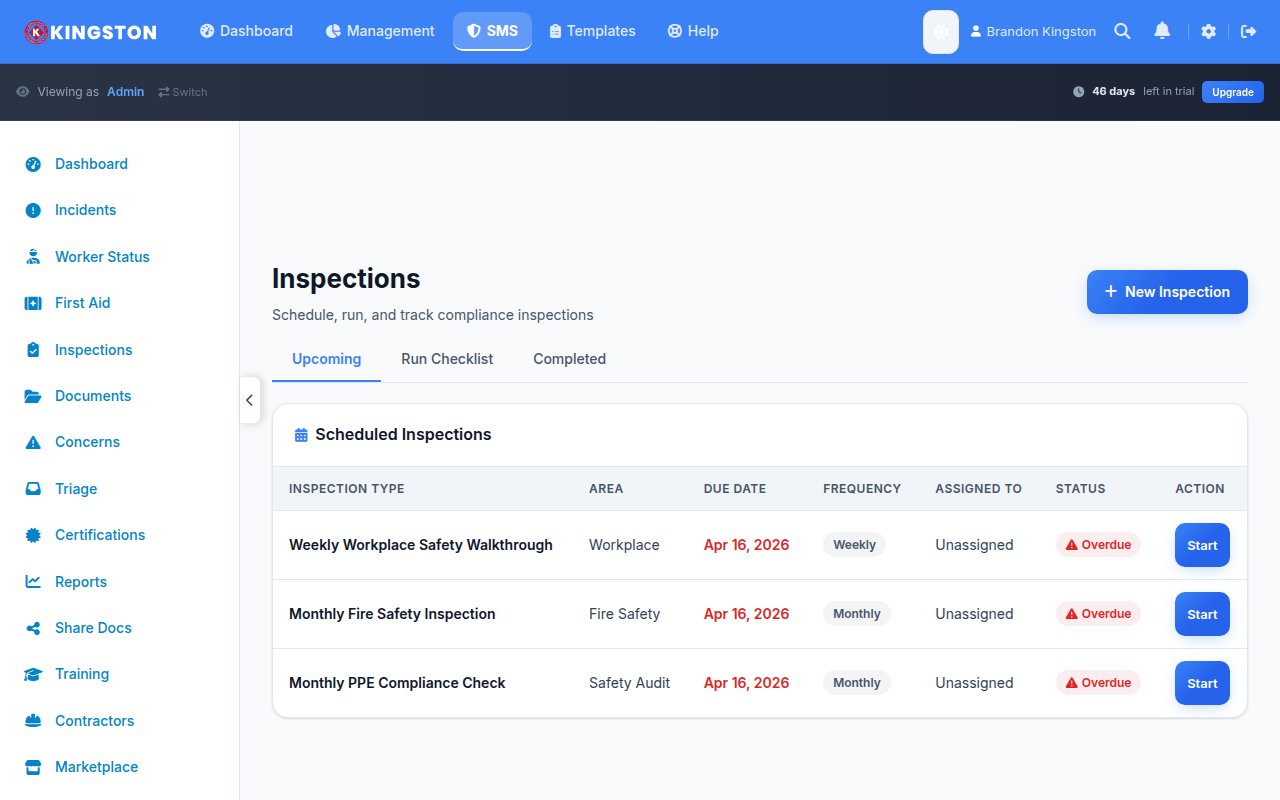
Digital inspection tools solve every one of these problems. Operators complete the checklist on a phone or tablet. The system timestamps each inspection automatically, flags failed items for supervisor review and stores every record in a searchable archive. Photo attachments let operators document exactly what a defect looks like.
Make Safety Easy's inspection module is built for exactly this workflow. You set up the checklist once, assign it to every forklift in your fleet and let the system handle scheduling, notifications and record-keeping.
How to Build a Forklift Inspection Program
A checklist alone is not a program. To meet OSHA expectations and genuinely protect your workers, follow these steps:
Step 1: Identify Every Forklift in Your Fleet
Create a master list with make, model, serial number, power source and assigned location. Each unit needs its own inspection record trail.
Step 2: Customize the Checklist for Each Type
A propane sit-down forklift has different inspection points than an electric reach truck or an order picker. Standardize where you can, but do not force a generic checklist onto specialized equipment.
Step 3: Train Every Operator
Operators need to understand why each item is on the checklist and what a failed condition looks like. Include pre-trip inspection training in your initial forklift certification course and reinforce it during refresher training every three years.
Step 4: Establish a Review Process
Someone - a supervisor, a fleet manager or a safety coordinator - must review completed inspections regularly. Look for patterns: if the same forklift fails the brake check three days in a row, there is a systemic issue that needs a mechanic, not just a checkbox.
Step 5: Retain Records
OSHA does not specify a retention period for daily inspection forms, but best practice is to keep them for at least three years. Many insurance carriers require longer. Digital storage makes retention effortless.
Frequently Asked Questions
How often must a forklift be inspected?
At least once per shift before the forklift is placed in service. If multiple operators use the same forklift across shifts, each operator must perform or verify an inspection at the start of their shift.
Who can perform a forklift inspection?
Any trained and authorized forklift operator. The inspector does not need to be a certified mechanic, but they must know what to look for and how to report defects.
Does OSHA require a specific inspection form?
No. OSHA requires the inspection to happen and defects to be reported and corrected. The form is your documentation tool. Using a standardized form - whether paper or digital - is the most reliable way to prove compliance.
What are the penalties for not inspecting forklifts?
OSHA can issue citations under the General Duty Clause or under 1910.178 specifically. Serious violations carry penalties up to $16,550. Willful or repeat violations can reach $165,514 per instance.
Streamline Every Forklift Inspection Starting Today
Replacing clipboards with a digital system takes less time than you think. Make Safety Easy lets you build custom forklift daily checklists, push them to every operator's device and track completion rates in real time. No more missing forms, no more illegible handwriting and no more last-minute scrambles before an audit. Schedule a demo to see the inspection module in action, or visit our pricing page to get started.
Ready to simplify your safety program?
Make Safety Easy helps teams run toolbox talks, inspections, incident reports and more - all from one platform.
Start Your Free TrialNo credit card required. 14-day free trial.