Starting a safety committee involves selecting representative members from management and the workforce, defining a clear mandate, establishing a regular meeting schedule and documenting the committee's activities. In many jurisdictions across North America, forming a joint health and safety committee is not optional - it is a legal requirement once your workforce reaches a specific threshold. Even where it is voluntary, a well-run safety committee is one of the most effective tools for reducing workplace injuries and building a culture of shared responsibility.
Is a Safety Committee Legally Required?
Requirements vary by jurisdiction. Understanding your obligation is the first step.
United States
Federal OSHA does not mandate safety committees for general industry, but several state plans do. Oregon, Washington, Minnesota, Nevada and others require safety committees for employers above certain size thresholds (often 10 or more employees). Even in states without a mandate, OSHA's Voluntary Protection Programs (VPP) recognize safety committees as a best practice element of an effective safety program.
Free Download: 5 Safe Work Procedures
Choose from 112 professionally written SWPs. No credit card required.
Get Free SWPsCanada
Most Canadian provinces require a Joint Health and Safety Committee (JHSC) for workplaces above a specified size. In Ontario the threshold is 20 or more workers. In British Columbia it is 20 or more workers (with a worker health and safety representative required at 9-19 workers). Alberta, Saskatchewan, Manitoba and other provinces have similar provisions. Federal workplaces under the Canada Labour Code require committees at 20 or more employees.
Step 1: Determine Your Committee Structure
A safety committee must represent both management and frontline workers. This joint structure ensures that decisions reflect operational reality and have organizational support for implementation.
Committee Size
The ideal size depends on your organization but a range of 4 to 12 members works for most workplaces. Smaller committees make decisions faster. Larger committees provide broader representation. For organizations with multiple departments, shifts or locations, aim to have at least one member from each major work group.
Worker Representatives
Worker members should be selected or elected by their peers - not appointed by management. This independence is critical for credibility and is a legal requirement in most Canadian jurisdictions. Worker representatives should reflect the diversity of roles, shifts and departments in your workforce.
Management Representatives
Management members should have the authority to allocate resources and approve corrective actions. Including at least one senior leader demonstrates organizational commitment. However, management members must not outnumber worker members - most regulations require at least 50% worker representation.
Co-Chairs
Many effective committees use a co-chair model with one management co-chair and one worker co-chair. They alternate leading meetings, share responsibility for the agenda and jointly sign off on meeting minutes and recommendations.
Step 2: Define the Committee's Mandate
A safety committee without a clear mandate becomes a complaint forum that produces frustration rather than results. Define the scope of the committee's responsibilities in a written terms of reference document.
Typical committee responsibilities include:
- Reviewing workplace inspection findings and recommending corrective actions
- Investigating incidents, accidents and near misses
- Reviewing and providing input on safety policies, procedures and programs
- Identifying training needs and recommending training programs
- Analyzing injury and illness trends
- Reviewing hazard reports submitted by workers
- Conducting or overseeing regular workplace inspections
- Making recommendations to management on safety improvements
Equally important is defining what the committee is not. The committee makes recommendations - it does not replace management's responsibility for implementing controls. It does not handle individual HR matters, workers' compensation claims or disciplinary issues.
Step 3: Recruit and Train Members
Committee members need specific training to be effective. At minimum, training should cover:
- The committee's legal authority and responsibilities
- Hazard recognition and risk assessment
- Incident investigation methodology
- Workplace inspection techniques
- Meeting facilitation and consensus-building
- Relevant occupational health and safety legislation
In Canadian jurisdictions, committee members often must complete certified training programs. Ontario requires that at least one worker and one management member be "certified members" who have completed a multi-day training program approved by the Chief Prevention Officer. British Columbia requires similar committee member training under WorkSafeBC guidelines.
Stagger member terms (typically two years) so the entire committee does not turn over at once. This preserves institutional knowledge and ensures continuity.
Step 4: Establish a Meeting Schedule
Consistency is more important than frequency. Most regulations require committees to meet at least quarterly but monthly meetings produce better results. Set the schedule for the full year at the start of each calendar year so members can plan around it.
Effective safety committee meetings follow a structured agenda:
Sample Meeting Agenda
- Call to order and attendance
- Review and approval of previous meeting minutes
- Status update on open action items
- Review of incidents, near misses and hazard reports since the last meeting
- Workplace inspection findings and recommendations
- Review of injury/illness statistics and trends
- Old business
- New business (policy reviews, training needs, upcoming changes)
- Action item assignment with owners and deadlines
- Next meeting date confirmation
Keep meetings to 60 minutes. Longer meetings lose focus and reduce attendance over time. If a topic requires extended discussion, assign it to a subcommittee that reports back at the next meeting.
Step 5: Implement a Tracking System
The committee's credibility depends on closing the loop on recommendations. Every recommendation should be logged with an assigned owner, a deadline and a status. Review this log at every meeting. A recommendation that sits unaddressed for months signals to workers that the committee is ineffective.
Use a document management system to store meeting minutes, inspection reports, recommendation logs and training records. Digital systems make it easy to track trends over time and produce reports for regulatory audits.
Step 6: Conduct Workplace Inspections
Many safety committees are responsible for conducting or coordinating regular workplace inspections. These inspections give committee members firsthand exposure to conditions on the floor, build credibility with the workforce and generate a pipeline of actionable findings.
Inspection best practices for committee members:
- Use a standardized checklist tailored to each work area
- Inspect during active operations, not during shutdowns when hazards may not be visible
- Document findings with photos and specific location details
- Prioritize findings by risk level (likelihood and severity)
- Report findings at the next committee meeting with recommended corrective actions
Step 7: Communicate Results to the Workforce
A safety committee that operates in a vacuum will lose worker trust and participation. Communicate meeting outcomes, inspection findings and completed corrective actions to the broader workforce through:
- Posted meeting minutes in common areas
- Safety bulletin boards (physical or digital)
- Toolbox talks led by committee members
- Monthly safety newsletters or email updates
- Direct feedback to workers who submitted hazard reports
Transparency builds trust. When workers see that their hazard reports lead to committee discussions that lead to real corrective actions, reporting rates increase and the safety culture strengthens.
Common Mistakes When Forming a Safety Committee
Avoid these pitfalls that cause newly formed committees to lose momentum:
Management Domination
If management members outnumber or overpower worker representatives the committee becomes a rubber stamp. Workers disengage and stop bringing forward concerns. Enforce balanced representation and encourage worker members to speak freely.
No Authority to Act
A committee that makes recommendations but never sees them implemented becomes demoralized. Ensure at least one management member has budget authority and decision-making power. Track implementation rates and escalate stalled recommendations to senior leadership.
Irregular Meetings
Canceling or postponing meetings erodes the committee's credibility and signals that safety is not a priority. Protect the meeting schedule the same way you would protect a production schedule.
Poor Record-Keeping
Incomplete minutes, missing attendance records and undocumented recommendations create regulatory risk and make it impossible to track progress. Assign a dedicated secretary (or rotate the role) and use a template to ensure consistency.
Measuring Committee Effectiveness
Track these metrics to evaluate whether your committee is delivering value:
- Recommendation close-out rate: Percentage of committee recommendations completed within the assigned deadline
- Meeting attendance rate: Consistent attendance above 80% indicates engagement
- Inspection completion rate: Are scheduled inspections being conducted on time?
- Hazard report volume: An increasing number of hazard reports submitted by workers suggests growing trust in the system
- Incident trends: While the committee alone does not determine incident rates, a sustained downward trend in injuries correlates with active committee engagement
Launch Your Safety Committee the Right Way
A safety committee is not a bureaucratic checkbox. When properly formed and supported it becomes the engine that drives continuous improvement in your safety program. Start with the right structure, give members real authority and maintain discipline around meetings, inspections and follow-through.
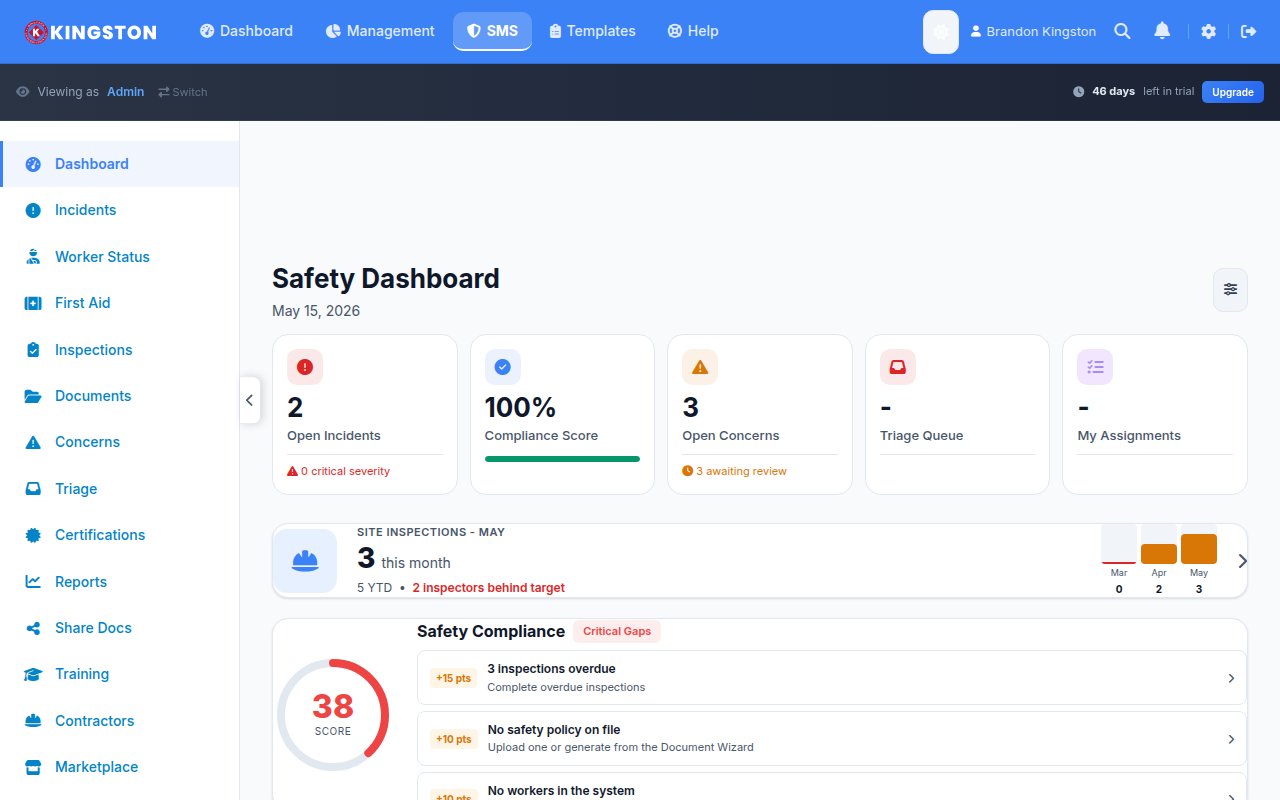
Need a platform to manage your committee's inspections, documents and action tracking? Book a free demo of Make Safety Easy and see how our tools support committee operations from meeting minutes to corrective actions. Explore pricing to find the right plan for your organization.
Ready to simplify your safety program?
Make Safety Easy helps teams run toolbox talks, inspections, incident reports and more - all from one platform.
Start Your Free TrialNo credit card required. 14-day free trial.