Lockout/tagout (LOTO) is the process of isolating machines and equipment from all energy sources and applying locks and tags to prevent unexpected startup or energy release during servicing and maintenance. OSHA's Control of Hazardous Energy standard (29 CFR 1910.147) requires written LOTO procedures for virtually every workplace with powered equipment. Canadian jurisdictions enforce equivalent requirements through provincial OHS regulations and CSA Z460 (Control of Hazardous Energy). The consequences of failing to lock out are catastrophic - crushing injuries, amputations, electrocution, burns and death. This guide covers everything employers need to build, implement and maintain a compliant LOTO program.
Here is a number that should keep every maintenance manager up at night: OSHA estimates that lockout/tagout violations contribute to approximately 10% of all serious workplace injuries in general industry. Workers performing maintenance and servicing tasks on machines that unexpectedly start, release stored energy, or re-energize face some of the most gruesome hazards in any workplace. A conveyor that starts while someone is clearing a jam. A hydraulic press that cycles while a technician is adjusting the die. A capacitor bank that discharges while an electrician is working on the panel.
Every one of those scenarios is preventable with proper lockout/tagout. Every single one.
Free Download: 5 Safe Work Procedures
Choose from 112 professionally written SWPs. No credit card required.
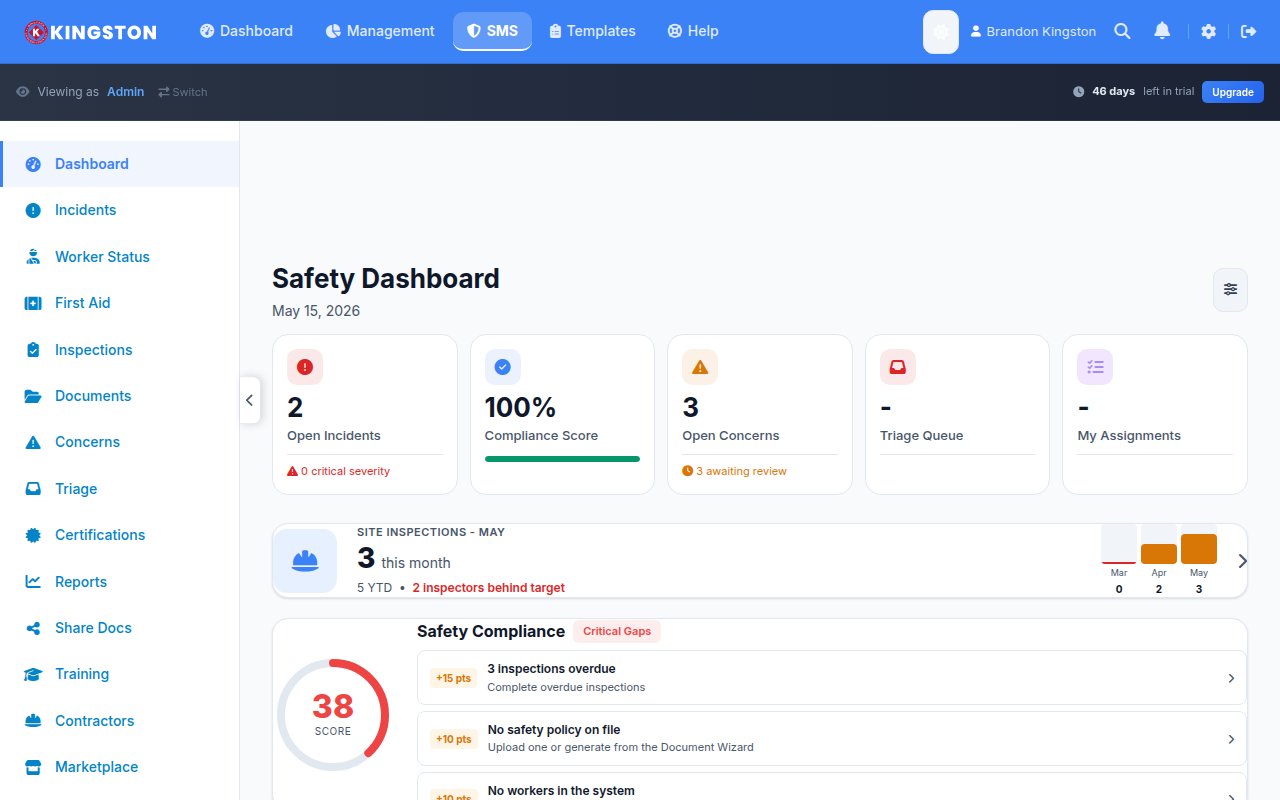
Get Free SWPsManaging LOTO procedures across multiple machines and facilities requires rigorous documentation. Make Safety Easy's document management system keeps your machine-specific energy control procedures organized, version-controlled and accessible to every authorized worker.
What OSHA's LOTO Standard Requires
OSHA 29 CFR 1910.147 - The Control of Hazardous Energy - applies to general industry. Construction has additional lockout requirements under 29 CFR 1926 and specific standards cover electrical lockout (NFPA 70E and 29 CFR 1910.333). Here are the core employer obligations:
- Develop a written energy control program that includes machine-specific lockout/tagout procedures
- Provide lockout/tagout devices (locks, tags, hasps, lockout devices) for all authorized employees
- Train all affected employees in three categories: authorized, affected and other employees
- Conduct periodic inspections of energy control procedures at least annually
- Follow specific procedural steps for applying and removing lockout/tagout devices
Canadian Requirements
Canadian provinces mirror OSHA's requirements through their OHS regulations:
- CSA Z460 - Control of Hazardous Energy: The national standard that provides a framework for hazardous energy control programs
- Ontario (O. Reg. 851, Industrial Establishments): Section 75 requires lockout before work on machines with exposed moving parts
- Alberta (OHS Code Part 15): Requires isolation and lockout of energy sources before servicing
- British Columbia (WorkSafeBC Part 10): Requires written lockout procedures and individual locks for each worker
- Federal (Canada Labour Code, COHSR Part 13): Requires lockout for federally regulated workplaces
Types of Hazardous Energy
Lockout/tagout isn't just about electrical energy. Workers must be protected from every energy source that could cause harm. A thorough energy control procedure identifies and addresses all of these:
| Energy Type | Sources | Isolation Methods |
|---|---|---|
| Electrical | Motors, circuits, transformers, capacitors, batteries | Disconnect switches, circuit breakers, removal of fuses. Verify zero energy with a voltmeter. |
| Mechanical | Flywheels, springs, gears, pulleys, gravity-fed components | Blocking, bracing, pinning, releasing stored energy (springs, elevated loads) |
| Hydraulic | Hydraulic cylinders, accumulators, pumps, lines | Bleed pressure, block cylinders in position, close and lock valves |
| Pneumatic | Air compressors, air cylinders, pressurized systems | Bleed pressure, close and lock valves, disconnect air supply |
| Thermal | Steam systems, furnaces, heated vessels, cryogenic systems | Allow cooling/warming to safe temperatures, close and lock steam valves, drain lines |
| Chemical | Process piping, reaction vessels, storage tanks | Close and lock valves, blank or blind flanges, double-block-and-bleed |
| Gravitational | Elevated components, counterweights, suspended loads | Lower to stable position, block or brace, use safety pins |
The most dangerous energy source is the one you don't identify. That's why machine-specific procedures are essential - generic lockout procedures miss the unique energy sources present in each piece of equipment.
The 8 Steps of Lockout/Tagout
These steps follow OSHA's recommended sequence and align with CSA Z460. Every authorized employee must know them cold.
Step 1: Preparation
Before beginning, the authorized employee must identify all energy sources associated with the machine or equipment. Review the machine-specific energy control procedure. Identify the type and magnitude of each energy source, the location of all isolation points and the method for verifying zero energy.
Step 2: Notification
Notify all affected employees - operators, other maintenance workers, supervisors - that the machine will be locked out. Tell them why, for how long (estimated), and who is performing the work. Communication prevents someone from unknowingly attempting to restart equipment.
Step 3: Normal Shutdown
Shut down the machine using its normal operating controls. Push the stop button. Turn off the switch. Follow the manufacturer's recommended shutdown sequence. Never pull a disconnect or breaker while a machine is running unless it's an emergency.
Step 4: Isolation
Isolate the machine from every energy source identified in Step 1. This means operating disconnects, closing valves, blocking mechanical motion and disconnecting any other energy feeds. The goal is complete isolation - no energy can reach the machine from any source.
Step 5: Apply Lockout/Tagout Devices
Each authorized employee working on the machine applies their own personal lock to each energy isolation device. The lock must be individually keyed - no master keys in routine use. If locks cannot physically be applied, tags are used, but OSHA requires that tags be supplemented with additional measures (such as removing a fuse or blocking a valve) because tags alone cannot prevent re-energization.
Every lock must be accompanied by a tag identifying the authorized employee, the date and the reason for lockout.
Step 6: Release Stored Energy
After isolation, stored or residual energy must be dissipated or restrained. This is the step most often missed - and it's the one that kills. Examples:
- Bleed hydraulic and pneumatic lines to zero pressure
- Discharge capacitors
- Release tension on springs
- Block elevated machine parts against falling
- Allow heated components to cool
- Drain piping that may contain pressurized or hazardous fluids
Step 7: Verification
Before beginning any servicing work, the authorized employee must verify that the machine is truly at zero energy. This is the most critical safety step in the entire process.
- Attempt to start the machine using normal operating controls - it must not respond
- Use a voltmeter or other testing instrument to verify zero electrical energy
- Check pressure gauges for hydraulic and pneumatic systems
- Visually confirm that mechanical components are secured
After verification, return all operating controls to the "off" position so the machine doesn't start when locks are removed.
Step 8: Perform the Work
Only after all previous steps are complete may the authorized employee begin servicing or maintenance work. If conditions change during the work - a new energy source is discovered, or additional workers need to be protected - stop work and repeat the procedure as needed.
Removing Lockout/Tagout Devices
Removal follows a specific sequence:
- Inspect the work area to ensure all tools, parts and materials are cleared and guards are reinstalled
- Verify that all workers are clear of the machine
- Notify affected employees that the lockout is being removed and the machine is about to be re-energized
- Each authorized employee removes only their own lock - no one else removes another person's lock
- Re-energize the machine following the manufacturer's startup sequence
OSHA permits removal of another employee's lock only under specific, documented circumstances - when the employee is not available (e.g., they left the facility) and only after the employer has made reasonable efforts to contact them and followed a verified procedure that ensures the employee's safety before the lock is removed.
Group Lockout/Tagout
When multiple workers service the same machine, group lockout procedures apply. The typical approach uses a lockout box or hasp system:
- A primary authorized employee performs the lockout procedure and places the keys to the energy isolation locks in a lockout box
- Each worker applies their personal lock to the lockout box
- No one can access the energy isolation keys until every personal lock has been removed
- The last lock removed is the primary authorized employee's, who then removes the isolation locks and follows re-energization procedures
This ensures that every worker is individually protected and that the machine cannot be re-energized until everyone has confirmed they are clear.
Periodic Inspections
OSHA requires that employers inspect each energy control procedure at least annually. The inspection must:
- Be performed by an authorized employee who is not using the procedure being inspected
- Include a review between the inspector and each authorized employee of their responsibilities under the procedure
- Correct any deviations or inadequacies identified
- Be documented, including the date, the machine or equipment inspected, the employees included and the person performing the inspection
Make Safety Easy's inspection tools let you schedule annual LOTO audits, assign inspectors, document findings and track corrective actions - all digitally, with automatic reminders so inspections never slip through the cracks.
Training Requirements
OSHA defines three categories of employees who require LOTO training, each with different content requirements:
| Employee Category | Who | Training Content |
|---|---|---|
| Authorized | Employees who perform lockout/tagout (maintenance, servicing) | Recognition of hazardous energy sources, type and magnitude of energy, methods and means for energy isolation and control, the full LOTO procedure |
| Affected | Employees who operate machines being locked out (operators, production workers) | The purpose and use of energy control procedures, the prohibition against restarting or re-energizing locked-out equipment |
| Other | Employees who work near locked-out machines but don't operate or service them | The prohibition against attempting to restart machines that are locked out or tagged out |
Retraining is required when job assignments change, when the energy control procedure changes, when a new hazard is introduced, or when a periodic inspection reveals that workers are not following procedures.
Common LOTO Violations and Penalties
Lockout/tagout consistently ranks among OSHA's top 10 most-cited standards. The most frequent violations:
- No written energy control procedures for specific machines
- Failure to train authorized, affected and other employees
- No periodic inspections conducted or documented
- Using tagout alone when lockout is feasible
- Locks not individually keyed or master keys used routinely
- Failure to verify zero energy before beginning work
- Not addressing all energy sources - stored energy left in hydraulic, pneumatic, or mechanical systems
OSHA penalties for LOTO violations can exceed $16,000 per serious violation and $160,000 per willful or repeat violation. In Canadian jurisdictions, penalties vary but can reach into the hundreds of thousands, with the possibility of imprisonment for officers and directors under C-45 (Westray Law) where negligence contributes to a fatality.
LOTO for Specific Industries
While the core principles are universal, certain industries face unique LOTO challenges:
- Manufacturing: High machine density, complex energy systems, frequent changeovers. Make Safety Easy's manufacturing safety tools are designed for this environment.
- Food processing: Washdown environments, sanitation procedures that require machine access, biological hazards in addition to energy hazards.
- Oil and gas: Process piping with high-pressure hydrocarbons, multiple energy sources in series, remote locations.
- Utilities: High-voltage electrical systems, live-line work exceptions, complex switching procedures.
- Construction: Temporary power, multiple trades working simultaneously, equipment brought on and off site frequently.
Building Your LOTO Program: A Checklist
- ☐ Written energy control program exists and is maintained
- ☐ Machine-specific energy control procedures developed for every piece of equipment requiring servicing
- ☐ Lockout devices (locks, hasps, valve lockouts, circuit breaker lockouts) are available for all energy isolation points
- ☐ Every authorized employee has their own individually keyed lock
- ☐ All three categories of employees are trained and training is documented
- ☐ Periodic inspections are scheduled and conducted at least annually
- ☐ Group lockout procedures exist for multi-worker servicing
- ☐ Shift change and personnel change procedures are defined
- ☐ Emergency lock removal procedures are documented
- ☐ All procedures are accessible to authorized employees at the point of use
Lockout/tagout is one of the most critical safety programs in any workplace. Make Safety Easy helps you manage machine-specific LOTO procedures, schedule and document annual inspections and keep training records organized and audit-ready. Book a demo to see the platform in action, or view our pricing to find the plan that fits your operation.
Learn more about how Make Safety Easy serves the LOTO in utilities industry with purpose-built safety tools.
Ready to simplify your safety program?
Make Safety Easy helps teams run toolbox talks, inspections, incident reports and more - all from one platform.
Start Your Free TrialNo credit card required. 14-day free trial.