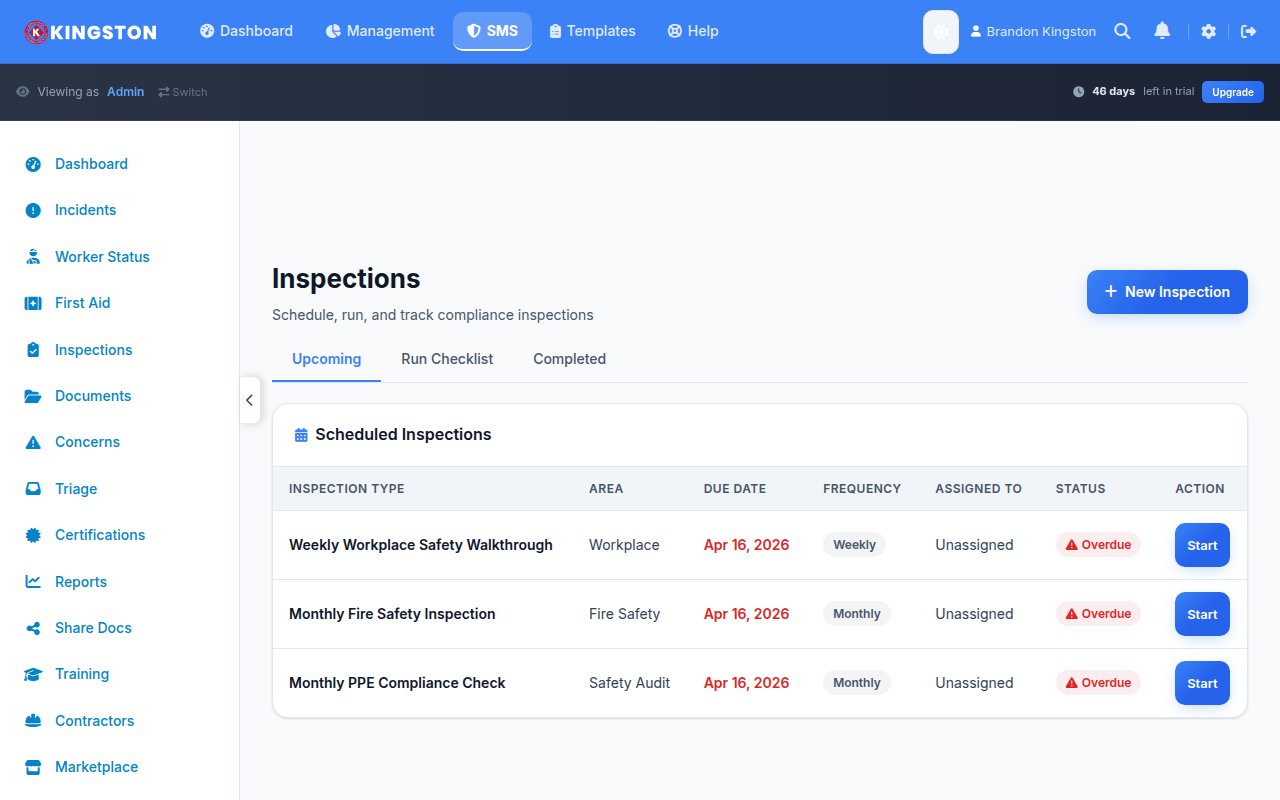
An OSHA compliance checklist is a structured tool that helps employers verify they meet the safety and health requirements set by the Occupational Safety and Health Administration. In 2026, OSHA continues to focus enforcement on fall protection, hazard communication, respiratory protection, lockout/tagout and scaffolding - the same categories that dominate its "Top 10 Most Cited Violations" list year after year. Using a checklist ensures nothing slips through the cracks between inspections.
Why OSHA Compliance Matters in 2026
OSHA penalties have continued to climb. As of 2026, willful or repeat violations can exceed $160,000 per instance, while serious violations carry penalties above $16,000 each. Beyond fines, non-compliance leads to work stoppages, increased insurance premiums, employee distrust and reputational damage that can take years to recover from.
Proactive compliance is always cheaper than reactive enforcement. Organizations that invest in systematic inspections, proper documentation and consistent training spend far less in the long run than those that scramble to fix problems after a citation.
Free Download: 5 Safe Work Procedures
Choose from 112 professionally written SWPs. No credit card required.
Get Free SWPsThe 2026 OSHA Compliance Checklist
General Duty Clause (Section 5(a)(1))
- Workplace is free from recognized hazards likely to cause death or serious harm
- Employees comply with OSHA standards and rules applicable to their roles
- Hazard assessments are documented and updated when conditions change
Hazard Communication (29 CFR 1910.1200)
- Written Hazard Communication Program is current and accessible
- Safety Data Sheets (SDS) are available for every hazardous chemical on site
- All containers are properly labeled with GHS-compliant labels
- Employees have received HazCom training and refresher sessions are documented
- Chemical inventory list is up to date
Walking-Working Surfaces and Fall Protection (29 CFR 1910.22-30, 1926.501)
- All walking surfaces are kept clean, dry and free of obstructions
- Fall protection is provided at heights of 4 feet (general industry) or 6 feet (construction)
- Guardrails, safety nets or personal fall arrest systems are in good condition
- Ladders are inspected before use and defective ladders are removed from service
- Floor openings are covered or guarded
Respiratory Protection (29 CFR 1910.134)
- Written Respiratory Protection Program is in place
- Employees requiring respirators have completed medical evaluations
- Fit testing is conducted annually for tight-fitting respirators
- Respirators are inspected, cleaned and stored properly
- Training on respirator use, limitations and maintenance is documented
Lockout/Tagout (29 CFR 1910.147)
- Energy control procedures are written for each piece of applicable equipment
- Authorized and affected employees have been trained on LOTO procedures
- Annual periodic inspections of LOTO procedures are completed and documented
- Locks, tags and other energy-isolating devices are available and in working order
Personal Protective Equipment (29 CFR 1910.132-138)
- PPE hazard assessment has been performed and certified in writing
- Appropriate PPE is provided at no cost to employees
- Workers are trained on when, how and what PPE to use
- PPE is inspected regularly and replaced when damaged or worn
Electrical Safety (29 CFR 1910.301-399)
- Electrical panels have 36 inches of clearance and are properly labeled
- Ground-fault circuit interrupters (GFCIs) are used in wet or damp locations
- Flexible cords are not used as permanent wiring
- Qualified personnel perform electrical work following safe practices
Fire Safety and Emergency Action Plans (29 CFR 1910.38-39)
- Written Emergency Action Plan is posted and communicated to all employees
- Fire extinguishers are mounted, accessible and inspected monthly
- Annual fire extinguisher maintenance is documented
- Evacuation routes are clearly marked and unobstructed
- Emergency drills are conducted at least annually
Recordkeeping (29 CFR 1904)
- OSHA 300 Log is maintained and current
- OSHA 300A Summary is posted from February 1 through April 30
- OSHA 301 Incident Report forms are completed within 7 days of each recordable event
- Electronic submission of injury and illness data is completed by the annual deadline
- Records are retained for a minimum of 5 years
Machine Guarding (29 CFR 1910.211-219)
- Point-of-operation guards are in place on machines that expose workers to injury
- Guards are secure and cannot be easily removed or bypassed
- Abrasive wheel machinery has proper tongue guards and tool rests
- Power transmission apparatus (belts, pulleys, chains) is guarded
Powered Industrial Trucks (29 CFR 1910.178)
- All forklift operators are certified and have completed hands-on evaluation
- Operator refresher training is conducted every 3 years or after an incident
- Pre-shift vehicle inspections are documented daily
- Pedestrian traffic routes are clearly marked and separated from forklift paths
- Load capacity ratings are posted on each vehicle and never exceeded
Scaffolding (29 CFR 1926.451-454)
- Scaffolds are erected by competent persons following manufacturer specifications
- Guardrails, midrails and toeboards are installed on all open sides above 10 feet
- Scaffold platforms are fully planked with no gaps greater than 1 inch
- Daily inspections are conducted before each shift by a competent person
- Workers are trained on scaffold hazards before use
How to Use This Checklist Effectively
Printing a checklist once a year is not compliance. The most effective organizations build these items into recurring digital inspections that assign responsibility, set deadlines and track completion automatically. When a deficiency is found, the system creates a corrective action with a clear owner and due date - no email chains or lost sticky notes.
Pair your inspections with proper document management. OSHA auditors do not just look at conditions on the day of the visit. They review your documentation trail: training records, inspection logs, maintenance histories and written programs. If you cannot produce them quickly, the citation risk goes up regardless of actual workplace conditions.
Top OSHA Violations to Watch in 2026
Based on recent enforcement trends, the following standards are most likely to result in citations this year:
| Rank | Standard | Common Issue |
|---|---|---|
| 1 | Fall Protection (1926.501) | Missing or inadequate fall protection at elevation |
| 2 | Hazard Communication (1910.1200) | Incomplete SDS libraries or missing training records |
| 3 | Respiratory Protection (1910.134) | Lack of fit testing or medical evaluations |
| 4 | Ladders (1926.1053) | Improper use or defective equipment |
| 5 | Scaffolding (1926.451) | Missing guardrails or unauthorized modifications |
| 6 | Lockout/Tagout (1910.147) | Missing or outdated energy control procedures |
| 7 | Powered Industrial Trucks (1910.178) | Operator certification gaps |
| 8 | Fall Protection Training (1926.503) | Workers not trained before exposure to fall hazards |
Preparing for an OSHA Inspection
OSHA inspections can be triggered by employee complaints, referrals from other agencies, severe injury reports or random programmed inspections targeting high-hazard industries. Knowing what to expect helps you stay composed and organized when an inspector arrives.
Before the Inspector Arrives
- Maintain an "audit-ready" state year-round rather than scrambling to prepare
- Designate a point person who will accompany the inspector during the walkaround
- Keep all required postings current (OSHA poster, 300A summary during the posting period, emergency numbers)
- Organize your written programs, training records and inspection logs for quick retrieval
During the Inspection
- Be courteous and cooperative but do not volunteer information beyond what is asked
- Take notes and photos of everything the inspector examines
- Have an employee representative participate in the walkaround if your workplace has one
- Correct obvious hazards immediately if possible - inspectors note good-faith efforts
After the Inspection
- Review any citations carefully and note the abatement deadlines
- Document all corrective actions taken and the dates they were completed
- File a notice of contest within 15 working days if you believe a citation is unjustified
- Use the findings to strengthen your ongoing compliance program
OSHA Compliance for Multi-Site Operations
Organizations with multiple locations face additional complexity. Each site may have different hazards, different state-plan requirements and different workforce compositions. A centralized compliance strategy ensures consistency while allowing for site-specific adaptations.
Key strategies for multi-site compliance include:
- Standardized inspection templates that cover federal requirements while allowing site-specific additions
- Centralized document libraries where written programs, SDS files and training materials are stored and version-controlled
- Dashboard reporting that gives corporate leadership visibility into compliance status across all locations
- Consistent training delivery so that a worker transferring between sites receives the same foundational knowledge
Managing this manually across five, ten or fifty sites is nearly impossible without digital tools. Spreadsheets cannot send automated reminders, track corrective actions in real time or flag overdue inspections before they become audit findings.
Building a Culture of Compliance
Checklists are essential, but they work best inside a broader safety culture. Compliance should not feel like an external burden imposed by regulators. When workers understand the "why" behind each requirement and see leadership taking it seriously, adherence becomes second nature.
Encourage workers to report hazards without fear of retaliation. Celebrate teams that maintain clean inspection records. Share lessons learned from incidents and near misses openly. These practices transform compliance from a checkbox exercise into a genuine competitive advantage.
Remember that OSHA compliance is not a destination. Standards evolve, enforcement priorities shift and your workplace changes over time. The organizations that stay ahead are those that treat compliance as an ongoing discipline rather than a one-time project.
Streamline Your OSHA Compliance
Tracking every OSHA requirement across multiple sites, shifts and teams is a massive undertaking. Manual systems break down as organizations grow. Digital safety platforms centralize your inspections, training records, incident reports and document libraries so that compliance data is always audit-ready.
The cost of non-compliance far exceeds the cost of prevention. A single serious citation can run over $16,000 and willful violations can reach six figures. Factor in legal fees, work stoppages, increased insurance premiums and reputational damage and the business case for proactive compliance becomes overwhelming.
Ready to simplify your compliance workflow? Schedule a demo to see how Make Safety Easy keeps your inspections on track and your documentation organized. Check out our pricing page to find a plan that fits your operation.
Ready to simplify your safety program?
Make Safety Easy helps teams run toolbox talks, inspections, incident reports and more - all from one platform.
Start Your Free TrialNo credit card required. 14-day free trial.