PPE Requirements by Industry: What Employers Need to Provide
Employers in the United States, Canada and most industrialized nations are legally required to provide personal protective equipment (PPE) to workers exposed to workplace hazards - at no cost to the employee. Under OSHA 29 CFR 1910.132, U.S. employers must conduct a hazard assessment, select appropriate PPE and train workers on its use. In Canada, provincial regulations such as Ontario's O. Reg. 213/91 and WorkSafeBC's OHS Regulation Part 8 impose similar obligations. Internationally, ISO 45001 and the EU PPE Regulation 2016/425 set the benchmark. Failure to comply can mean six-figure fines - and, far worse, preventable injuries.
This guide covers the PPE that employers must provide across major industries, including what specific standards apply and how to build a compliant program without drowning in paperwork.
The Legal Foundation: Who Pays for PPE?
Let's settle the most common question first. In the U.S., OSHA's employer-paid PPE rule (29 CFR 1910.132(h)) is unambiguous: when PPE is required to protect against workplace hazards, the employer pays. There are narrow exceptions - everyday items like steel-toed boots that employees can wear off-site, prescription safety glasses and logging boots under specific conditions - but the default is clear.
Free Download: 5 Safe Work Procedures
Choose from 112 professionally written SWPs. No credit card required.
Get Free SWPsCanadian jurisdictions mirror this principle. Under Alberta's OHS Code Part 18, employers must provide PPE or ensure workers have access to it. British Columbia's WorkSafeBC regulations require employers to supply PPE at no charge when the hazard cannot be controlled by other means. The hierarchy of controls still applies everywhere: PPE is the last line of defense, not the first.
Internationally, the ILO Convention C155 on occupational safety and health establishes that employers shall provide protective equipment "without any cost to the worker," a principle echoed across EU directives and Australian WHS laws.
PPE Requirements by Industry
1. Construction
Construction consistently ranks among the most hazardous industries. OSHA's Focus Four hazards - falls, struck-by, caught-in/between and electrocution - drive PPE requirements that are more extensive than nearly any other sector.
- Head protection: Hard hats meeting ANSI/ISEA Z89.1 (Type I or Type II) are mandatory on virtually all construction sites. CSA Z94.1 governs Canadian requirements.
- Fall protection harnesses: Required at heights of 6 feet (OSHA) or 3 metres (most Canadian provinces). Full-body harnesses must meet ANSI Z359.11 or CSA Z259.10.
- Eye and face protection: Safety glasses, goggles, or face shields per ANSI Z87.1 for cutting, grinding, welding, or chemical exposure.
- High-visibility apparel: ANSI/ISEA 107 Class 2 or 3 vests for workers near traffic or heavy equipment.
- Hearing protection: Required when noise exceeds 85 dBA (OSHA's action level). Plugs or muffs rated per ANSI S3.19 or CSA Z94.2.
- Respiratory protection: Governed by OSHA 29 CFR 1910.134 for silica dust, asbestos, or chemical exposure. Requires a written respiratory protection program and fit testing.
- Foot protection: Steel-toed or composite-toed boots meeting ASTM F2413 or CSA Z195.
For construction employers, tracking that every worker has current, properly fitted PPE across dozens of job sites is a genuine operational challenge. Digital inspection tools streamline PPE audits by letting supervisors verify compliance on mobile devices in real time.
2. Manufacturing
Manufacturing PPE requirements depend heavily on the sub-sector - food processing looks nothing like metal fabrication. However, common requirements include:
- Machine guarding PPE: Cut-resistant gloves (ANSI/ISEA 105 Level A4+), arm guards and safety glasses for workers operating or maintaining machinery.
- Hearing conservation: Manufacturing environments frequently exceed 85 dBA. A hearing conservation program under OSHA 29 CFR 1910.95 is often mandatory.
- Chemical PPE: Chemical-resistant gloves, aprons and splash goggles when handling solvents, acids, or other hazardous substances. Selection must follow the Safety Data Sheet (SDS) recommendations.
- Respiratory protection: Required for welding fumes, paint spraying and exposure to airborne particulates above permissible exposure limits (PELs).
- Electrical PPE: Arc-rated clothing, insulated gloves (ASTM D120), and face shields for workers performing electrical maintenance. NFPA 70E governs arc flash PPE categories.
Managing SDSs, PPE inventories and training records simultaneously is where many manufacturers fall behind. A centralized document management system keeps everything accessible and audit-ready.
3. Healthcare
The COVID-19 pandemic permanently elevated PPE awareness in healthcare, but requirements existed long before 2020. OSHA's Bloodborne Pathogens Standard (29 CFR 1910.1030) and the General Duty Clause are the primary enforcement tools.
- Gloves: Medical-grade nitrile or latex gloves for any procedure involving blood, bodily fluids, or contaminated materials.
- Gowns and isolation apparel: Required during aerosol-generating procedures or contact with infectious patients.
- Respiratory protection: N95 respirators (NIOSH-approved) or higher for airborne pathogen exposure. Fit testing is required annually.
- Eye and face protection: Goggles or face shields during procedures that risk splash or spray exposure.
- Sharps protection: Engineered sharps injury prevention devices are an employer obligation under the Needlestick Safety and Prevention Act.
4. Oil and Gas
Upstream oil and gas operations combine almost every hazard category: chemical, fire, fall, struck-by and confined space. PPE programs must address:
- Flame-resistant (FR) clothing: FRC meeting NFPA 2112 is standard on most sites. Many operators require a minimum arc thermal performance value (ATPV) of 8 cal/cm2.
- H2S detection and respiratory protection: Self-contained breathing apparatus (SCBA) or supplied-air respirators for hydrogen sulfide exposure areas.
- Fall protection: Full-body harnesses for work on rigs, platforms and elevated structures.
- Hand protection: Impact-resistant gloves (ANSI/ISEA 138) to prevent hand and finger crush injuries - the most common injury type in the sector.
5. Warehousing and Logistics
Often underestimated, warehousing carries significant ergonomic, struck-by and forklift-related hazards.
- High-visibility vests: Essential in facilities with forklift and pedestrian traffic.
- Steel-toed footwear: Protection against falling inventory and pallet loads.
- Cut-resistant gloves: For workers handling box cutters, banding materials, or sharp-edged products.
- Back support and ergonomic aids: While not PPE in the regulatory sense, many employers provide them as part of an injury-prevention program.
PPE Requirements Quick-Reference Table
| Industry | Primary PPE | Key OSHA Standard | Canadian Reference |
|---|---|---|---|
| Construction | Hard hat, harness, hi-vis, safety glasses, hearing protection | 29 CFR 1926 Subpart E | Provincial OHS Codes (e.g., ON O. Reg. 213/91) |
| Manufacturing | Cut-resistant gloves, hearing protection, safety glasses, respirators | 29 CFR 1910.132-138 | CSA Z94 series |
| Healthcare | Gloves, gowns, N95 respirators, face shields | 29 CFR 1910.1030 | Provincial infection control standards |
| Oil & Gas | FR clothing, SCBA, fall harness, impact gloves | 29 CFR 1910.119 (PSM) | Alberta OHS Code Part 18, WorkSafeBC Part 8 |
| Warehousing | Hi-vis vest, steel-toed boots, cut-resistant gloves | 29 CFR 1910.132 | Provincial workplace standards |
Building a Compliant PPE Program: 5 Steps
- Conduct a hazard assessment. Walk the floor. Document every hazard by task, not just by job title. OSHA requires a written certification of this assessment.
- Select PPE that matches the hazard. Use manufacturer data, SDS sheets and applicable ANSI/CSA standards to choose the right equipment - not the cheapest option.
- Train every worker. Training must cover when PPE is required, how to put it on and take it off, its limitations and proper care. Document every session.
- Inspect and maintain. Damaged or expired PPE is worse than no PPE - it creates a false sense of security. Regular inspections catch issues before they cause injuries.
- Document everything. Hazard assessments, purchase records, training logs and inspection reports must be retrievable for audits. A digital document management platform eliminates the filing cabinet chaos.
Common PPE Compliance Mistakes
Even well-intentioned employers stumble. The most frequent pitfalls include:
- Skipping the hazard assessment. Without it, your entire PPE program has no legal foundation.
- One-size-fits-all selection. PPE must fit the individual worker. Ill-fitting respirators, gloves, or harnesses compromise protection.
- Ignoring re-training. OSHA requires retraining when hazards change, new PPE is introduced, or workers demonstrate they don't understand proper use.
- Poor record-keeping. If you can't prove compliance during an inspection, you're non-compliant - period.
How Make Safety Easy Simplifies PPE Compliance
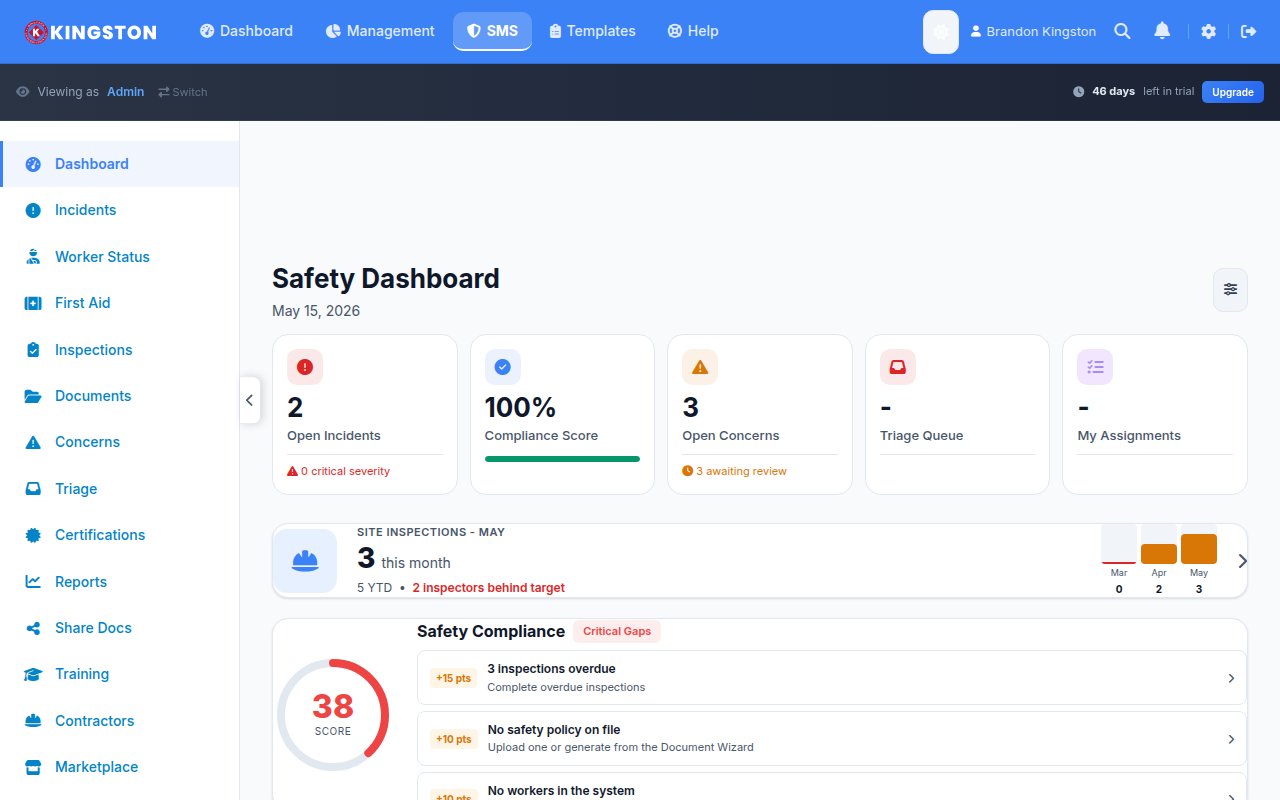
Managing PPE across an entire workforce - especially with multiple sites, shifts and hazard profiles - demands more than spreadsheets. Make Safety Easy provides digital inspection checklists for PPE audits, centralized document storage for training records and hazard assessments and automated reminders so nothing expires unnoticed.
Ready to eliminate the guesswork from PPE compliance? Book a demo or explore pricing to see how Make Safety Easy keeps your workforce protected and your paperwork audit-ready.
Ready to simplify your safety program?
Make Safety Easy helps teams run toolbox talks, inspections, incident reports and more - all from one platform.
Start Your Free TrialNo credit card required. 14-day free trial.