To build a return-to-work program that actually works, you need six core components: a written RTW policy, early contact with the injured worker, a functional abilities assessment, a modified duties plan, ongoing communication with your provincial WCB and a system to track recovery milestones. When these pieces work together, Canadian employers consistently see faster recoveries, lower claim costs and stronger relationships with workers' compensation boards like WorkSafeBC and WSIB Ontario. Below, we walk through every step so you can build - or rebuild - your program from the ground up.
Why a Return-to-Work Program Matters More Than You Think
Every week an injured worker stays off the job, the probability of them ever returning drops sharply. Research from the Institute for Work & Health shows that after 12 weeks of absence, the chance of a successful return falls below 50%. After six months, it drops to roughly 10%. The human cost is obvious. The financial cost is staggering.
A well-structured RTW program in Canada does three things simultaneously:
Free Download: 5 Safe Work Procedures
Choose from 112 professionally written SWPs. No credit card required.
Get Free SWPs- Protects the worker - injured employees who stay connected to the workplace recover faster and experience fewer mental health complications like depression and isolation.
- Protects the employer - shorter claim durations mean lower WCB premiums, fewer replacement labour costs and less disruption to operations. Learn more about the real numbers in our guide to the cost of workplace injury in Canada.
- Satisfies your legal obligations - under Canadian human rights legislation, employers have a duty to accommodate injured workers to the point of undue hardship. A formal RTW program is the clearest evidence that you are meeting that obligation.
Understanding Your Legal Obligations
Before you draft a single policy, you need to understand the legal landscape. In Canada, return-to-work obligations come from two directions:
Workers' Compensation Legislation
Each province has its own WCB statute. In British Columbia, the Workers Compensation Act and WorkSafeBC policies require employers to cooperate in the worker's early and safe return to work. In Ontario, the Workplace Safety and Insurance Act places explicit obligations on employers, workers and the WSIB to collaborate on return-to-work planning. Failure to cooperate can result in financial penalties levied directly against the employer.
Human Rights and the Duty to Accommodate
The Canadian Human Rights Act and provincial human rights codes require employers to accommodate workers with disabilities - including temporary disabilities from workplace injuries - up to the point of undue hardship. This means you must actively explore modified duties, adjusted schedules, ergonomic changes, or reassignment to alternative roles before concluding that accommodation is not possible.
A documented return-to-work program is your best defence in a human rights complaint or WCB audit. Without one, you are exposed.
How to Build a Return-to-Work Program: 7 Steps
Follow these steps in order. Each one builds on the last and skipping ahead is the most common reason RTW programs fail.
-
Step 1: Establish a Written RTW Policy
Your policy is the foundation. It should be a standalone document - or a clearly defined section of your health and safety manual - that states:
- The company's commitment to returning injured workers to safe, meaningful work as early as medically appropriate.
- Roles and responsibilities for the worker, the supervisor, the RTW coordinator and the union (if applicable).
- The process that will be followed after every injury, from initial reporting through to full recovery.
- Confidentiality protections for the worker's medical information.
Distribute the policy to every employee. Post it in common areas. Make sure supervisors understand it - they are the front line of your program.
-
Step 2: Report the Injury Immediately and Accurately
Speed matters. The sooner you file an accurate injury report with your WCB, the sooner the claim is processed and the sooner the worker gets the support they need. Late or incomplete reports are one of the top reasons claims spiral out of control.
Use a standardized incident reporting system to capture the details while they are fresh: what happened, when, where, who was involved and what first aid was administered. Digital reporting eliminates the "lost paperwork" problem that plagues manual processes.
-
Step 3: Make Early Contact With the Injured Worker
Within 24 to 48 hours of the injury, reach out to the worker. This is not a medical interrogation - it is a welfare check. Express genuine concern. Let them know their job is secure and that you will work together on a plan to get them back safely.
This single step has an outsized impact on outcomes. Workers who feel supported by their employer return faster and are far less likely to engage legal representation. Keep the conversation documented but compassionate.
-
Step 4: Obtain a Functional Abilities Assessment
A functional abilities assessment (sometimes called a Functional Abilities Form or FAF) is a document completed by the worker's treating physician that outlines exactly what the worker can do - not just what they cannot. It specifies physical restrictions, cognitive limitations and any time-based conditions (for example, "can sit for 30 minutes before requiring a 10-minute break").
Both WorkSafeBC and WSIB Ontario have standardized forms for this purpose. Make sure the form gets to the physician quickly and follow up if it is not returned within a reasonable timeframe. Without this document, you cannot design a safe modified duties plan.
-
Step 5: Design a Modified Duties Program
This is where your program lives or dies. Using the functional abilities assessment, create a modified duties program that matches the worker's current capabilities to available tasks. Effective modified duties should be:
- Meaningful - the work must be productive and dignified. Assigning someone to "sit in the break room and count paper clips" is not accommodation; it is humiliation and WCBs know the difference.
- Safe - the duties must fall within the physician's documented restrictions. No exceptions.
- Progressive - plan a graduated return where duties, hours and physical demands increase over time as the worker heals. A phased approach prevents re-injury and builds confidence.
- Time-limited - set review dates. A modified duties plan should not become a permanent arrangement without a formal reassessment.
Document the plan in writing and have the worker, the supervisor and the RTW coordinator sign it. Send a copy to the WCB if required by your province.
-
Step 6: Maintain Communication With Your WCB
Your workers' compensation board is not the enemy. They want the same outcome you do: a safe, sustainable return to work. Proactive communication with WorkSafeBC, WSIB, or your provincial equivalent signals that you are a responsible employer and can positively influence claim adjudication.
Keep your WCB updated on:
- The modified duties offer and whether the worker accepted it.
- Any changes in the worker's functional abilities.
- Progress through the graduated return plan.
- Any barriers or disputes that arise.
Use a WCB tracking tool to centralize claim correspondence, deadlines and status updates. Missing a WCB deadline can result in penalties or unfavourable claim decisions - and once those costs hit your experience rating, they follow you for years.
-
Step 7: Track Recovery and Close the Claim
Recovery is not a straight line. Schedule regular check-ins - weekly is ideal during the early phase, then biweekly as the worker progresses. At each check-in, document:
- Current work duties and hours.
- The worker's self-reported comfort and pain levels.
- Any adjustments needed to the modified duties plan.
- Updated medical information or new functional abilities assessments.
When the worker has returned to full duties - or has reached maximum medical improvement - formally close the RTW plan and notify your WCB. File all documentation. This records become invaluable if a similar claim arises in the future or if you need to defend your accommodation efforts.
Common RTW Program Mistakes (And How to Avoid Them)
Even well-intentioned programs fail when employers fall into these traps:
- Waiting too long to make contact. Every day of silence tells the injured worker they do not matter. Reach out within 48 hours, every time.
- Offering "make-work" duties. Modified duties must be genuine and productive. If the worker feels punished or sidelined, they disengage - and so does their recovery.
- Ignoring the physician's restrictions. Pushing a worker beyond their documented capabilities is not just dangerous; it exposes you to significant legal liability and can reopen a claim at higher cost.
- Treating RTW as an HR-only function. Successful programs require buy-in from supervisors, senior leadership and the workers themselves. If the shop floor does not respect the program, it will not work.
- Failing to document. If it is not written down, it did not happen. Every conversation, every plan revision, every physician's note must be logged and accessible.
- Not tracking costs. If you cannot quantify the impact of your RTW program on claim duration and WCB premiums, you cannot defend its budget or improve its performance. Understand your true cost of workplace injury so you can measure what your program saves.
How Technology Makes RTW Programs Easier
Managing a return-to-work program with spreadsheets and paper forms is possible - but it is slow, error-prone and difficult to scale. Modern safety management platforms let you:
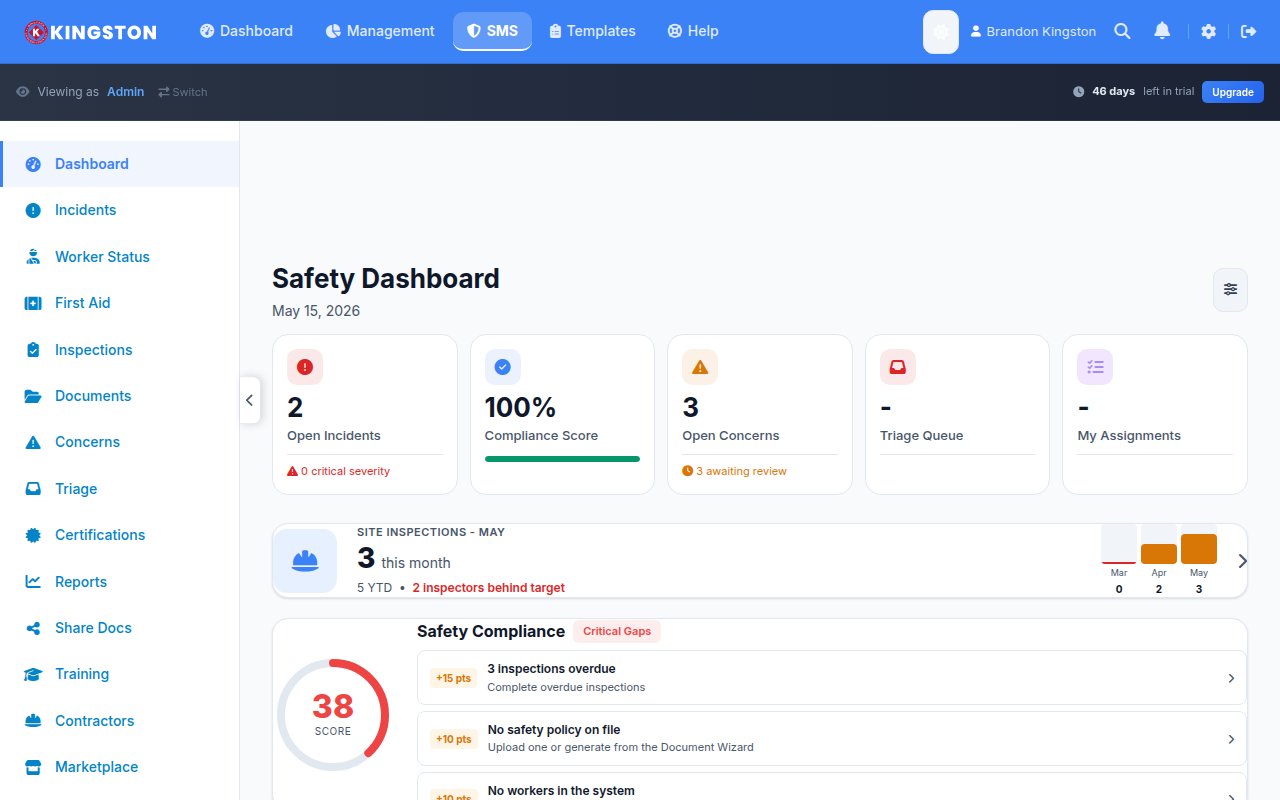
- File incident reports digitally from any device, ensuring accuracy and speed.
- Track every WCB claim in one dashboard - deadlines, correspondence, costs and status.
- Store functional abilities assessments, modified duties plans and recovery check-in notes in a centralized, searchable system.
- Generate reports that show your WCB (and your leadership team) exactly how your program is performing.
When your documentation is organized and your communication is proactive, claim durations drop, premiums stabilize and your workers get back to their lives faster.
Start Building Your RTW Program Today
A return-to-work program is not a "nice to have." It is a legal obligation, a financial imperative, and - most importantly - the right thing to do for people who got hurt on your watch. The seven steps above give you a proven framework. The key is to start now, before the next injury forces you to improvise.
Ready to Simplify Your Return-to-Work Process?
Make Safety Easy gives you the incident reporting, WCB claim tracking and documentation tools you need to run a compliant, effective RTW program - without the spreadsheet chaos.