Safety Data Sheets (SDS): The Complete Guide for Employers
A Safety Data Sheet (SDS) is a standardized document that provides detailed information about a chemical product's hazards, safe handling procedures, storage requirements, emergency measures and disposal methods. Under the Globally Harmonized System (GHS) - adopted by OSHA in the United States (29 CFR 1910.1200), by WHMIS 2015 in Canada and by regulatory bodies in over 70 countries - every manufacturer, importer and distributor of hazardous chemicals must provide an SDS in a consistent 16-section format. Employers who use those chemicals must maintain accessible SDS files and ensure every worker who handles or could be exposed to a hazardous product knows how to read and use them.
This is not optional. It is a core component of hazard communication and it is one of the most frequently cited areas in OSHA inspections. Getting it right protects your workers. Getting it wrong exposes your organization to citations, lawsuits, and - far worse - preventable injuries.
SDS vs. MSDS: What Changed?
If you have been in the industry long enough, you remember Material Safety Data Sheets (MSDS). The transition from MSDS to SDS was driven by the adoption of the GHS, which standardized chemical classification and communication worldwide. The key differences:
Free Download: 5 Safe Work Procedures
Choose from 112 professionally written SWPs. No credit card required.
Get Free SWPs| Feature | MSDS (Old System) | SDS (GHS/Current System) |
|---|---|---|
| Format | Varied by manufacturer - 8, 9, or 16 sections in any order | Standardized 16-section format, consistent globally |
| Hazard Classification | Country-specific criteria | Unified GHS classification criteria |
| Pictograms | Varied symbols depending on country | Nine standardized GHS pictograms (red diamond border) |
| Signal Words | Varied or absent | "Danger" or "Warning" - standardized |
| Hazard Statements | Free text, inconsistent | Standardized "H-statements" (e.g., H315: Causes skin irritation) |
The transition deadline in the U.S. passed in 2015. In Canada, WHMIS 2015 aligned with GHS and has been fully in effect since 2018. If you still have MSDS binders on site, they are out of compliance and must be replaced with current SDS documents.
The 16 Sections of an SDS - Explained
Every SDS follows the same 16-section structure. Understanding what each section contains - and which sections are most critical for your workers - is essential for effective training.
- Identification: Product name, manufacturer/supplier information, recommended use and emergency phone number. This is how you match the SDS to the product on your shelf.
- Hazard(s) Identification: GHS classification, signal word, pictograms, hazard statements and precautionary statements. This is the section most workers need to read first. It tells you, in plain terms, what the chemical can do to you.
- Composition/Information on Ingredients: Chemical identity and concentration of hazardous components. Important for assessing exposure limits and for emergency responders.
- First-Aid Measures: Symptoms and treatment for inhalation, skin contact, eye contact and ingestion. Keep this information accessible at the point of use - not just in a binder across the plant.
- Fire-Fighting Measures: Suitable extinguishing media, special hazards (e.g., toxic combustion products), and protective equipment for firefighters.
- Accidental Release Measures: Spill cleanup procedures, containment methods and personal precautions. This section drives your spill response protocols.
- Handling and Storage: Precautions for safe handling, conditions for safe storage and incompatible materials. Critical for warehouse and inventory management.
- Exposure Controls/Personal Protection: Occupational exposure limits (OELs), engineering controls and recommended PPE. This section tells you what protection workers need - reference it when selecting gloves, respirators and eye protection.
- Physical and Chemical Properties: Appearance, odor, pH, flash point, boiling point, vapor pressure and other properties. Useful for hazard assessment and emergency planning.
- Stability and Reactivity: Chemical stability, conditions to avoid, incompatible materials and hazardous decomposition products. Essential for storage planning and incident response.
- Toxicological Information: Routes of exposure, acute and chronic health effects, LD50/LC50 data and carcinogenicity classification.
- Ecological Information: Environmental fate, toxicity to aquatic organisms and biodegradability. Required by GHS but not enforced by OSHA - relevant for environmental compliance.
- Disposal Considerations: Waste treatment methods and regulatory disposal requirements.
- Transport Information: UN number, shipping name, transport hazard class and packing group. Relevant for shipping and receiving departments.
- Regulatory Information: Country-specific regulatory classifications (TSCA, CEPA, REACH, etc.).
- Other Information: Date of preparation or last revision, version number and any additional information the manufacturer deems relevant.
Note: Sections 12 through 15 are required by GHS but are not enforced by OSHA in the United States. They are, however, enforced under WHMIS in Canada and by regulators in many other countries. Best practice is to ensure your SDS files include all 16 sections regardless of jurisdiction.
Employer Obligations Under OSHA and WHMIS
The requirements are clear and specific. Here is what you must do:
OSHA Hazard Communication Standard (29 CFR 1910.1200)
- Maintain an SDS for every hazardous chemical used or stored in the workplace. There is no threshold - even one container requires an SDS.
- Ensure SDS are readily accessible to workers during their shifts. "Readily accessible" means a worker can obtain the information without leaving the work area or waiting for a supervisor. Digital access on a tablet, phone, or computer terminal satisfies this requirement - provided the system works reliably.
- Develop and maintain a written hazard communication program that includes an SDS management component.
- Train workers on the hazards of the chemicals they work with, how to read an SDS and where to find them. Training must occur at hire and whenever a new chemical hazard is introduced.
- Maintain a chemical inventory (list of hazardous chemicals in the workplace) cross-referenced to your SDS library.
WHMIS 2015 (Canada)
Canada's Workplace Hazardous Materials Information System mirrors GHS requirements with some Canada-specific elements:
- SDS must be available for all hazardous products as defined under the Hazardous Products Act and Hazardous Products Regulations.
- Supplier SDS must be no more than three years old at the time of sale. Employers must update their copies when new versions become available.
- SDS must be in English and French in federally regulated workplaces. Provincial requirements vary.
- Worker training (WHMIS education) must cover SDS content, labels and workplace-specific procedures.
- Employers must develop workplace-specific labels for products transferred to secondary containers or produced on site.
How to Manage Your SDS Library
Managing SDS files is straightforward in principle and often chaotic in practice. Here is a system that works.
Step 1: Build and Maintain a Chemical Inventory
List every hazardous chemical product in your workplace. Include trade names, manufacturer names and locations where each product is used or stored. This inventory is your master reference - every product on the list must have a corresponding SDS.
Update the inventory whenever a new product is introduced or an existing product is discontinued. Assign a responsible person (or team) to manage the process. Do not rely on purchasing departments to notify safety - build it into the procurement workflow.
Step 2: Obtain and Organize SDS Documents
SDS are provided by the manufacturer, importer, or distributor. They are typically available on the supplier's website or upon request. If you cannot obtain an SDS for a product, do not use that product until you have one - you are out of compliance without it.
Organize SDS by a consistent method: alphabetically by product name, by department, or by a unique product code. The method matters less than the consistency. Every worker must know the system and be able to find a specific SDS within minutes.
Step 3: Go Digital
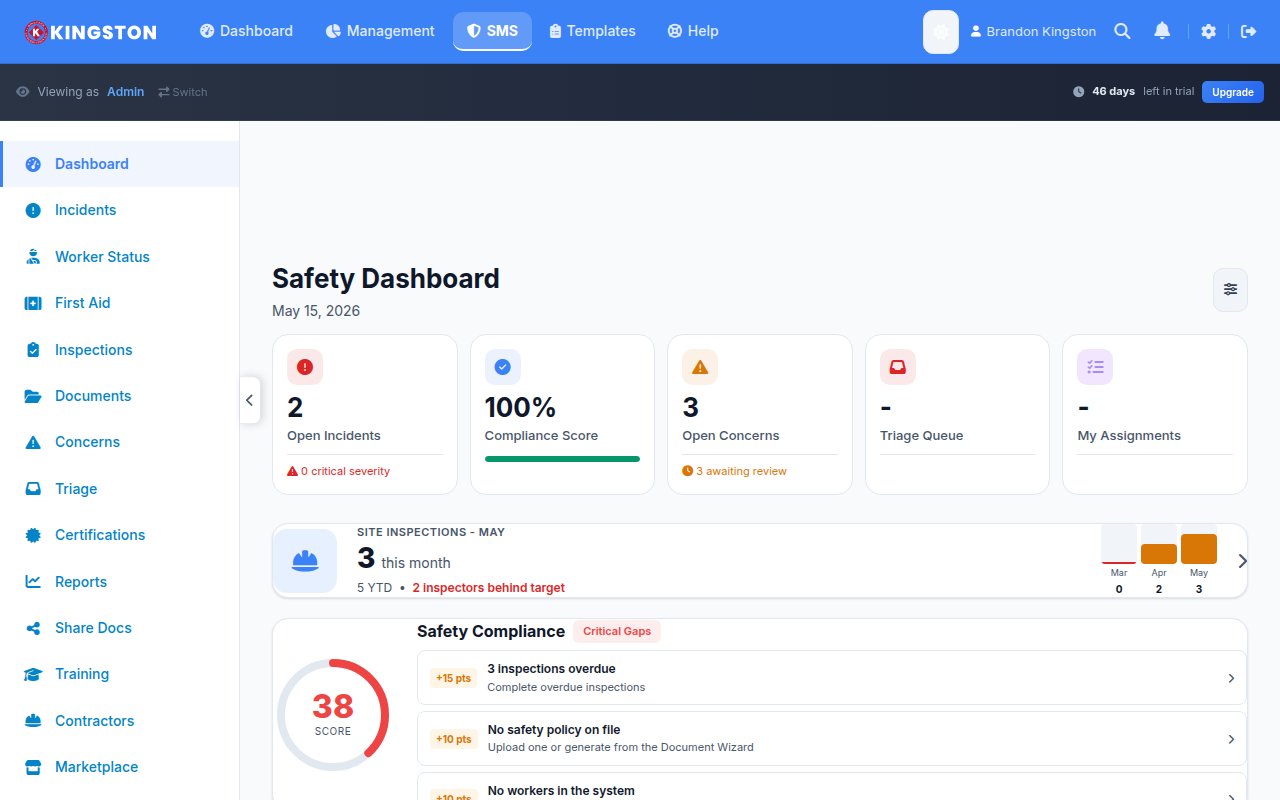
Paper SDS binders have serious limitations. They get damaged, pages are removed and not replaced, new products are added at the back and never indexed and nobody checks whether the versions are current. A digital SDS management system - like the one available through Make Safety Easy's document management feature - solves all of these problems:
- Searchable library: Find any SDS in seconds by product name, manufacturer, or chemical ingredient.
- Version control: Automatic alerts when an SDS is outdated or when a new version is available.
- Mobile access: Workers can pull up an SDS on their phone from the work floor, the loading dock, or a remote job site.
- Audit trail: Timestamped records of when SDS were accessed, by whom and from where.
- Chemical inventory integration: Link SDS directly to your chemical inventory for seamless compliance.
Step 4: Train Your Workers
An SDS is only useful if workers know it exists, know where to find it and know how to read it. Training should cover:
- What an SDS is and why it matters.
- How to locate the SDS for any product in the workplace - the specific system you use (binder location, app, kiosk, etc.).
- How to read the critical sections - particularly Sections 2 (Hazard Identification), 4 (First Aid), 7 (Handling and Storage), and 8 (Exposure Controls/PPE).
- How to interpret GHS pictograms and signal words.
- What to do in an emergency involving a chemical product - spill response, first aid, who to contact.
Deliver this training at hire and refresh it whenever new chemicals are introduced. Short toolbox talks on SDS topics - such as "How to Read Section 2" or "This Month's New Chemical Products" - keep the knowledge current between formal training sessions.
GHS Pictograms: A Quick Reference
The nine GHS pictograms appear on both SDS (Section 2) and product labels. Workers should be able to recognize them on sight.
| Pictogram Name | Symbol Description | Hazard Types |
|---|---|---|
| Flame | Fire symbol | Flammable liquids, gases, aerosols, solids; self-reactive substances; pyrophoric materials |
| Flame Over Circle | Flame above an "O" shape | Oxidizers - may cause or intensify fire |
| Exploding Bomb | Detonation symbol | Explosives, self-reactive substances, organic peroxides |
| Gas Cylinder | Gas container | Gases under pressure - may explode if heated |
| Corrosion | Liquid dripping on hand and surface | Corrosive to skin, eyes, or metals |
| Skull and Crossbones | Skull symbol | Acute toxicity - fatal or toxic if inhaled, swallowed, or absorbed through skin |
| Exclamation Mark | ! symbol | Irritant, skin sensitizer, narcotic effects, respiratory tract irritation, hazardous to ozone layer |
| Health Hazard | Silhouette with starburst on chest | Carcinogen, respiratory sensitizer, reproductive toxicity, target organ toxicity, mutagenicity, aspiration hazard |
| Environment | Dead fish and tree | Aquatic toxicity - hazardous to the environment |
Common SDS Compliance Mistakes
- Missing SDS for products on site. Every hazardous product needs an SDS. Conduct regular audits of your chemical inventory against your SDS library to identify gaps.
- Outdated SDS. Manufacturers update SDS when new hazard data becomes available. Under WHMIS, an SDS older than three years from the supplier is non-compliant. Under OSHA, you must maintain the most current version available.
- Inaccessible SDS. A binder locked in a supervisor's office does not meet the "readily accessible" requirement. Workers must be able to reach the SDS themselves, during their shift, without barriers.
- No training - or training at hire only. HazCom training must be refreshed when new chemicals are introduced. A worker hired three years ago has no knowledge of the products added since their onboarding.
- Unlabeled secondary containers. When a chemical is transferred from its original container to a secondary one (spray bottle, bucket, drum), the secondary container must be labeled with the product identity and appropriate hazard warnings.
- No written HazCom program. OSHA requires a written program that describes how the employer will implement SDS management, labeling and training. This document must be available to workers and to OSHA inspectors on request.
SDS and Emergency Response
In an emergency - a spill, a fire, an exposure incident - the SDS is the first document responders need. Sections 4, 5, 6 and 8 contain the critical information: what first aid to administer, what extinguishing agents to use, how to contain a spill and what protective equipment is required.
Ensure your emergency response team knows how to access SDS quickly. If your facility uses a digital system, verify it is accessible during power outages or network failures - maintain a backup method (offline app, cached files, or a printed emergency binder for the most hazardous chemicals).
Take Control of Your SDS Compliance
SDS management does not need to be a burden. With a clear chemical inventory, a digital management platform and consistent training, you can turn compliance into a straightforward, auditable process that actually protects your workers - not just your paperwork.
Make Safety Easy's document management system keeps your SDS library current, searchable and accessible from any device. Pair it with toolbox talks for ongoing chemical safety education and you have a complete hazard communication program. Book a free demo to see how it works, or explore our pricing to get your team set up.
Ready to simplify your safety program?
Make Safety Easy helps teams run toolbox talks, inspections, incident reports and more - all from one platform.
Start Your Free TrialNo credit card required. 14-day free trial.