A safety incentive program is a structured system that rewards workers for safe behaviors, hazard reporting and active participation in workplace safety activities. The most effective programs focus on leading indicators - actions employees take to prevent incidents - rather than lagging indicators like injury-free days. When designed correctly and in compliance with OSHA's guidelines under Section 11(c), these programs reduce incidents by 20-45% and significantly improve employee engagement with safety. This playbook covers everything you need to design, implement and measure a safety incentive program that works.
Why Safety Incentive Programs Matter
Safety rules alone do not change behavior. Workers know they should wear PPE, follow procedures and report hazards. The gap between knowing and doing is where incentive programs live. They provide the motivation, recognition and social reinforcement that turns safety knowledge into safety habits.
The business case is compelling:
Free Download: 5 Safe Work Procedures
Choose from 112 professionally written SWPs. No credit card required.
Get Free SWPs- Organizations with active safety recognition programs report 44% lower turnover rates (Gallup)
- Companies that reward leading safety behaviors see 20-45% reductions in recordable incidents within the first 18 months
- Every dollar invested in safety incentive programs yields an average return of $3 to $6 in reduced incident costs
- Workers who feel recognized for safety contributions are 2.7x more likely to report near-misses and hazards
But poorly designed programs can backfire spectacularly. Rate-based programs that reward injury-free periods have been shown to suppress reporting rather than reduce actual injuries. Understanding the difference between effective and counterproductive program designs is critical.
Rate-Based vs. Activity-Based Programs
This is the single most important distinction in safety incentive program design. Getting this wrong can expose your organization to OSHA citations and actually increase your risk by hiding incidents.
Rate-Based Programs (Outcome-Based)
These programs reward workers or teams for achieving specific injury rate targets - typically zero recordable injuries over a defined period. Examples include "million hours without a lost-time injury" celebrations and monthly prizes for departments with no reported incidents.
Problems with rate-based programs:
- Reporting suppression: Workers avoid reporting injuries to protect the team's streak or their own eligibility for rewards. This is the primary concern OSHA has raised since 2016.
- Peer pressure: Injured workers face social pressure not to report, which can lead to untreated injuries becoming more severe.
- False confidence: Low reported numbers create an illusion of safety while actual hazards remain unaddressed.
- OSHA scrutiny: Programs that explicitly or implicitly discourage reporting can trigger Section 11(c) violations.
Activity-Based Programs (Behavior-Based)
These programs reward specific safety actions that workers take - reporting hazards, completing safety training, conducting peer observations, participating in safety committees and submitting safety improvement suggestions.
Advantages of activity-based programs:
- Encourages reporting: Workers are rewarded for identifying and reporting hazards, which increases data quality.
- Proactive focus: Rewards prevention activities rather than the absence of outcomes workers cannot fully control.
- OSHA-compliant: Activity-based programs align with OSHA's guidance on acceptable incentive structures.
- Measurable: You can track specific actions and participation rates rather than relying on the absence of negative events.
- Inclusive: Every worker can participate regardless of their work area's inherent risk level.
Comparison Table
| Feature | Rate-Based | Activity-Based |
|---|---|---|
| What is rewarded | Absence of injuries | Positive safety actions |
| OSHA compliance risk | High | Low |
| Impact on reporting | Suppresses reporting | Encourages reporting |
| Measurement clarity | Binary (injury or not) | Multiple measurable actions |
| Worker control | Limited (cannot control all factors) | High (actions are within worker control) |
| Sustainability | Declines as streaks break | Sustained through continuous engagement |
| Recommended | No (unless combined with activity-based elements) | Yes |
OSHA Compliance: Section 11(c) and Incentive Programs
In 2016, OSHA issued updated guidance clarifying that employers must not use incentive programs to discourage workers from reporting injuries or illnesses. This guidance is rooted in Section 11(c) of the OSH Act, which protects workers from retaliation for exercising their safety rights - including reporting injuries.
What OSHA Prohibits
- Programs that withhold rewards from an entire team because one member reported an injury
- Programs where the only qualifying criterion is the absence of reported injuries
- Disciplinary actions disguised as "safety accountability" that punish workers for reporting
- Any program structure that creates explicit or implicit disincentives for reporting workplace injuries or hazards
What OSHA Permits
- Rewarding workers for reporting near-misses and hazards
- Incentivizing participation in safety training and meetings
- Recognizing workers who conduct safety observations or inspections
- Rewarding compliance with specific safety rules (PPE usage, lockout/tagout compliance) verified through observation
- Rate-based programs IF combined with adequate reporting protections and anti-retaliation measures
OSHA Compliance Checklist for Incentive Programs
- [ ] Program rewards positive safety actions, not just the absence of injuries
- [ ] Anti-retaliation policy is clearly communicated and enforced
- [ ] Workers are trained on their right to report injuries without fear of losing incentives
- [ ] Reporting channels are accessible and confidential
- [ ] Program does not withhold team-wide benefits based on individual injury reports
- [ ] Documentation demonstrates the program encourages (not discourages) reporting
- [ ] Program is reviewed annually for compliance with current OSHA guidance
- [ ] Supervisors are trained to never discourage injury reporting to protect incentive metrics
For a detailed analysis of OSHA's stance on incentive programs, see our guide on safety incentive programs and OSHA compliance.
Program Design Framework: 8 Steps to Launch
Building an effective safety incentive program requires careful planning. Follow this step-by-step framework to design a program that drives genuine behavior change while maintaining regulatory compliance.
Step 1: Define Your Objectives
Start with clear, measurable objectives. What specific safety outcomes do you want to improve? Vague goals like "improve safety culture" are not actionable. Define specific targets:
- Increase near-miss reporting by 50% within 6 months
- Achieve 95% on-time completion of required safety training
- Increase safety observation submissions to 5 per supervisor per week
- Improve PPE compliance from 78% to 95% as measured by behavioral observations
- Increase safety committee participation from 60% to 90% attendance
Step 2: Identify Rewarded Behaviors
Select 5-10 specific, observable and measurable safety behaviors that your program will reward. Focus on actions that have the strongest correlation with incident prevention in your specific workplace.
| Category | Rewarded Behaviors | Points Value |
|---|---|---|
| Reporting | Submit a near-miss report | 10 points |
| Reporting | Identify and report a new hazard | 15 points |
| Training | Complete assigned training on time | 5 points |
| Training | Complete optional safety training module | 10 points |
| Observations | Conduct a peer safety observation | 10 points |
| Observations | Provide constructive safety feedback to a coworker | 10 points |
| Participation | Attend safety committee meeting | 5 points |
| Participation | Lead a toolbox talk | 20 points |
| Innovation | Submit a safety improvement suggestion | 15 points |
| Innovation | Suggestion implemented by management | 50 points (bonus) |
Step 3: Design the Reward Structure
Choose a reward structure that aligns with your budget, workforce demographics and organizational culture. The most effective programs use a combination of approaches.
Tiered Reward Levels:
| Tier | Points Required | Reward Options | Approximate Value |
|---|---|---|---|
| Bronze | 50 points/quarter | Company swag, coffee gift cards, extra break time | $10-25 |
| Silver | 100 points/quarter | Restaurant gift cards, movie tickets, paid half-day off | $25-75 |
| Gold | 200 points/quarter | Major gift cards, electronics, extra PTO day | $75-200 |
| Platinum | 500 points/year | Annual safety champion award, premium prizes, VIP parking | $200-500 |
Step 4: Build the Recognition Framework
Financial incentives are effective, but recognition often has an even greater impact on sustained behavior change. Design recognition into three levels:
Peer Recognition: Workers recognize each other for safe behaviors. This builds social norms around safety and does not require management involvement for every interaction.
- "Safety Shout-Out" cards that workers can give to peers
- Digital recognition through a mobile app or intranet
- Peer-nominated "Safety Star of the Month"
Management Recognition: Supervisors and managers formally recognize safety contributions during team meetings, shift briefings and performance reviews.
- Personal thank-you from a supervisor within 24 hours of the safe behavior
- Public recognition at team meetings
- Mention in company newsletters or communication channels
- Positive notation in performance records
Company-Wide Recognition: Organization-level celebrations and recognition for outstanding safety achievements.
- Annual Safety Awards ceremony
- Featured profiles on company website or social media
- Letters from senior leadership
- Safety Hall of Fame or Wall of Recognition at each facility
Step 5: Establish Measurement Systems
You cannot manage what you do not measure. Set up tracking systems before launching the program, not after.
Key metrics to track:
- Program participation rate (percentage of eligible workers actively participating)
- Points earned per worker per month (engagement level)
- Distribution of points across behavior categories (are all categories active?)
- Near-miss reporting trends (should increase)
- Safety observation completion rates
- Training completion rates
- Incident rates (should decrease over time)
- Worker satisfaction with the program (quarterly survey)
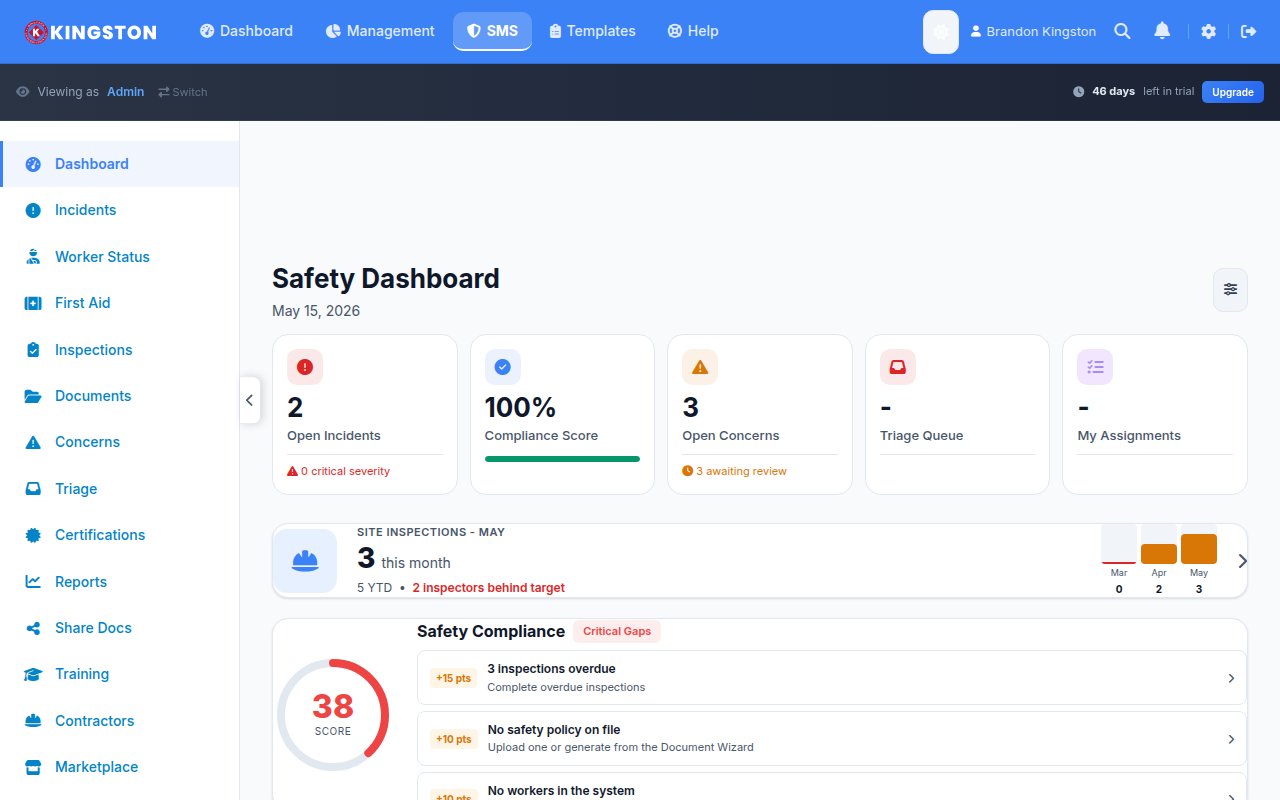
Digital tracking through a platform like Make Safety Easy's incident reporting module makes data collection seamless. Workers log activities through a mobile app and the system automatically calculates points and generates reports.
Step 6: Train the Organization
A program only works if everyone understands it. Conduct a structured rollout:
- Leadership briefing: Explain the program's objectives, budget and expected ROI to senior management
- Supervisor training: Train all supervisors on how to recognize safe behaviors, manage the points system and avoid inadvertently discouraging injury reporting
- Worker orientation: Explain the program clearly to all eligible workers. Cover what behaviors earn points, how to claim rewards and the anti-retaliation policy
- Printed and digital reference materials: Provide quick-reference guides at all work stations
Step 7: Launch with Momentum
A quiet launch produces quiet results. Create excitement around the program:
- Hold a kickoff event with leadership visible and engaged
- Offer bonus points for the first 30 days to drive early adoption
- Celebrate the first workers to earn rewards publicly
- Share early success stories within the first two weeks
- Display progress dashboards in common areas
Step 8: Iterate Based on Data
Plan a formal program review at 90 days, 6 months and 12 months. Adjust reward values, behavior categories and recognition methods based on participation data and worker feedback.
Gamification Strategies for Safety
Gamification applies game-design elements to non-game contexts. When applied thoughtfully to safety, it can transform routine compliance activities into engaging experiences. When applied poorly, it trivializes serious safety responsibilities.
Effective Gamification Elements
Points and Levels: The tiered point system described above is itself a gamification element. Workers accumulate points and advance through levels, creating a sense of progression and achievement.
Leaderboards: Display team or individual rankings for safety activity participation. Use leaderboards carefully - they should rank positive actions (observations completed, training hours, hazards reported) not the absence of injuries.
Challenges and Quests: Create time-limited challenges that focus attention on specific safety priorities:
- "Hazard Hunt Week" - bonus points for every new hazard identified during a defined period
- "PPE Perfect Score Challenge" - team achieves 100% PPE compliance for 5 consecutive observation rounds
- "Training Sprint" - complete all overdue training within 2 weeks for bonus points
- "Near-Miss November" - organization-wide focus on near-miss reporting during one month
Badges and Achievements: Award digital or physical badges for safety milestones:
- "First Responder" - completed advanced first aid certification
- "Eagle Eye" - identified 10 hazards in a quarter
- "Safety Mentor" - led 5 toolbox talks
- "Zero Hero" - completed all assigned training on time for 12 consecutive months
Team Competitions: Create healthy competition between departments, shifts or project teams. Team-based gamification is often more effective than individual competition because it builds collective accountability.
Gamification Pitfalls to Avoid
- Do not gamify lagging indicators: Never create competitions around who has fewer injuries. This suppresses reporting.
- Avoid winner-take-all structures: Programs where only the top performer wins create disengagement among the majority. Use tiered rewards where anyone can win.
- Do not trivialize serious risks: Gamification should enhance engagement, not make safety seem like a game. Maintain appropriate gravity when discussing incidents, injuries and near-misses.
- Watch for gaming the system: Workers may submit low-quality reports just to earn points. Build quality checks into your system (supervisor verification for observations and hazard reports).
- Avoid leaderboard fatigue: Rotate challenges and refresh the program quarterly. Static leaderboards lose their motivational power after 3-4 months.
Budget Planning for Safety Incentive Programs
Effective safety incentive programs do not require massive budgets. Research consistently shows that recognition and small meaningful rewards outperform large prizes. Here is how to plan your budget:
Budget Benchmarks
| Company Size | Annual Budget Range | Per-Employee Range |
|---|---|---|
| Small (under 50 employees) | $2,500 - $10,000 | $50 - $200 |
| Medium (50-250 employees) | $10,000 - $50,000 | $75 - $200 |
| Large (250-1,000 employees) | $50,000 - $200,000 | $100 - $200 |
| Enterprise (1,000+ employees) | $200,000+ | $100 - $250 |
Budget Allocation Framework
| Category | Percentage of Budget | Examples |
|---|---|---|
| Individual rewards | 40-50% | Gift cards, prizes, PTO |
| Team rewards | 15-20% | Team lunches, events, outings |
| Recognition materials | 10-15% | Certificates, plaques, badges, apparel |
| Administration | 10-15% | Software, tracking, communication |
| Events and celebrations | 10-15% | Annual awards ceremony, safety week activities |
Low-Budget High-Impact Ideas
Some of the most effective recognition costs nothing or very little:
- Handwritten thank-you notes from senior leadership ($0)
- Public recognition at all-hands meetings ($0)
- Preferred parking spot for the month ($0)
- Early release on a Friday (cost of lost productivity only)
- Feature in company newsletter or social media ($0)
- Lunch with the CEO or site manager ($20-50)
- Choice of next work assignment ($0)
- Professional development opportunity (variable)
Common Pitfalls and How to Avoid Them
Even well-intentioned programs can fail. Here are the most common mistakes and their solutions:
Pitfall 1: Rewarding Only Lagging Indicators
The problem: Programs that reward zero injuries create pressure to suppress reporting.
The solution: Make at least 80% of your reward criteria based on leading indicators (actions taken) rather than lagging indicators (outcomes achieved).
Pitfall 2: Management Disengagement
The problem: If supervisors and managers do not actively participate in the recognition program, workers perceive it as insincere.
The solution: Include management participation as a tracked metric. Require supervisors to deliver a minimum number of recognitions per month. Make safety recognition part of the supervisory performance review.
Pitfall 3: Program Fatigue
The problem: Participation drops after the initial excitement wears off, typically at the 3-4 month mark.
The solution: Build in quarterly refreshes - new challenges, updated reward options, special events. Rotate the types of behaviors being emphasized to maintain novelty.
Pitfall 4: Inequitable Access
The problem: Office workers have more opportunities to earn points (attend meetings, complete online training) than field workers who face the highest risks.
The solution: Weight point values to ensure field workers can earn comparable rewards through field-appropriate activities (observations, hazard reports, toolbox talk participation).
Pitfall 5: No Connection to Safety Culture
The problem: The incentive program operates in isolation from the broader safety management system.
The solution: Integrate the program with your safety management platform. Points earned through the incentive program should flow from the same activities tracked in your inspection, observation and reporting systems. Use monthly safety reviews to analyze incentive program data alongside incident trends.
Pitfall 6: One-Size-Fits-All Rewards
The problem: A 25-year veteran and a new hire are motivated by different rewards.
The solution: Offer a choice of rewards at each tier level. Let workers select what matters most to them - time off, gift cards, merchandise, professional development or charitable donations in their name.
Legal Considerations Beyond OSHA
OSHA compliance is the primary legal concern, but several other legal issues require attention:
Tax Implications
In the United States, safety incentive awards may be considered taxable income depending on the type and value. The IRS considers cash and cash-equivalent rewards (gift cards) as taxable compensation. Tangible personal property of modest value may qualify for exclusion under certain conditions. Consult with your tax advisor and ensure your payroll department properly reports incentive awards.
Discrimination and Equity
Ensure your program does not inadvertently discriminate against protected classes. Workers with disabilities may face barriers to participating in certain physical safety activities. Accommodate these workers with alternative qualifying activities of equivalent point value.
Workers' Compensation Implications
In some jurisdictions, if an incentive program is found to have discouraged injury reporting, it could affect workers' compensation claim validity and employer liability. Document your anti-retaliation protections thoroughly.
Union Considerations
In unionized workplaces, incentive programs may be subject to collective bargaining. Consult with labor relations before implementing a program that affects terms and conditions of employment. Many unions support activity-based safety incentive programs when they are developed collaboratively.
Multi-Jurisdictional Compliance
If your organization operates across multiple states, provinces or countries, be aware that incentive program regulations vary. Canadian provinces under OHSA requirements have different frameworks than US federal OSHA. International operations may face additional constraints under local labor laws.
Case Studies: Programs That Work
Case Study 1: Manufacturing Plant - Activity-Based Points System
Situation: A 200-employee manufacturing facility had a TRIR of 8.2, well above the industry average of 3.4. Prior rate-based incentive program was suspected of suppressing reporting.
Program design: Replaced the rate-based program with an activity-based points system. Workers earned points for hazard reports (15 points), near-miss reports (10 points), peer observations (10 points), training completion (5 points) and safety suggestions (15 points). Quarterly rewards at three tiers.
Results after 18 months:
- Near-miss reports increased from 12/month to 67/month
- Hazard reports increased from 8/month to 34/month
- TRIR decreased from 8.2 to 4.1 (despite increased reporting)
- Program participation rate: 89% of eligible workers
- Annual program cost: $35,000. Estimated savings from prevented incidents: $186,000
Case Study 2: Construction Company - Peer Recognition Program
Situation: A regional construction firm with 500 field workers struggled with inconsistent safety practices across job sites. Supervisors varied widely in their safety engagement.
Program design: Implemented a peer-to-peer "Safety Catch" card system. Workers carried cards they could give to peers when they observed someone working safely or intervening to prevent a hazard. Cards were entered into a monthly drawing for prizes. Workers receiving 5+ cards per quarter received a "Safety Champion" hard hat sticker and a $50 gift card.
Results after 12 months:
- Over 8,400 Safety Catch cards distributed in the first year
- Recordable incidents decreased by 31%
- Worker survey showed 72% felt "more connected to the safety program" compared to 34% before the program
- Supervisor safety engagement improved as workers began recognizing supervisors and vice versa
Case Study 3: Oil and Gas - Gamified Safety Platform
Situation: A mid-size oil and gas company with operations across three states needed to standardize safety engagement across remote locations.
Program design: Deployed a mobile app-based gamification platform. Workers earned points, badges and leveled up through safety activities tracked digitally. Leaderboards showed team rankings by location. Monthly challenges focused attention on rotating safety priorities (confined space procedures one month, driving safety the next).
Results after 24 months:
- Safety observation frequency increased 340%
- Training completion rates improved from 71% to 96%
- Lost-time injury rate decreased by 42%
- Employee engagement survey scores for "safety culture" improved from 3.1 to 4.2 on a 5-point scale
- Program cost: $120,000/year. Estimated savings: $680,000/year in reduced incidents and insurance costs
Measuring Program Effectiveness
Track these metrics monthly and report quarterly to leadership:
Program Health Metrics
| Metric | Target | Warning Sign |
|---|---|---|
| Participation rate | 75%+ of eligible workers | Below 50% indicates design or communication issues |
| Points distribution | Normal distribution across workforce | Bimodal (few very active, many inactive) needs attention |
| Category balance | Points earned across all behavior categories | One category dominating suggests gaming |
| Reward redemption rate | 80%+ of earned rewards redeemed | Low redemption means rewards are not valued |
| Month-over-month engagement | Stable or growing participation | Declining trend after month 3 signals fatigue |
Safety Impact Metrics
| Metric | Expected Trend | Measurement Period |
|---|---|---|
| Near-miss reporting rate | Increase 50-200% in first 6 months | Monthly |
| Hazard identification rate | Increase 30-100% in first 6 months | Monthly |
| Safety observation scores | Gradual improvement in compliance % | Monthly |
| TRIR | Decrease 15-30% within 12-18 months | Quarterly (rolling 12 months) |
| DART rate | Decrease 10-25% within 12-18 months | Quarterly (rolling 12 months) |
| Workers' comp costs | Decrease 10-20% within 18-24 months | Annually |
Building a Safety Culture Through Recognition
An incentive program is a tool, not a culture. True safety culture transformation requires the program to be embedded within a broader commitment to worker well-being, open communication and continuous improvement.
The incentive program should reinforce - not replace - these foundational elements:
- Management commitment: Leaders at every level visibly prioritize safety in their decisions and actions
- Worker participation: Employees have a genuine voice in safety decisions, not just token representation
- Open reporting: Workers feel safe reporting hazards, near-misses and injuries without fear of retaliation
- Just culture: Honest mistakes are treated as learning opportunities while willful violations are addressed appropriately
- Continuous improvement: The organization actively seeks ways to improve safety performance beyond minimum compliance
For a comprehensive framework on building lasting safety culture, see our guide on building a workplace safety culture.
Implementation Timeline: 12-Week Launch Plan
| Week | Activities | Responsible |
|---|---|---|
| 1-2 | Define objectives, select rewarded behaviors, set budget | Safety manager, HR, finance |
| 3-4 | Design reward structure, source rewards, build tracking system | Safety manager, procurement |
| 5-6 | Develop communication materials, train supervisors | Safety manager, communications |
| 7-8 | Pilot with one department or location, gather feedback | Safety manager, pilot group supervisors |
| 9-10 | Adjust program based on pilot feedback, prepare for full launch | Safety manager |
| 11 | Full organization launch event, distribute materials | Safety manager, senior leadership |
| 12 | First week of active tracking, troubleshoot issues, celebrate early wins | Safety manager, all supervisors |
Sustaining Long-Term Engagement
The hardest part of any incentive program is keeping it fresh after the initial excitement fades. Here are proven strategies for long-term sustainability:
Quarterly program refreshes: Change the featured challenge, update reward options and introduce new badges or achievements every quarter.
Annual program overhaul: Each year, review the entire program structure. Retire elements that have lost effectiveness, introduce new features and reset leaderboards to give everyone a fresh start.
Worker input: Survey participants quarterly about what is working and what is not. Programs designed with worker input have 2-3x higher sustained participation rates.
Celebrate milestones: Mark program anniversaries, cumulative achievements (10,000th safety observation, 1,000th near-miss report) and individual milestones.
Connect to business results: Share the program's impact on incident rates, insurance costs and overall safety performance with all participants. Workers who understand their collective impact stay more engaged.
Evolve with technology: As your safety management system evolves, integrate new data sources into the incentive program. Mobile apps, wearable safety devices and IoT sensors can all generate data that feeds the recognition system.
Getting Started Today
You do not need a complex platform or a large budget to start recognizing and rewarding safe behaviors. Begin with a simple peer recognition card system, track it on a spreadsheet and build from there. The most important step is shifting from rewarding the absence of injuries to rewarding the presence of safety-positive actions.
As your program matures, digital tools become essential for scaling. Schedule a demo of Make Safety Easy to see how our platform integrates incident reporting, safety observations and training tracking into a unified system that powers your incentive program with real-time data. Or visit our pricing page to explore plans that fit organizations of every size.
The investment is modest. The returns - in prevented injuries, reduced costs and a workforce that genuinely cares about going home safe every day - are extraordinary.
Ready to simplify your safety program?
Make Safety Easy helps teams run toolbox talks, inspections, incident reports and more - all from one platform.
Start Your Free TrialNo credit card required. 14-day free trial.