Safety leadership is the single most powerful predictor of workplace safety performance. When managers actively demonstrate their commitment to worker safety through visible actions - not just policies - incident rates drop, near-miss reporting increases and workers engage with safety programs voluntarily. This playbook provides practical strategies that managers at every level can use to lead safety culture from the front.
Why Safety Leadership Matters More Than Safety Programs
Organizations spend billions annually on safety programs, training and equipment. Yet research consistently shows that leadership behavior has a greater impact on safety outcomes than any program or technology. A landmark study published in the Journal of Applied Psychology found that supervisor safety leadership was the strongest predictor of worker safety behavior, outperforming safety climate surveys, training frequency and even regulatory enforcement actions.
The reason is straightforward. Workers take their cues from what leaders do, not what safety posters say. When a manager walks past a hazard without stopping, that action communicates more about organizational priorities than any safety meeting. When a supervisor pressures a crew to skip pre-task inspections to meet a deadline, the message is clear: production comes first. Conversely, when leaders consistently stop work for safety concerns, participate in inspections and follow up on hazard reports, workers internalize that safety is genuinely valued.
Free Download: 5 Safe Work Procedures
Choose from 112 professionally written SWPs. No credit card required.
Get Free SWPsThe Four Pillars of Safety Leadership
Effective safety leadership rests on four foundational behaviors that managers must practice consistently. These are not personality traits - they are skills that can be learned and developed through deliberate practice.
1. Visible Safety Commitment
Visibility is the most basic and most important element. Workers need to see their managers engaged in safety activities regularly, not just when there is an incident or an audit. Visible commitment includes:
- Participating in safety walkthroughs and inspections weekly, not monthly or quarterly
- Attending safety meetings and toolbox talks in person rather than delegating
- Wearing required PPE correctly and consistently, especially when visiting work areas
- Stopping to correct unsafe conditions personally rather than passing the task to a safety coordinator
- Discussing safety first in team meetings before production updates or financial results
The key word is "consistent." A manager who does a high-profile safety walkthrough once a quarter but ignores conditions the rest of the time is not demonstrating visible commitment. Regularity matters more than intensity.
2. Active Listening and Response
Workers must believe that reporting hazards and safety concerns will result in action. If reports go into a black hole - acknowledged but never resolved - reporting behavior will decline rapidly. Active listening in a safety context means:
- Responding to every safety report with a specific action and timeline
- Following up with the reporter to confirm the issue was resolved
- Explaining the reasoning when a reported concern cannot be addressed immediately
- Never dismissing or minimizing a worker's safety concern, even if you disagree with the risk assessment
- Tracking response times for safety reports and holding yourself accountable for delays
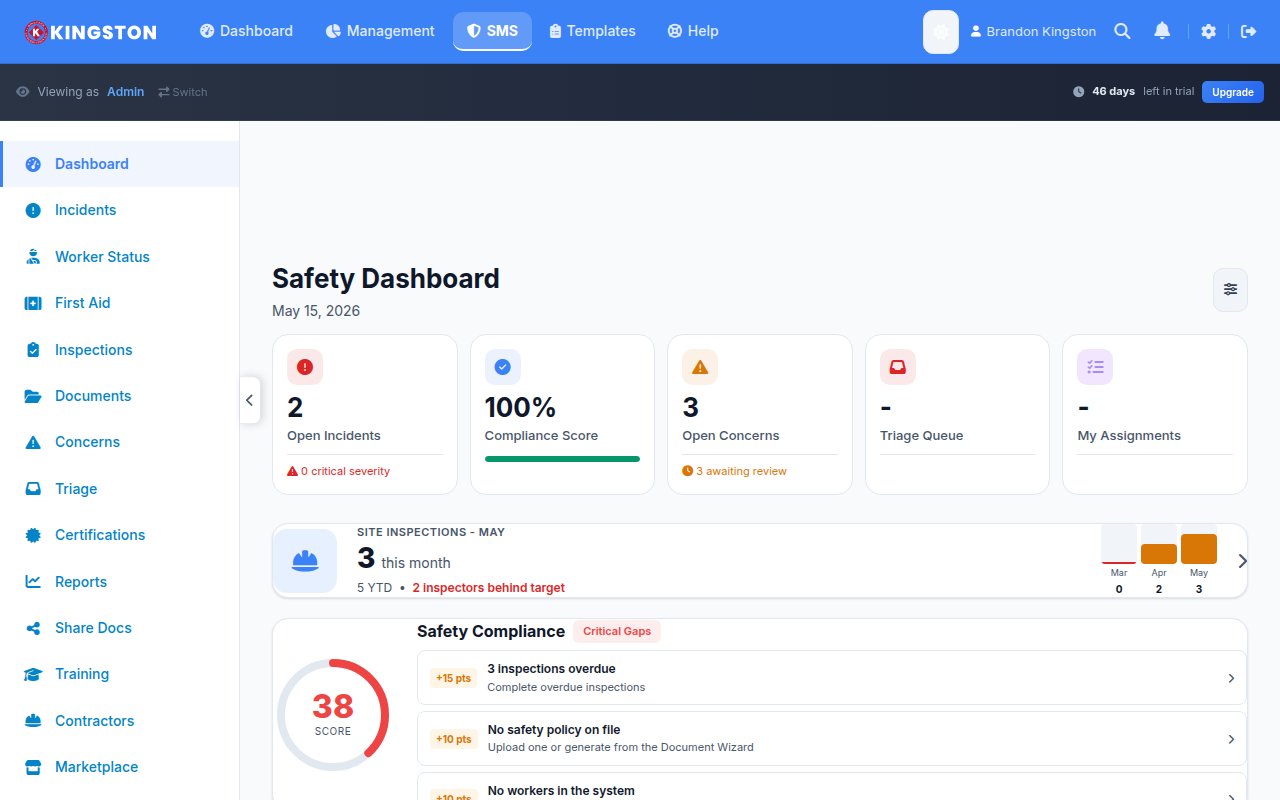
A digital safety platform that tracks hazard reports from submission through resolution makes it much easier to maintain this responsiveness. Monthly safety reviews should include metrics on report response times and close-out rates.
3. Accountability Without Blame
One of the most difficult balancing acts in safety leadership is holding people accountable for unsafe behavior while maintaining a culture where workers feel comfortable reporting hazards and near misses. The solution is to separate accountability for deliberate risk-taking from response to system failures and honest mistakes.
A just culture framework categorizes safety events into three tiers:
- Human error: Unintentional mistakes made while following procedures. Response: console the worker, fix the system that allowed the error
- At-risk behavior: Conscious choices to take shortcuts, often because the worker perceives the risk as low. Response: coach the worker, address the incentives driving the behavior
- Reckless behavior: Conscious disregard of a substantial and unjustifiable risk. Response: disciplinary action appropriate to the severity
When managers apply this framework consistently, workers learn that honest reporting is safe while deliberate risk-taking has consequences. This drives near-miss reporting up while reducing actual at-risk behaviors.
4. Empowerment and Participation
The safest workplaces are those where every worker feels ownership of safety outcomes. Leaders create this ownership by empowering workers to identify and solve safety problems directly rather than requiring every decision to flow through a management chain.
Practical empowerment strategies include:
- Giving every worker the explicit authority and encouragement to stop work for safety concerns without fear of repercussion
- Including frontline workers on safety committees and in hazard assessments
- Assigning safety improvement projects to teams rather than keeping them centralized in the safety department
- Recognizing and celebrating worker-initiated safety improvements publicly
- Asking workers for their input before implementing new safety procedures that affect their daily work
Building Your Safety Leadership Routine
Safety leadership is not a special project - it is a daily practice. The most effective safety leaders build specific behaviors into their regular routines so that safety engagement becomes automatic rather than something that requires extra effort.
Daily Actions
- Start every shift or team meeting with a safety topic or observation
- Conduct at least one brief safety walkthrough of your area of responsibility
- Have at least one safety-focused conversation with a frontline worker
- Review any open safety action items and follow up on overdue items
Weekly Actions
- Participate in a formal safety inspection or audit
- Review incident and near-miss reports from the previous week
- Recognize at least one individual or team for positive safety behavior
- Attend or lead a toolbox talk or safety briefing
Monthly Actions
- Review safety performance metrics (incident rates, near-miss trends, inspection completion rates)
- Conduct a monthly safety review with your team
- Assess progress on safety improvement projects
- Evaluate your own safety leadership behaviors honestly
Measuring Safety Leadership Effectiveness
You cannot manage what you do not measure and safety leadership is no exception. While lagging indicators like injury rates are important, leading indicators provide a much clearer picture of leadership effectiveness.
Leading indicators that reflect safety leadership quality:
- Near-miss reporting rate: Increasing near-miss reports indicate that workers trust the reporting system and feel safe speaking up
- Safety observation frequency: Track how often managers conduct safety walkthroughs
- Corrective action close-out rate: Measure the percentage of safety actions completed on time
- Worker safety perception surveys: Anonymous surveys that measure how workers perceive management's commitment to safety
- Inspection completion rates: Track whether scheduled inspections are completed on time across all areas
These metrics should be reviewed regularly and shared transparently with the workforce. When workers see that leadership is tracking and responding to these numbers, it reinforces that safety engagement is genuinely valued.
Common Safety Leadership Mistakes
Even well-intentioned managers can undermine their own safety leadership through common mistakes. Being aware of these pitfalls helps you avoid them.
- Talking safety but tolerating shortcuts: Inconsistency between words and actions destroys credibility faster than anything else
- Focusing only on lagging indicators: Celebrating "zero injuries" without monitoring leading indicators creates a false sense of security
- Punishing all incidents equally: Treating honest mistakes the same as reckless behavior kills reporting culture
- Delegating all safety activities to the safety department: Safety professionals are advisors, not owners. Line managers own safety outcomes
- Making safety a compliance exercise: When safety becomes about "passing the audit" rather than protecting people, workers disengage
Safety Leadership During Organizational Change
Organizational changes - mergers, rapid growth, layoffs, new facility openings and leadership transitions - are periods of heightened safety risk. Workers are distracted, routines are disrupted and institutional knowledge may be lost. Safety leaders must increase their visibility and communication during these periods to prevent the safety program from degrading.
During change, prioritize maintaining existing safety routines even when other processes are in flux. Keep inspection schedules on track. Continue toolbox talks and safety meetings. Communicate transparently about how changes will affect safety roles and responsibilities. Workers who feel uncertain about the future are more likely to take shortcuts or disengage from safety participation. Consistent safety leadership during turbulent times builds trust that persists long after the change is complete.
Building a Safety Culture That Lasts
Safety culture is not built through a single initiative or training event. It is the cumulative result of thousands of daily interactions between leaders and workers. Every time a manager stops to address a hazard, listens to a concern or follows up on a report, they deposit credibility into the safety culture account. Every time they walk past a hazard, dismiss a concern or fail to follow through, they make a withdrawal.
The organizations with the strongest safety cultures are those where safety leadership is not confined to the safety department or senior management. They have developed safety leadership capabilities at every level, from the CEO to the newest frontline worker. Developing this distributed leadership capacity requires intentional effort - mentoring emerging safety leaders, delegating meaningful safety responsibilities and recognizing safety initiative at all levels of the organization.
Start Leading Safety More Effectively
Safety leadership requires the right mindset and the right tools. Make Safety Easy gives managers the data, workflows and communication tools to lead safety proactively. From automated monthly reviews to real-time inspection tracking, our platform makes it easy to stay engaged with safety performance across your entire operation.
Request a demo to see how Make Safety Easy supports safety leadership at every level, or view our plans to find the right fit for your organization.
Ready to simplify your safety program?
Make Safety Easy helps teams run toolbox talks, inspections, incident reports and more - all from one platform.
Start Your Free TrialNo credit card required. 14-day free trial.