Shipyard safety is the discipline of controlling the concentrated hazards found in shipbuilding, ship repair and ship breaking operations - including confined space entry, hot work in enclosed spaces, falls from height, toxic substance exposure and heavy lifting in complex structural environments. OSHA maintains a dedicated set of standards for shipyard employment (29 CFR 1915) precisely because the hazards of this industry are distinct from general industry or construction work.
With major shipbuilding and repair facilities operating across the Gulf Coast, East Coast, West Coast and Great Lakes regions of the United States - plus significant operations in Atlantic Canada - shipyard safety management affects thousands of workers who build, maintain and dismantle the vessels that drive global commerce and national defense.
Understanding OSHA Shipyard Employment Standards
OSHA's shipyard employment standards are organized into multiple subparts under 29 CFR 1915, each addressing specific hazard categories:
Free Download: 5 Safe Work Procedures
Choose from 112 professionally written SWPs. No credit card required.
Get Free SWPs- Subpart B - Confined and Enclosed Spaces: Requirements for testing atmospheric conditions in spaces that have been or may have been contaminated by hazardous substances
- Subpart C - Surface Preparation and Preservation: Standards for painting, cleaning and coating operations including ventilation and respiratory protection
- Subpart D - Welding, Cutting and Heating: Hot work safety requirements including fire watches, gas-free engineering and ventilation
- Subpart E - Scaffolding: Requirements for scaffolding used in shipyard operations
- Subpart F - General Working Conditions: Standards for housekeeping, illumination and sanitation
- Subpart G - Gear and Equipment: Requirements for material handling equipment, cranes and rigging
- Subpart H - Tools and Equipment: Standards for portable power tools, ladders and staging
- Subpart I - Personal Protective Equipment: PPE selection, use and maintenance requirements
- Subpart Z - Toxic and Hazardous Substances: Exposure limits and controls for specific substances
Additionally, OSHA's general industry standards (29 CFR 1910) and maritime standards apply where the shipyard-specific standards do not address a particular hazard. Understanding which standard applies in which situation requires careful analysis of the specific work activity and location.
Critical Shipyard Hazards
Confined and Enclosed Spaces
Ships are essentially collections of confined spaces - tanks, voids, cofferdams, chain lockers, pump rooms and double bottoms. These spaces may contain oxygen-deficient or oxygen-enriched atmospheres, flammable vapors from fuel residue or cargo and toxic gases including hydrogen sulfide and carbon monoxide.
OSHA's shipyard confined space standard requires that a Marine Chemist or shipyard competent person test and certify spaces before entry. Certifications are posted at space entrances and specify whether the space is safe for workers, safe for hot work or requires additional precautions.
Atmospheric monitoring must continue throughout the work period, not just at initial entry. Conditions inside ship spaces can change rapidly as work progresses - welding consumes oxygen, surface preparation generates dust and disturbing cargo residue can release trapped vapors.
Hot Work in Enclosed Spaces
Welding, cutting and burning operations are constant activities in shipyard environments. When performed inside enclosed ship spaces, these operations create fire, explosion, toxic fume and oxygen depletion hazards simultaneously. The National Fire Protection Association (NFPA) Standard 306 "Control of Gas Hazards on Vessels" provides the framework for gas-free engineering and hot work authorization.
Fire watches are required during and after hot work operations. In shipyard environments, fires can smolder behind insulation or in hidden void spaces for hours before becoming visible. Post-work fire watch periods must account for these concealed combustion risks.
Falls from Height
Shipyard workers routinely work at heights on scaffolding, staging, ship decks, dry dock walls and within vessel structures. The complex geometry of ship construction creates fall hazards that change constantly as the vessel takes shape or as repair work opens new access points.
Guardrail systems, safety nets and personal fall arrest systems are the primary fall protection methods. The choice depends on the specific work location, task duration and structural attachment points available. Proper inspection of fall protection equipment and anchor points is essential before each use.
Asbestos and Lead Exposure
Ship repair and breaking operations frequently disturb asbestos-containing materials (ACM) and lead-based paint. Older vessels - particularly those built before the 1980s - may contain asbestos in insulation, gaskets, packing materials and deck coverings. Lead paint is common on both interior and exterior surfaces.
Before beginning repair or demolition work, conduct a thorough survey to identify ACM and lead-based paint. OSHA standards for asbestos (1915.1001) and lead (1915.1025) in shipyard employment establish exposure limits, monitoring requirements, engineering controls, PPE requirements and medical surveillance programs.
Noise Exposure
Shipyards are extraordinarily noisy environments. Steel fabrication, grinding, chipping, pneumatic tool use and engine testing create noise levels that frequently exceed OSHA's permissible exposure limit of 90 dBA (8-hour TWA). Inside ship spaces, noise levels can exceed 110 dBA during active work.
Implement a hearing conservation program that includes noise monitoring, engineering controls where feasible, hearing protection and annual audiometric testing for exposed workers.
Shipyard Safety Management Practices
Multi-Employer Worksite Coordination
Shipyards are inherently multi-employer worksites. The shipyard operator, prime contractor, subcontractors and vessel owner may all have workers on site simultaneously - often working in the same spaces. Safety coordination between these employers is critical and legally required.
Establish clear communication protocols for hazard notifications, permit coordination and emergency response. A ship repair project may involve electricians, pipefitters, painters, insulators and structural welders from different employers working in adjacent spaces. Each employer's activities can create hazards for the others.
Inspection Programs
Comprehensive inspection programs are fundamental to shipyard safety. Regular inspections should cover scaffolding, staging, ladders, cranes, rigging, ventilation systems, fire protection equipment and personal protective equipment.
Ship-specific inspections must verify that space certifications are current, ventilation is adequate, fire watches are in place and access/egress routes are maintained. As work progresses, conditions change and inspections must adapt accordingly.
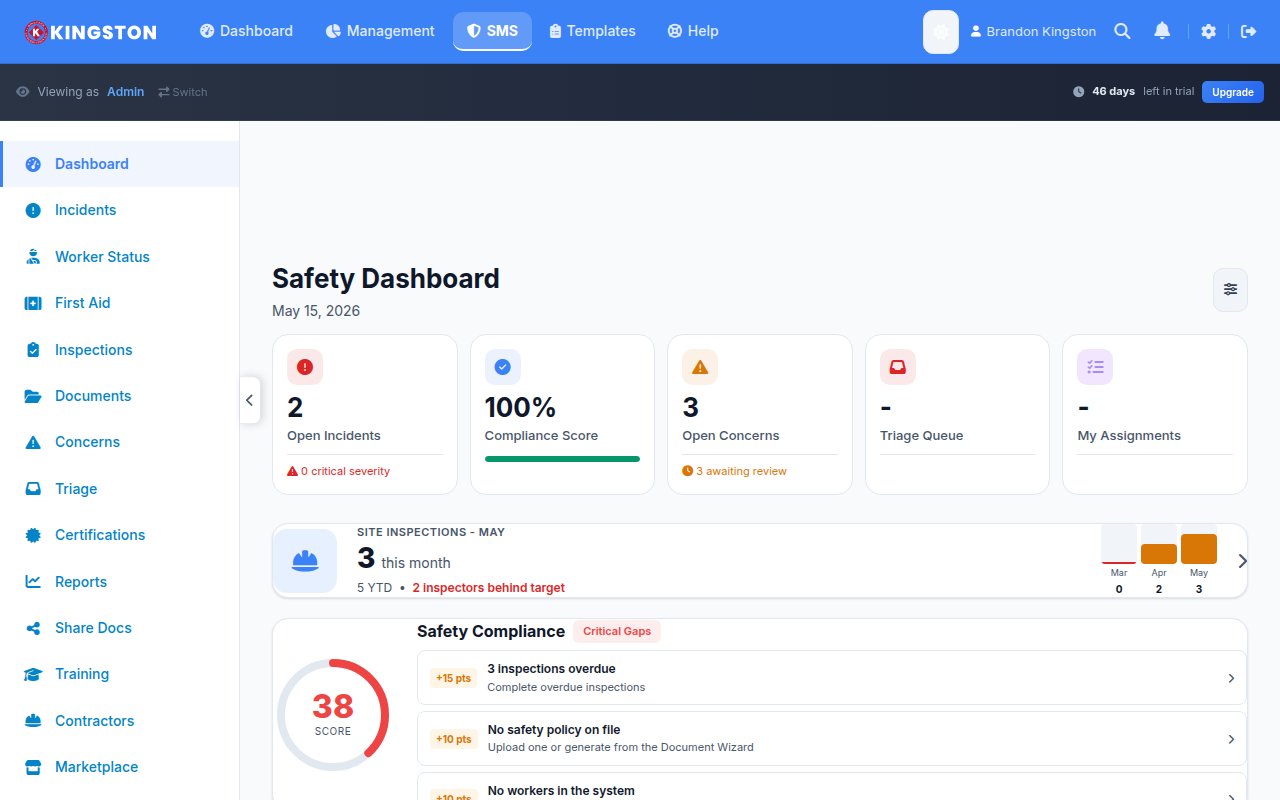
Digital inspection tools allow safety personnel to conduct inspections on a tablet, photograph deficiencies, assign corrective actions and track closure - all from the deck or the dock. This produces more thorough documentation than paper-based systems and enables faster response to identified hazards.
Document Management
Shipyard safety generates an enormous volume of documentation - space entry certifications, hot work permits, crane inspection reports, welder qualifications, JSA/JHA forms, SDS libraries and training records. Managing these documents across a dynamic worksite with multiple employers is a significant challenge.
A centralized document management system ensures that current certifications, permits and procedures are accessible to everyone who needs them. When a Marine Chemist updates a space certification, that information must reach the workers entering that space immediately - not after it works through a paper distribution chain.
Emergency Response
Shipyard emergency scenarios include fires in enclosed spaces, toxic releases, crane incidents, structural collapses and man-overboard situations in dry docks and waterfront areas. Each scenario requires specific response procedures, specialized equipment and trained personnel.
Rescue from deep within a vessel is technically demanding. Emergency responders must navigate through hatches, ladders and confined passages to reach an injured worker - and then extract them through the same route. Pre-plan rescue routes for all active work areas and ensure rescue teams practice these extractions regularly.
Shipyard Safety Training Requirements
OSHA's shipyard standards require training for numerous specific hazards and activities:
- Confined space entry and atmospheric monitoring
- Hot work safety and fire watch responsibilities
- Fall protection systems use and inspection
- Hazard communication and SDS interpretation
- Asbestos and lead awareness (for workers near but not disturbing these materials)
- Respiratory protection fit testing and use
- Crane signaling and rigging practices
- Lockout/tagout for ship systems and shore power
Training must be documented and refreshed at intervals specified by each applicable standard. Workers from different employers must receive site-specific orientation that covers the shipyard's emergency procedures, reporting requirements and site-specific hazards.
Regulatory Inspections and Compliance
OSHA conducts both programmed and complaint-driven inspections at shipyard facilities. Shipyard employment has historically been an OSHA emphasis program due to the high frequency and severity of injuries. Inspectors are familiar with the specific shipyard standards and will evaluate compliance across multiple subparts during a single visit.
Maintain audit-ready documentation at all times. Inspection records, training certifications, space entry permits, hot work permits and crane inspection reports should be organized and retrievable within minutes. The quality of your documentation often determines the outcome of an OSHA inspection.
Strengthen Your Shipyard Safety Program
Shipyard safety management is complex, multi-layered and constantly evolving as projects progress through different phases. Paper-based systems cannot keep pace with the documentation demands and coordination requirements of modern shipyard operations.
Make Safety Easy gives shipyard operators and contractors the digital tools to manage inspections, safety documentation and compliance tracking across dynamic multi-employer worksites.
Build ships safely with better safety tools. Request a demo to see how Make Safety Easy supports shipyard safety management. Or check our pricing page for plans that fit your operation.
Ready to simplify your safety program?
Make Safety Easy helps teams run toolbox talks, inspections, incident reports and more - all from one platform.
Start Your Free TrialNo credit card required. 14-day free trial.