The hardest part of delivering consistent toolbox talk topics is not the delivery - it is finding a fresh, relevant topic week after week without repeating yourself or resorting to generic material that puts your crew to sleep. This list of over 100 safety talk ideas is organized by hazard category and industry so you can quickly find the right topic for your crew, your worksite and the hazards you are facing today.
If you are new to toolbox talks or want a refresher on how to deliver them effectively, start with our guide on what a toolbox talk is and how to run one. Then come back here for topics.
How to Choose the Right Toolbox Talk Topic
Not every topic suits every situation. The most effective toolbox meeting topics are selected based on:
Free Download: 5 Safe Work Procedures
Choose from 112 professionally written SWPs. No credit card required.
Get Free SWPs- The day's work. Match the topic to the tasks being performed. If the crew is working at heights today, talk about fall protection - not chemical handling.
- Recent incidents or near misses. A real event on your site (or a comparable one in your industry) is the most powerful conversation starter.
- Seasonal hazards. Heat stress in summer, cold exposure in winter, wet/slippery conditions in spring and fall.
- Regulatory requirements. Some topics - like hazard communication and emergency procedures - must be covered periodically under OSHA or provincial OHS regulations.
- Trends in your data. If your incident reports show a spike in hand injuries, run a series of talks on hand safety, tool use and glove selection.
General Safety Topics
These toolbox talk topics apply across virtually every industry and workplace.
- Slip, trip and fall prevention
- Proper lifting techniques and back injury prevention
- Housekeeping and its role in hazard prevention
- Reporting near misses - why it matters
- The right to refuse unsafe work
- Emergency evacuation procedures for your site
- Fire extinguisher types and proper use
- First aid basics - when and how to respond
- Distracted driving and vehicle safety
- Fatigue and its effect on safety
- Workplace violence awareness and de-escalation
- Drug and alcohol awareness policies
- Mental health and psychological safety
- Sun and UV exposure protection
- Hydration and heat illness prevention
- Cold stress - frostbite and hypothermia recognition
- Electrical safety basics
- Safe use of extension cords and power strips
- Hand and finger injury prevention
- Eye injury prevention and proper eyewear
Personal Protective Equipment (PPE) Topics
- PPE selection - matching protection to the hazard
- Hard hat inspection and replacement criteria
- Safety glasses vs. goggles vs. face shields
- Hearing protection - plugs vs. muffs, NRR ratings
- Glove selection by hazard type (cut, chemical, thermal)
- Respiratory protection - N95 vs. half-face vs. full-face
- High-visibility clothing requirements
- Steel-toe vs. composite-toe footwear
- Fall protection harness inspection
- PPE care, maintenance and storage
Fall Protection Topics
- Fall protection requirements - when is it required?
- Guardrails, safety nets and personal fall arrest systems
- Harness donning and proper fit
- Lanyard types - shock-absorbing vs. self-retracting
- Anchor point selection and capacity
- Ladder safety - the 4-to-1 rule and 3-point contact
- Scaffold safety and inspection requirements
- Aerial lift and scissor lift safety
- Roof work hazards and edge protection
- Fall rescue planning - what happens after a fall?
Hazardous Materials and Chemical Safety Topics
- How to read a Safety Data Sheet (SDS)
- GHS pictograms and what they mean
- Chemical spill response procedures
- Proper chemical storage and incompatibility
- Flammable liquids handling and storage
- Asbestos awareness - identification and what not to do
- Lead exposure hazards and controls
- Silica dust exposure and prevention
- Hydrogen sulfide (H2S) awareness
- Carbon monoxide hazards in enclosed spaces
Construction-Specific Topics
- OSHA's Fatal Four - falls, struck-by, electrocution, caught-in/between
- Excavation and trenching safety - soil classification and shoring
- Crane safety - signals, load charts and exclusion zones
- Concrete and masonry cutting - dust and noise hazards
- Steel erection safety
- Power tool safety - guards, grounding and inspection
- Hand tool safety - using the right tool for the job
- Material handling and rigging basics
- Barricading and flagging hazardous areas
- Demolition safety planning
- Working near utilities - overhead power lines and underground services
- Concrete pumping safety
- Hot work permits and fire watch procedures
- Mobile equipment and pedestrian interaction on site
- Temporary electrical systems on construction sites
Manufacturing and Industrial Topics
- Lockout/tagout (LOTO) procedures
- Machine guarding - types and inspection
- Conveyor belt safety
- Forklift safety - pre-shift inspections and pedestrian zones
- Compressed gas cylinder handling and storage
- Welding safety - fumes, UV and fire prevention
- Ergonomics at the workstation - reducing repetitive strain
- Noise exposure and hearing conservation
- Robotic and automated equipment safety zones
- Dust explosion awareness in manufacturing
Oil, Gas and Mining Topics
- Well site hazard awareness
- H2S personal monitors - calibration and alarm response
- Confined space entry - permits, attendants and rescue
- Process safety management (PSM) basics
- Line breaking and energy isolation
- Transportation of dangerous goods (TDG/DOT)
- Ground disturbance and one-call procedures
- Rig floor hazards and pinch points
- Pressure testing safety
- Flare and vent system hazards
Transportation and Warehousing Topics
- Loading dock safety - fall hazards and vehicle restraint
- Pre-trip vehicle inspections
- Defensive driving principles
- Backing and spotting procedures
- Cargo securement - what can go wrong
- Racking and shelving inspection - load limits and damage
- Pedestrian safety in warehouse environments
- Battery charging station hazards (hydrogen gas, acid)
Seasonal and Environmental Topics
- Spring safety - flooding, unstable ground, allergies
- Summer heat illness prevention and OSHA's water-rest-shade approach
- Fall hazards - reduced daylight, wet leaves, hunting season traffic
- Winter driving and cold weather work preparation
- Lightning safety for outdoor workers
- Wildfire smoke and air quality index awareness
- Severe weather procedures - tornado, hurricane, earthquake
Health and Wellness Topics
- Stress management and recognizing burnout
- Sleep hygiene and shift work health effects
- Proper nutrition and hydration for physical work
- Stretching and warm-up exercises before physical tasks
- Skin cancer prevention for outdoor workers
- Substance use awareness and employee assistance programs
- Tick-borne illness prevention (Lyme disease)
- Pandemic and infectious disease protocols
Leadership and Culture Topics
- Stop Work Authority - what it is and when to use it
- Bystander intervention - speaking up when you see a hazard
- Leading by example - how supervisors set the safety tone
- Why shortcuts cause injuries
- Complacency - the hidden risk of routine work
- Learning from near misses vs. waiting for injuries
- Building trust on the crew through open safety communication
Tips for Delivering Effective Toolbox Talks
Having a list of toolbox talk topics is only half the battle. Delivery matters just as much as content. Here are the practices that separate memorable talks from forgettable ones:
Keep It Short
Five to fifteen minutes is the sweet spot. If you are going longer, you are covering too much ground. Pick one topic. Cover it well. Move on.
Make It Interactive
Ask questions. Invite workers to share relevant experiences. A two-way conversation is retained far better than a one-way lecture. Try opening with: "Has anyone here seen or experienced this hazard?" The responses will drive the entire discussion.
Use Real Examples
Reference actual incidents - either from your own site, your company, or industry news. Abstract warnings about "potential hazards" do not land the same way as "Last Tuesday on the north side of the site, a worker tripped over an unsecured hose and fractured his wrist."
Connect to the Day's Work
The most impactful talks are directly relevant to what the crew will do that day. If you are pouring concrete, talk about silica dust or manual handling. If a crane is arriving, talk about exclusion zones and load charts.
Document Everything
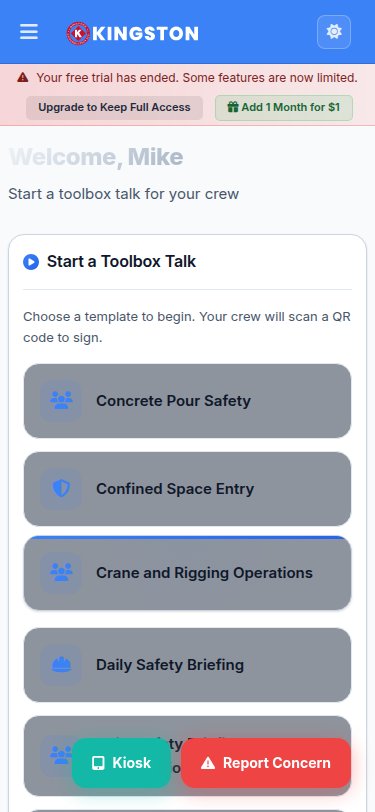
Record the date, topic, presenter and attendees. This documentation is critical for regulatory compliance, audit preparation and demonstrating due diligence. The Make Safety Easy toolbox talks feature lets you record and track talks digitally, with built-in attendance capture and a library of ready-to-use content.
How to Build a Toolbox Talk Schedule
Rather than scrambling for a topic each morning, build a monthly or quarterly calendar. Here is a simple framework:
- Week 1: Hazard-specific topic related to current work activities
- Week 2: PPE topic - inspection, selection, or use
- Week 3: Incident review - discuss a recent near miss, incident, or industry event
- Week 4: Seasonal or wellness topic
Rotate through the categories in this article and you will never repeat a topic within a two-year cycle. Adjust the rotation when site conditions, incidents, or regulatory changes demand it.
Want a toolbox talk system that practically runs itself? Make Safety Easy includes a digital toolbox talk library, scheduling tools and automatic attendance tracking - so your supervisors spend less time on paperwork and more time talking with their crews. Book a demo or explore pricing to get started.
Ready to simplify your safety program?
Make Safety Easy helps teams run toolbox talks, inspections, incident reports and more - all from one platform.
Start Your Free TrialNo credit card required. 14-day free trial.