A safety inspection is a systematic, documented examination of a workplace, equipment, or process to identify hazards, verify compliance with safety standards and confirm that existing controls are functioning as intended. Effective safety inspections are the backbone of every successful safety management system - they catch problems before they become injuries and provide the evidence trail regulators expect. This guide covers the major types of safety inspections, what to include in your checklists and the best practices that separate thorough inspections from check-the-box exercises.
Let's get something out of the way early: a safety inspection that finds nothing wrong isn't a good inspection. It's a suspicious one. Every workplace has hazards. Every piece of equipment degrades. Every process drifts from its original design over time. If your inspection consistently comes back clean, the inspection is the problem - not the workplace.
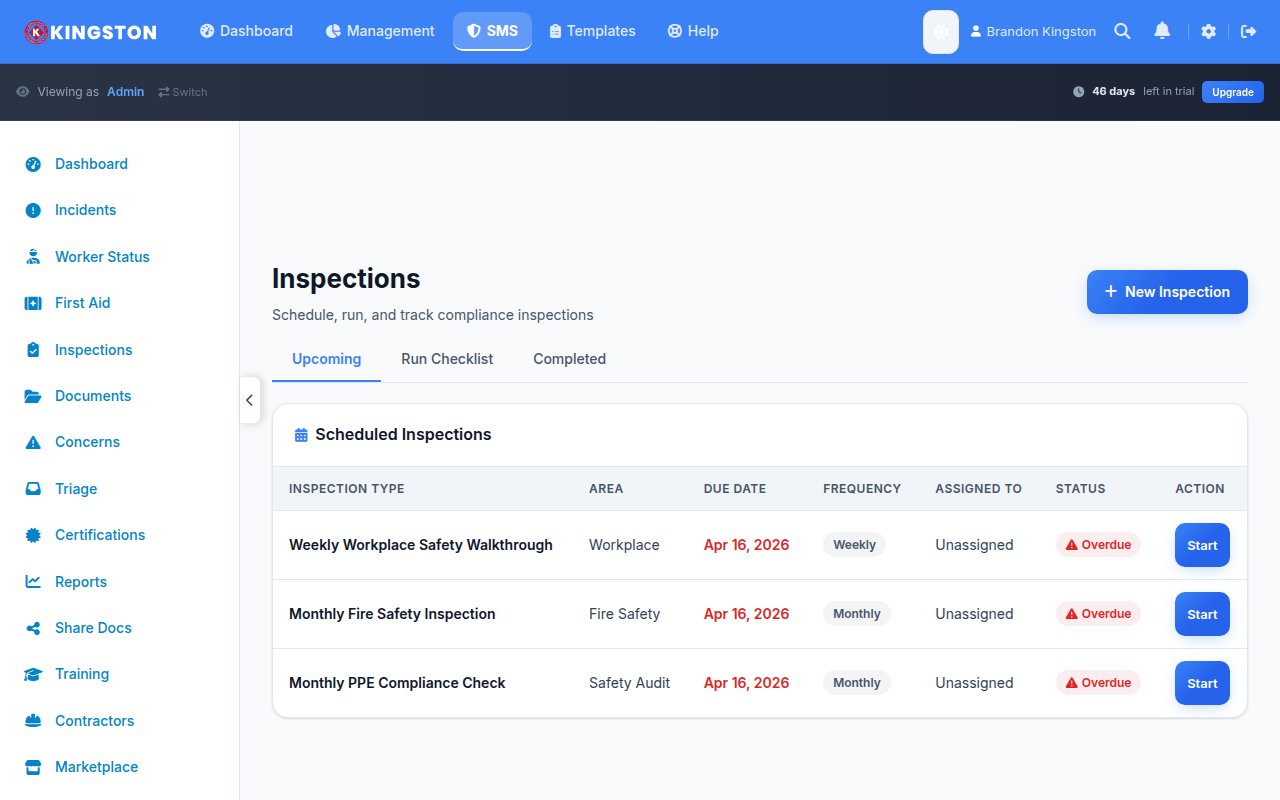
Whether you're a safety coordinator running weekly walk-throughs at a manufacturing plant, a site supervisor conducting pre-shift checks on a construction site, or a safety manager building an inspection program from scratch, this guide gives you the framework, the checklists and the field-tested advice to do it right. Need to digitize your inspection process? Make Safety Easy's inspection tools let your team complete, document and follow up on inspections from any mobile device.
Free Download: 5 Safe Work Procedures
Choose from 112 professionally written SWPs. No credit card required.
Get Free SWPsTypes of Safety Inspections
Not all inspections serve the same purpose. Understanding the different types helps you build a comprehensive inspection program that covers all the bases without creating redundancy or fatigue.
Routine (Scheduled) Inspections
Routine inspections are planned, recurring examinations conducted on a fixed schedule - daily, weekly, monthly, or quarterly depending on the workplace and the hazard profile. They use standardized checklists and cover the same items each cycle, which makes trending possible. When your monthly housekeeping inspection shows a steady decline in scores for the loading dock area, that's a signal worth investigating before it becomes an incident.
Best for: General workplace conditions, housekeeping, PPE compliance, fire protection equipment, emergency exits, first aid supplies.
Pre-Use and Pre-Shift Inspections
These are conducted before equipment is operated or before a work shift begins. They're focused, quick and critical. A forklift operator checking brakes, steering, tires, horn and hydraulics before starting the machine. A crane operator verifying rigging, wire ropes, limit switches and load charts. A construction crew confirming scaffold integrity before climbing it.
Best for: Mobile equipment, cranes and hoists, scaffolding, fall protection equipment, vehicles, powered industrial trucks.
Formal (Comprehensive) Inspections
Formal inspections are deep, thorough examinations that cover an entire facility, department, or operation. They're typically conducted monthly or quarterly by safety committee members, safety professionals, or cross-functional teams. Unlike routine walk-throughs, formal inspections examine management systems, documentation, training records and emergency preparedness in addition to physical conditions.
Best for: Quarterly or annual safety program evaluations, multi-department facilities, pre-audit preparation, regulatory compliance verification.
Hazard-Specific Inspections
These target a single hazard category or regulatory requirement. Examples include confined space inspections, electrical safety inspections, fall protection system inspections, fire prevention inspections and WHMIS/GHS chemical storage inspections. They require specialized knowledge and often use technical criteria beyond general safety awareness.
Best for: High-risk activities, permit-required work, specialized equipment, regulatory-specific compliance.
Post-Incident Inspections
Conducted after an injury, near-miss, property damage event, or environmental release. The purpose isn't just to document what happened - it's to identify the conditions and system failures that allowed the incident to occur. Post-incident inspections feed directly into root cause analysis and corrective action development.
Best for: Incident investigation, root cause analysis, corrective action verification, regulatory response.
Regulatory and Third-Party Inspections
These are conducted by external parties - OSHA compliance officers, provincial OHS inspectors, insurance auditors, client safety representatives, or certification body auditors. You don't control the schedule (for unannounced regulatory inspections), but you absolutely control your state of readiness. Organizations that conduct rigorous internal inspections rarely get surprised by external ones.
Building Effective Safety Inspection Checklists
A checklist is only as good as what's on it - and how it's used. Here's how to build checklists that actually find hazards instead of just generating paper.
Principles of Good Checklist Design
- Be specific, not vague - "Housekeeping acceptable" is useless. "Walking surfaces clear of tripping hazards, spills cleaned, materials stored below eye level" gives the inspector concrete criteria to evaluate.
- Organize by area or system - Group checklist items logically. An inspector walking through a warehouse should check items in the order they encounter them, not jump between sections randomly.
- Include a severity or risk rating - Not all findings are equal. A missing fire extinguisher is more urgent than a faded safety poster. Build a rating system (Critical / Major / Minor) into the checklist so follow-up is prioritized correctly.
- Allow for comments and photos - Yes/No checkboxes identify the existence of a hazard. Comments and photos document its nature, location and severity - information that's essential for effective corrective action.
- Version-control your checklists - Regulations change. Equipment changes. Processes change. Your checklists must keep pace. Date-stamp every revision and archive previous versions. Centralized document management keeps everyone working from the current version.
General Workplace Safety Inspection Checklist
This is a starting template. Customize it for your specific workplace, industry and regulatory jurisdiction.
Walking and Working Surfaces
- Floors free of tripping hazards (cords, hoses, debris, uneven surfaces)
- Spills cleaned promptly; wet floor signs deployed when applicable
- Stairways in good condition with handrails on both sides
- Aisles and walkways clear and properly marked
- Floor openings guarded or covered
Fire Protection and Emergency Equipment
- Fire extinguishers accessible, tagged with current inspection date and appropriate for hazard class
- Emergency exits unobstructed and clearly marked with illuminated signage
- Fire alarm pull stations accessible and unobstructed
- Sprinkler heads unobstructed (minimum 18-inch / 46 cm clearance below in the U.S.; check local codes in Canada)
- Emergency evacuation maps posted and current
- First aid kits stocked and accessible; AED inspected and charged
Electrical Safety
- Electrical panels accessible (36-inch / 1-meter clearance in front per OSHA/CSA requirements)
- No damaged cords, exposed wiring, or improper use of extension cords as permanent wiring
- GFCI protection on receptacles in wet or damp locations
- Lockout/tagout devices available and in serviceable condition
- Electrical rooms and panels properly labeled
Chemical Storage and Hazard Communication
- Safety Data Sheets (SDS) readily accessible for all chemicals on-site
- Chemical containers properly labeled per WHMIS 2015 (Canada) or GHS/HazCom 2012 (U.S.)
- Incompatible chemicals stored separately per SDS requirements
- Secondary containment in place for bulk storage
- Eyewash stations and safety showers functional and unobstructed (tested weekly per ANSI Z358.1)
Personal Protective Equipment (PPE)
- Workers wearing required PPE for their tasks
- PPE in good condition - no cracked hard hats, scratched safety glasses, or torn gloves
- Specialty PPE (fall protection, respiratory protection, hearing protection) properly fitted and inspected
- PPE storage areas clean and organized
Machine Guarding and Equipment Safety
- All point-of-operation guards in place and functional
- Emergency stop buttons accessible and tested
- Lockout/tagout procedures posted and followed for maintenance
- Equipment safety labels and warning signs legible and intact
- Preventive maintenance up to date per manufacturer and regulatory requirements
Safety Inspection Best Practices
Having a great checklist is necessary but not sufficient. How the inspection is conducted matters just as much as what's on the list.
1. Train Your Inspectors
An untrained inspector will walk past hazards that a trained eye catches instantly. Inspectors need to understand the regulatory requirements behind each checklist item, recognize common hazard patterns and know the difference between a minor observation and a critical finding. Pair new inspectors with experienced ones for their first several rounds.
2. Vary Your Inspectors
The person who works in an area every day develops "hazard blindness" - they stop seeing the frayed cord, the blocked exit, the missing guard because it's been that way for months. Rotating inspectors between areas brings fresh eyes and catches what familiarity misses.
3. Inspect During Active Work
Inspecting an empty shop floor on a Saturday tells you about housekeeping. Inspecting during peak production tells you about safe work practices, PPE compliance, equipment operation and how procedures hold up under real-world conditions. Both have value, but operational inspections reveal more.
4. Document Everything - Including Positive Findings
Inspections shouldn't only record deficiencies. Noting positive observations ("Fall protection 100% compliant on scaffolding crew") reinforces good behavior and provides a balanced view of safety performance. Workers who only hear from the safety inspector when something's wrong learn to avoid the inspector, not the hazard.
5. Close the Loop on Corrective Actions
An inspection finding without a corrective action is a documented hazard you chose to ignore. Every deficiency needs an assigned owner, a due date and a follow-up verification that the correction was completed and effective. This is where most inspection programs fail - not in finding hazards, but in fixing them. Digital tools that automatically assign and track corrective actions eliminate the "it fell through the cracks" excuse.
6. Trend Your Data
Individual inspection results show you today's hazards. Inspection trends show you systemic issues. If electrical safety findings appear in every monthly inspection at the same facility, you don't have an electrical safety problem - you have a management problem. Trending requires consistent data collection, which is nearly impossible with paper forms and trivially easy with digital inspection platforms.
7. Involve Workers
Workers know where the hazards are. They work with the equipment, navigate the environment and deal with the conditions every day. Joint inspections that include frontline workers alongside safety professionals yield better findings and build ownership of the safety program. Many jurisdictions require joint health and safety committee participation in workplace inspections.
Inspection Frequency: How Often Is Enough?
There's no universal answer, but there are guidelines based on risk level and regulatory requirements:
| Inspection Type | Typical Frequency | Triggers for Increased Frequency |
|---|---|---|
| Pre-use equipment checks | Before every use or shift | Equipment age, known defects, manufacturer requirements |
| Workplace walk-throughs | Weekly | Recent incidents, new processes, high-hazard areas |
| Formal area inspections | Monthly | Regulatory requirements, JHSC schedules, client requirements |
| Comprehensive facility inspections | Quarterly or annually | Upcoming audits, significant changes, poor lagging indicator performance |
| Specialty inspections (confined space, fall protection) | Per regulatory schedule or before each use | Manufacturer requirements, incident history, environmental conditions |
Digital vs. Paper Inspections: The Business Case
Paper inspections are familiar. They're also slow, error-prone, hard to trend, easy to lose and impossible to follow up on efficiently. The shift to digital inspection tools isn't about technology for technology's sake - it's about making inspections actually work as a safety management tool.
- Real-time data - Completed inspections are available instantly. No waiting for paper forms to be returned, transcribed and filed.
- Photo documentation - Attach photos directly to findings. A picture of a cracked scaffold plank communicates urgency better than a text description ever will.
- Automatic corrective action assignment - Findings trigger notifications to the responsible person with due dates and escalation rules.
- Trend analysis - Compare inspection results across sites, time periods and inspection types. Identify patterns that individual inspections can't reveal.
- Version control - Always working from the current checklist. No outdated forms floating around the shop floor.
- Audit readiness - Every inspection, finding, corrective action and closure is documented with timestamps and electronic signatures. When the regulator asks for your inspection records, you pull them up in seconds - not hours.
Make Your Inspections Count
Safety inspections are only valuable if they find real hazards and drive real corrective actions. A beautifully formatted checklist that sits in a filing cabinet does nothing for the worker who trips over the same hose every morning. The organizations that get inspections right treat them as the front line of hazard identification - the early warning system that catches problems while they're still cheap and easy to fix.
Make Safety Easy gives you customizable digital inspections, automatic corrective action tracking, photo documentation and trend analysis - all accessible from any device, in the field or the office. Paired with centralized document management, your entire inspection program lives in one place.
Book a demo to see how digital inspections work in practice, or view our pricing to find the right plan for your team.
Ready to simplify your safety program?
Make Safety Easy helps teams run toolbox talks, inspections, incident reports and more - all from one platform.
Start Your Free TrialNo credit card required. 14-day free trial.