Safety audit frequency is one of the most common questions safety managers face - and there is no single right answer. The optimal schedule depends on your industry, the types of hazards present, regulatory requirements, incident history and organizational capacity. However, there are clear frameworks and best practices that help you determine how often to conduct safety audits and inspections so that hazards are caught early and compliance is maintained without overwhelming your team.
Safety Audits vs. Safety Inspections
Before setting a frequency, it is important to distinguish between audits and inspections because they serve different purposes and operate on different schedules.
Safety Inspections
Safety inspections are routine examinations of the workplace to identify hazardous conditions, unsafe behaviors and non-compliance with safety procedures. They are typically conducted by supervisors, safety committee members or trained workers. Inspections are focused on current conditions - what does the workplace look like right now?
Free Download: 5 Safe Work Procedures
Choose from 112 professionally written SWPs. No credit card required.
Get Free SWPsSafety Audits
Safety audits are more comprehensive evaluations of the entire safety management system. They examine whether policies, procedures, training programs and documentation meet regulatory requirements and organizational standards. Audits evaluate the system itself, not just the current state of the workplace. They are typically conducted by internal safety professionals, corporate safety teams or third-party auditors.
Both are essential. Inspections catch hazards in real time. Audits ensure the systems designed to prevent hazards are functioning correctly. Your organization needs a schedule for each.
Factors That Determine Audit Frequency
Several factors should influence how often you schedule safety audits and inspections. Evaluating each factor helps you build a risk-based schedule rather than applying an arbitrary frequency.
Industry Risk Level
High-hazard industries require more frequent audits and inspections than lower-risk environments. Construction, mining, oil and gas, chemical manufacturing and heavy manufacturing all involve hazards that can change rapidly and cause severe or fatal injuries. These industries typically require daily inspections of active work areas and quarterly to semi-annual comprehensive audits.
Lower-hazard environments such as offices, retail and light manufacturing still require regular safety inspections, but the frequency can be reduced. Monthly inspections and annual audits are common baseline frequencies for these settings.
Regulatory Requirements
Some regulations mandate specific audit or inspection frequencies:
- OSHA Process Safety Management (PSM): Process hazard analyses must be revalidated every 5 years. Compliance audits are required at least every 3 years
- OSHA Permit-Required Confined Spaces: Annual review of the permit space program when entries are made during the year
- MSHA (Mining): Workplace examinations required at least once per shift in underground mines
- DOT/FMCSA: Annual vehicle inspections for commercial motor vehicles, plus pre-trip and post-trip inspections by drivers
- EPA Risk Management Plan: Compliance audits at least every 3 years
- OSHA Crane Standards: Annual comprehensive inspections by qualified personnel, plus frequent and periodic inspections per manufacturer requirements
These regulatory minimums are exactly that - minimums. Organizations committed to safety excellence typically exceed regulatory frequencies.
Incident History
A workplace that has experienced recent incidents, near misses or regulatory citations should increase its audit and inspection frequency until the underlying causes are addressed and trends improve. Conversely, a workplace with a strong safety track record and mature safety systems may be able to maintain compliance with less frequent auditing, though reducing frequency below regulatory minimums is never acceptable.
Organizational Change
Changes in processes, equipment, personnel, facilities or production volumes all create potential for new or increased hazards. Any significant organizational change should trigger an additional safety audit or inspection cycle regardless of the regular schedule. Common triggers include new equipment installation, process modifications, workforce expansion, contractor changes and facility renovations.
Recommended Safety Inspection Frequencies
The following framework provides a starting point for establishing your inspection schedule. Adjust based on your specific hazard profile and regulatory requirements.
Daily Inspections
Daily inspections are appropriate for areas and equipment with the highest hazard potential or most frequent regulatory requirements:
- Pre-use equipment inspections (forklifts, aerial lifts, cranes, vehicles)
- Active construction work areas
- Confined space entry permits
- Hot work permits and fire watch areas
- Trenching and excavation operations
- Chemical process areas in PSM-covered facilities
Weekly Inspections
Weekly inspections cover areas that change frequently but not daily:
- Warehouse and storage areas
- Emergency equipment (eyewash stations, fire extinguishers, emergency showers)
- Housekeeping conditions in production areas
- PPE condition and availability
- Loading dock equipment
Monthly Inspections
Monthly inspections address areas and systems that change more slowly:
- Comprehensive facility walkthroughs covering all work areas
- Fire protection systems (sprinklers, alarms, extinguishers)
- Electrical panels and wiring conditions
- Machine guarding and safety devices
- Ergonomic assessments of workstations
- First aid kit inventory and supply checks
Quarterly Inspections
Quarterly inspections address systems and conditions that require periodic but not monthly attention:
- Emergency evacuation routes and exit lighting
- Ventilation system performance
- Ladder and scaffold condition assessments
- Chemical inventory reconciliation against Safety Data Sheets
- Fall protection equipment inspection (harnesses, lanyards, anchors)
Recommended Safety Audit Frequencies
Comprehensive safety audits operate on longer cycles than inspections because they evaluate systemic factors rather than point-in-time conditions.
Annual Audits
Most organizations should conduct a comprehensive safety management system audit at least annually. This audit evaluates the overall effectiveness of the safety program and covers policy review, training program adequacy, documentation completeness, regulatory compliance status and corrective action follow-through. A thorough annual audit using a standardized safety audit checklist provides the foundation for continuous improvement planning.
Program-Specific Audits
Individual safety programs (lockout/tagout, confined space, hazard communication, respiratory protection) should be audited on rotating schedules so that each program receives a focused audit at least every 2 to 3 years. High-risk programs may warrant annual audits.
Third-Party Audits
External audits by third-party safety consultants or insurance carriers provide an objective perspective that internal audits cannot replicate. Most organizations benefit from a third-party audit every 2 to 3 years, or more frequently if significant gaps have been identified.
Building Your Safety Inspection Schedule
Creating an effective schedule requires balancing thoroughness with practicality. An overly ambitious schedule that cannot be sustained is worse than a modest schedule that is consistently executed.
Step 1: Inventory Your Inspection Requirements
List every area, piece of equipment and safety program that requires inspection. Include regulatory requirements, manufacturer recommendations and internal standards. This inventory becomes the master list from which your schedule is built.
Step 2: Assign Frequencies Based on Risk
Use the risk-based framework above to assign an appropriate frequency to each item. When in doubt, default to the more frequent option - you can always reduce frequency later if data supports it.
Step 3: Assign Responsibility
Every inspection must have a named responsible person or role. Unassigned inspections do not get completed. Distribute inspection responsibilities across supervisors, team leads and safety committee members rather than concentrating everything on the safety manager.
Step 4: Build the Calendar
Map all inspections onto a calendar that shows daily, weekly, monthly, quarterly and annual activities. Stagger inspections across the month so that the workload is distributed evenly rather than creating a crush at month-end.
Step 5: Track Completion and Follow-Up
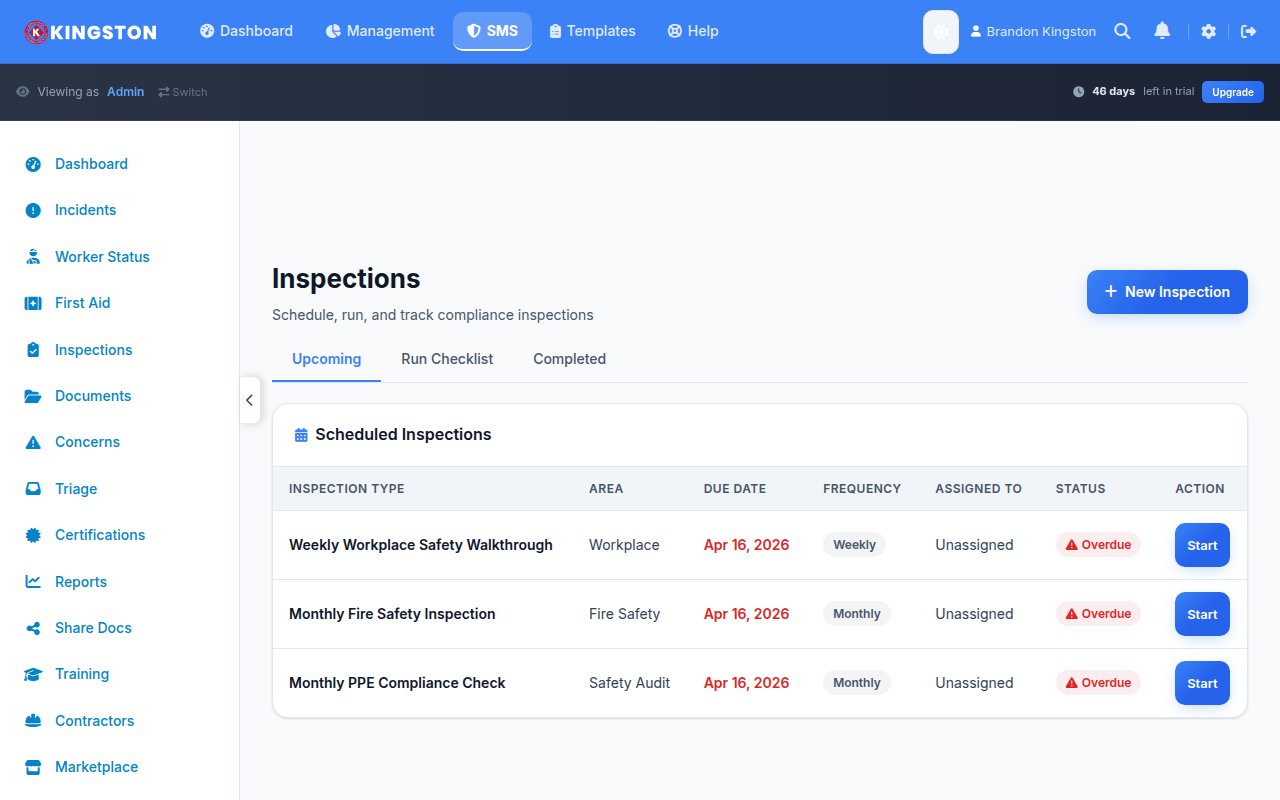
An inspection that is completed but not followed up on provides false assurance. Every finding must generate a corrective action, every corrective action must have an owner and deadline and every deadline must be tracked to closure. This is where digital inspection management tools provide the greatest value - automated reminders, corrective action tracking and completion dashboards ensure nothing falls through the cracks.
Common Mistakes in Safety Audit Scheduling
Avoid these pitfalls when establishing your audit and inspection schedule:
- Setting frequencies based on what is convenient rather than what is needed: Schedule based on risk, not on how busy the safety team is
- Conducting inspections without follow-up: An inspection program that identifies hazards but does not track corrective actions to closure is performing compliance theater
- Using the same checklist everywhere: Different areas and operations have different hazards. Generic checklists miss area-specific risks
- Relying only on scheduled inspections: Unscheduled spot checks and informal observations catch issues that workers may "clean up" before a scheduled inspection
- Not adjusting frequency based on results: If monthly inspections consistently find zero issues in an area, the frequency might be appropriate to reduce. If they consistently find problems, the frequency should increase
Measuring Inspection Program Effectiveness
Track these metrics to evaluate whether your safety audit and inspection schedule is working:
- Inspection completion rate: Percentage of scheduled inspections completed on time. Target 95% or higher
- Findings per inspection: A sudden increase may indicate deteriorating conditions. A consistent zero may indicate inspectors are not looking carefully enough
- Corrective action close-out rate: Percentage of findings resolved within the assigned timeframe
- Time to close: Average number of days between finding identification and resolution
- Repeat findings: Issues that appear on multiple inspections indicate that corrective actions are not effective
Automate Your Safety Inspection Schedule
Managing a comprehensive inspection schedule across multiple areas, frequencies and responsible parties is complex. Make Safety Easy provides automated scheduling, mobile inspection checklists, corrective action tracking and compliance dashboards that take the administrative burden off your safety team so they can focus on finding and fixing hazards.
Use our safety audit checklist guide as a starting point for building your inspection program. Then schedule a demo to see how our platform automates the entire process, or check our pricing to find the right plan for your organization.
Ready to simplify your safety program?
Make Safety Easy helps teams run toolbox talks, inspections, incident reports and more - all from one platform.
Start Your Free TrialNo credit card required. 14-day free trial.