A PPE management system is a structured program for selecting, procuring, distributing, inspecting, maintaining and tracking personal protective equipment across your workforce. OSHA requires employers to assess workplace hazards, provide appropriate PPE at no cost to employees and ensure workers are trained on proper use under 29 CFR 1910.132-138. An effective system reduces injury rates by 40-60% for hazards where engineering controls are insufficient, while controlling costs through inventory optimization and lifecycle management. This guide covers every component of a world-class PPE program.
OSHA PPE Requirements: Standards You Must Know
OSHA's PPE standards span multiple regulations depending on the type of protection and the industry. Understanding which standards apply to your workplace is the foundation of a compliant PPE program.
General Industry PPE Standards (29 CFR 1910)
| Standard | Coverage | Key Requirements |
|---|---|---|
| 1910.132 | General requirements | Hazard assessment, PPE selection, training, employer-paid PPE |
| 1910.133 | Eye and face protection | ANSI Z87.1 compliant eyewear, selection based on hazard type |
| 1910.134 | Respiratory protection | Written program, medical evaluation, fit testing, training |
| 1910.135 | Head protection | ANSI Z89.1 compliant hard hats, Type I or Type II based on hazard |
| 1910.136 | Foot protection | ASTM F2413 compliant safety footwear |
| 1910.137 | Electrical protective equipment | Insulating gloves, sleeves, blankets rated for voltage exposure |
| 1910.138 | Hand protection | Selection based on hazard type (chemical, cut, heat, electrical) |
Construction Industry PPE Standards (29 CFR 1926)
| Standard | Coverage | Key Requirements |
|---|---|---|
| 1926.95 | General PPE requirements | Hazard assessment, employer provision |
| 1926.100 | Head protection | Hard hats required where falling/flying object hazards exist |
| 1926.101 | Hearing protection | Required when noise exceeds 85 dBA TWA |
| 1926.102 | Eye and face protection | Required for dust, flying particles, chemicals, welding |
| 1926.103 | Respiratory protection | References 1910.134 requirements |
| 1926.104 | Safety belts/lanyards/lifelines | Fall protection equipment specifications |
| 1926.106 | Working over water | Life jackets, ring buoys, rescue equipment |
Canadian Requirements
Canadian employers must comply with provincial OHS regulations which vary by jurisdiction. Key standards include CSA Z94.1 (head protection), CSA Z94.3 (eye and face protection), CSA Z195 (foot protection) and CSA Z94.4 (hearing protection). While the specific regulation numbers differ from OSHA, the core requirements - hazard assessment, employer-provided PPE, training and documentation - are consistent across all Canadian provinces.
Free Download: 5 Safe Work Procedures
Choose from 112 professionally written SWPs. No credit card required.
Get Free SWPsHazard Assessment for PPE Selection
The hazard assessment is the cornerstone of your PPE program. OSHA requires a documented workplace hazard assessment to determine what PPE is necessary (29 CFR 1910.132(d)). This is not a one-time exercise - reassessment is required whenever processes, equipment or materials change.
Step-by-Step Hazard Assessment Process
Step 1: Walk-Through Survey
Physically walk through every work area and document potential hazards. For each area, identify:
- Sources of motion (machinery, vehicles, material handling)
- Sources of high temperatures (furnaces, welding, hot surfaces)
- Chemical exposures (liquids, vapors, dusts, fumes)
- Sources of harmful radiation (welding arcs, UV, lasers)
- Sources of falling objects or potential for impacts
- Sources of sharp objects (cutting tools, sheet metal, glass)
- Sources of rolling or pinching objects
- Electrical hazards
- Noise levels exceeding 85 dBA
- Slip, trip and fall hazards
Step 2: Organize and Analyze Hazard Data
For each identified hazard, document:
- The specific hazard type
- The body part(s) at risk
- The severity and probability of injury
- Existing engineering and administrative controls
- Residual risk requiring PPE protection
Step 3: Select Appropriate PPE
Match residual hazards to PPE that provides adequate protection. Consider protection level, comfort, fit and compatibility with other PPE items the worker must wear simultaneously.
Step 4: Document the Assessment
OSHA requires a written certification that the hazard assessment was performed. The document must include:
- The workplace evaluated
- The name of the person conducting the assessment
- The date of the assessment
- The hazards identified
- The PPE selected for each hazard
Hazard-to-PPE Selection Matrix
| Hazard Type | Body Area | PPE Required | Standard/Rating |
|---|---|---|---|
| Flying particles/debris | Eyes/face | Safety glasses with side shields or goggles | ANSI Z87.1 |
| Chemical splash | Eyes/face | Chemical splash goggles, face shield | ANSI Z87.1 D3/D4 |
| Welding arc | Eyes/face | Welding helmet with proper shade lens | ANSI Z87.1, Z49.1 |
| Falling objects | Head | Type I or Type II hard hat | ANSI Z89.1 Class E, G or C |
| Electrical exposure | Head | Class E (electrical) hard hat | ANSI Z89.1 Class E |
| Cut hazards | Hands | Cut-resistant gloves | ANSI/ISEA 105 (A1-A9 cut levels) |
| Chemical contact | Hands | Chemical-resistant gloves | EN 374, material-specific permeation data |
| Impact/crush | Feet | Safety-toe footwear | ASTM F2413 |
| Puncture (underfoot) | Feet | Puncture-resistant sole | ASTM F2413 PR rated |
| Noise above 85 dBA | Ears | Earplugs or earmuffs | ANSI S3.19, NRR rated |
| Airborne contaminants | Respiratory | Appropriate respirator (APR, PAPR, SAR) | NIOSH-approved, 42 CFR 84 |
| Fall from height | Full body | Full-body harness with lanyard/SRL | ANSI Z359.1 |
| High-visibility needs | Full body | High-visibility vest or garment | ANSI/ISEA 107 Class 2 or 3 |
Fit Testing Protocols
Proper fit is essential for PPE to provide its rated protection. An ill-fitting respirator, loose-fitting glove or oversized hard hat can be worse than no PPE at all because it creates a false sense of security.
Respiratory Fit Testing
OSHA's respiratory protection standard (1910.134) requires fit testing before initial use and annually thereafter for all tight-fitting respirators. There are two approved methods:
Qualitative Fit Testing (QLFT)
A pass/fail test that relies on the wearer's ability to detect a test agent (saccharin, Bitrex, isoamyl acetate or irritant smoke). Suitable for half-mask respirators only.
- Advantages: Low cost, simple to administer, no specialized equipment
- Limitations: Subjective, limited to half-mask respirators, relies on wearer honesty
- Cost: $3-8 per test
Quantitative Fit Testing (QNFT)
Uses an instrument to measure the actual amount of leakage into the facepiece. Required for full-face respirators. Produces a numerical fit factor.
- Advantages: Objective, more accurate, works with all respirator types
- Limitations: Higher cost, requires specialized equipment and trained operator
- Cost: $15-40 per test (equipment cost: $5,000-15,000 for PortaCount or similar device)
Fit Testing Triggers
Beyond annual testing, retest when any of the following occur:
- Different respirator model or size assigned
- Worker experiences significant weight change (gain or loss of 20+ pounds)
- Dental work affecting facial structure (dentures, significant dental surgery)
- Facial scarring or surgery
- Worker reports breathing difficulty or poor seal
- Visual observation of poor fit during use
Other PPE Fit Considerations
Hard hats: Must fit snugly with the suspension system adjusted properly. The clearance between the shell and suspension should be 1 to 1.25 inches. Workers should not modify hard hats (drilling holes, removing suspension components).
Safety footwear: Should be professionally fitted. Ill-fitting safety boots cause blisters, foot fatigue and tripping hazards. Provide multiple width options and ensure workers can try before purchasing.
Gloves: Must allow adequate dexterity for the task. Oversized gloves create caught-in hazards around machinery. Undersized gloves cause hand fatigue and reduce grip strength.
Fall protection harnesses: Must be adjusted to fit snugly with no more than 4 inches of slack at any strap. The D-ring should sit between the shoulder blades. Workers must be trained on proper donning and adjustment.
PPE Inspection and Maintenance
PPE degrades over time through normal use, UV exposure, chemical contact and physical damage. Regular inspection and maintenance are essential for ensuring continued protection.
Inspection Frequencies and Criteria
| PPE Type | Inspection Frequency | Key Inspection Points | Replacement Triggers |
|---|---|---|---|
| Safety glasses | Before each use | Scratches, cracks, loose frames, degraded lenses | Impaired vision, frame damage, failed impact test |
| Hard hats | Before each use | Cracks, dents, UV degradation (chalky appearance), suspension wear | Any crack or dent, suspension fraying, 5-year max service life |
| Gloves | Before each use | Tears, punctures, chemical degradation, reduced elasticity | Any hole or tear, visible degradation, per manufacturer schedule |
| Safety footwear | Weekly (formal), daily (visual) | Sole wear, exposed safety toe, sole separation, lace condition | Sole worn smooth, toe cap exposed, sole delamination |
| Respirators | Before each use; monthly if stored | Valve condition, strap elasticity, facepiece flexibility, filter condition | Valve damage, strap failure, facepiece hardening, per change schedule |
| Fall protection harness | Before each use; formal annual by competent person | Webbing cuts/fraying, hardware damage, stitching integrity, D-ring wear | Any webbing damage, deformed hardware, post-fall (mandatory) |
| Hearing protection | Before each use | Earmuff cushion condition, headband tension, earplug cleanliness | Hardened cushions, reduced headband tension, damaged foam |
| High-visibility garments | Before each use | Retroreflective tape condition, fabric tears, soiling, fading | Tape peeling or non-reflective, excessive soiling, tears |
PPE Inspection Checklist Template
- [ ] Visual inspection for damage, wear or contamination
- [ ] Functional test (straps, adjustments, closures work properly)
- [ ] Check manufacturer date codes against maximum service life
- [ ] Verify correct size and fit for the assigned worker
- [ ] Confirm compatibility with other PPE items worn simultaneously
- [ ] Document inspection results and any items removed from service
- [ ] Replace defective items before worker begins task
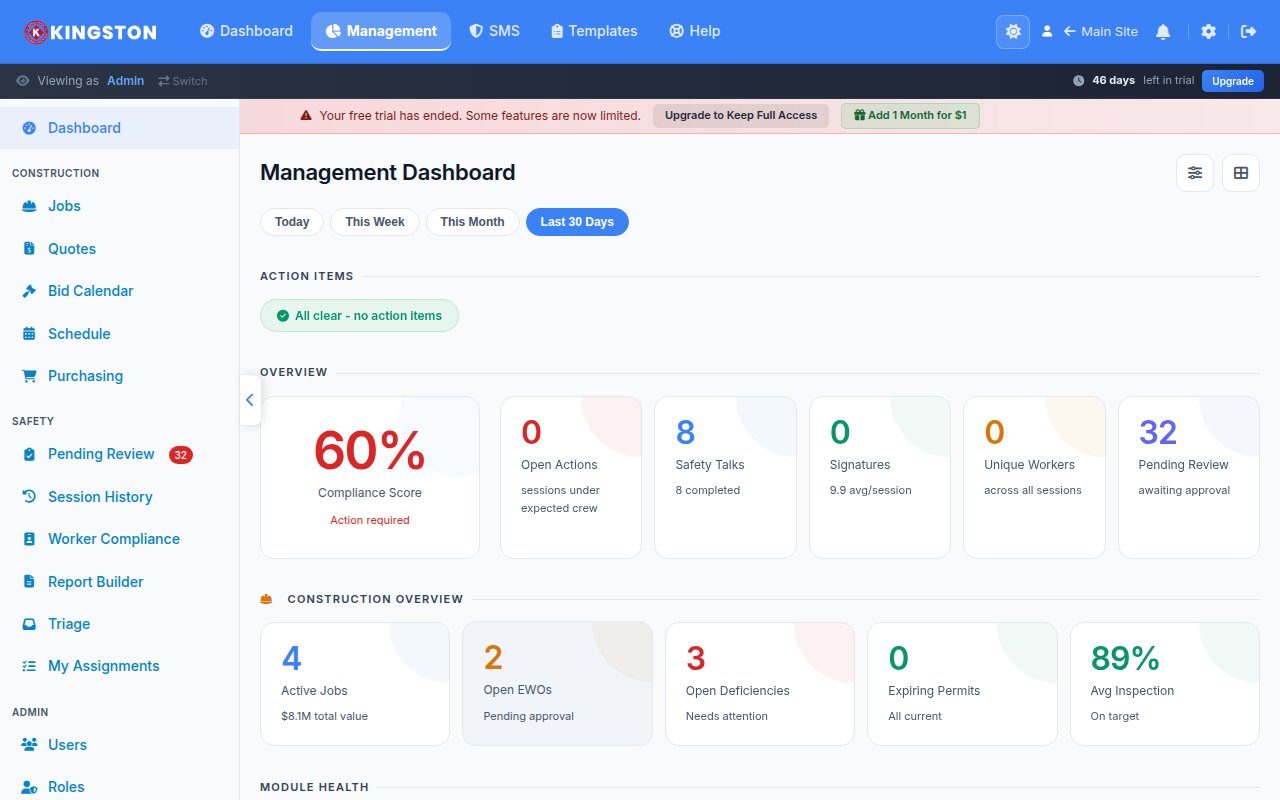
Digital inspection tools streamline this process significantly. With Make Safety Easy's inspection module, supervisors complete PPE inspections on a mobile device, automatically documenting results with timestamps and photos. Deficiencies trigger automatic corrective action workflows.
Inventory Management Systems
Effective PPE inventory management prevents two costly problems: stockouts (workers cannot get the PPE they need) and overstocking (tying up budget in unused inventory that may expire or degrade before use).
Inventory Management Methods
Manual Tracking (Spreadsheet-Based)
Suitable for organizations with fewer than 50 workers and limited PPE variety. Use a simple spreadsheet tracking stock levels, issuance and reorder points.
- Advantages: Low cost, simple, no technology required
- Disadvantages: Error-prone, no real-time visibility, time-consuming
Vending Machine Systems
Automated dispensing machines located at work areas. Workers swipe a badge to receive PPE items. The machine tracks usage by individual, department and item type.
- Advantages: 24/7 access, automatic usage tracking, reduced waste (20-40% typical), accountability
- Disadvantages: Capital investment ($5,000-15,000 per unit), limited item sizes, maintenance required
Digital Inventory Management (Software-Based)
Cloud-based platforms that track PPE inventory across multiple locations, automate reorder alerts and generate usage reports. Integrates with procurement systems.
- Advantages: Real-time visibility, automated reordering, usage analytics, multi-location support
- Disadvantages: Monthly subscription cost, requires internet connectivity, setup time
RFID/Barcode Tracking
Each PPE item is tagged with an RFID chip or barcode. Scanning tracks issuance, return, inspection status and service life. Commonly used for high-value items like respirators, harnesses and specialty gloves.
- Advantages: Precise tracking, automated service life alerts, loss prevention
- Disadvantages: Higher per-item cost, requires scanning infrastructure
Inventory Optimization Strategies
Par Level System: Set minimum stock levels for each PPE item. When inventory drops below par, a reorder is triggered automatically. Calculate par levels based on average daily usage multiplied by lead time plus a safety buffer.
Formula: Par Level = (Average Daily Usage x Lead Time in Days) + Safety Stock
Example: If you use 10 pairs of cut-resistant gloves per day, your supplier has a 7-day lead time and you want a 3-day safety buffer:
Par Level = (10 x 7) + (10 x 3) = 70 + 30 = 100 pairs minimum on hand
ABC Analysis: Categorize PPE items by consumption value (unit cost x annual usage):
- A items (top 20% by value, ~80% of spend): Tight inventory control, frequent reviews, preferred suppliers
- B items (next 30% by value, ~15% of spend): Moderate controls, monthly reviews
- C items (bottom 50% by value, ~5% of spend): Simple controls, bulk purchasing, infrequent review
Cost Reduction Without Compromising Protection
| Strategy | Typical Savings | Implementation Effort |
|---|---|---|
| Volume purchasing agreements with preferred vendors | 10-25% | Low |
| Standardizing PPE brands/models across locations | 5-15% | Medium |
| Vending machine dispensing (reduces waste/hoarding) | 20-40% | High (upfront) |
| Worker accountability tracking (who uses what) | 10-20% | Medium |
| Proper storage to extend service life | 5-15% | Low |
| Right-sizing (matching PPE level to actual hazard) | 10-30% | Medium |
| Reusable vs. disposable analysis | 15-40% (for applicable items) | Low |
PPE Training Requirements
OSHA requires training for all workers who must use PPE. Training must cover when PPE is necessary, what PPE is required, how to properly put on and take off the PPE, the limitations of the PPE and proper care and maintenance. Training must be documented and refreshed when conditions change.
Training Content by PPE Type
All PPE Types (General):
- When and why the PPE is required
- How to properly don (put on) and doff (remove) the PPE
- How to adjust for proper fit
- Limitations - what the PPE does and does not protect against
- Useful life and how to recognize wear or damage
- Proper cleaning, storage and maintenance
- How to request replacement PPE
Respiratory Protection (Additional Requirements):
- Medical evaluation results and clearance
- Fit test results and the importance of seal integrity
- Cartridge/filter change schedule and breakthrough indicators
- Emergency procedures for respirator failure
- IDLH (Immediately Dangerous to Life or Health) atmosphere protocols
- Voluntary use requirements under Appendix D (for filtering facepieces)
Fall Protection Harness (Additional Requirements):
- Pre-use inspection procedure
- Proper donning with all five adjustment points
- Connecting to appropriate anchorage (5,000 lb capacity or 2x anticipated force)
- Fall clearance calculation
- Suspension trauma awareness and rescue procedures
- Post-fall equipment removal from service
Training Documentation Requirements
OSHA requires employers to verify that each affected employee has received and understood the required PPE training. Documentation should include:
- Worker name and employee ID
- Date of training
- Type of PPE covered
- Trainer name and qualifications
- Training method (classroom, hands-on, online, OJT)
- Competency verification method (written test, practical demonstration)
- Worker signature confirming understanding
Keep training records for the duration of employment plus any retention period required by your jurisdiction. Digital document management makes long-term record retention and retrieval straightforward.
Retraining Triggers
Retraining is required when:
- Worker demonstrates they do not understand the training
- Worker is observed using PPE incorrectly
- Workplace changes make previous training inadequate
- New PPE types or models are introduced
- New hazards are identified requiring different PPE
- Annual refresher (recommended best practice, even where not specifically required)
Industry-Specific PPE Matrices
PPE requirements vary significantly across industries. Use these matrices as starting points for your hazard assessment-based PPE selection.
Construction
| Task/Area | Head | Eyes | Hands | Feet | Hearing | Respiratory | Fall Protection | Visibility |
|---|---|---|---|---|---|---|---|---|
| General site access | Hard hat | Safety glasses | Work gloves | Safety boots | As needed | - | - | Class 2 vest |
| Demolition | Hard hat | Goggles | Cut-resistant | Safety boots | Required | N95 minimum | As needed | Class 2 vest |
| Welding | Welding helmet | Shade lens | Welding gloves | Safety boots | As needed | P100 for fumes | As needed | FR clothing |
| Concrete work | Hard hat | Goggles | Chemical-resistant | Rubber boots | As needed | N95 for dust | - | Class 2 vest |
| Steel erection | Hard hat | Safety glasses | Work gloves | Safety boots | As needed | - | Required >6ft | Class 2 vest |
Manufacturing
| Task/Area | Head | Eyes | Hands | Feet | Hearing | Respiratory |
|---|---|---|---|---|---|---|
| Machine operation | Bump cap | Safety glasses | Cut-resistant (A4+) | Safety shoes | Area-specific | - |
| Grinding/cutting | As needed | Face shield + glasses | Impact-resistant | Safety shoes | Required | P100 for metals |
| Chemical handling | As needed | Chemical goggles | Chemical-resistant | Chemical boots | - | Per SDS/exposure assessment |
| Painting/coating | As needed | Chemical goggles | Chemical-resistant | Safety shoes | - | OV/P100 or supplied air |
| Shipping/receiving | Bump cap | Safety glasses | Work gloves | Safety shoes | - | - |
Oil and Gas
| Task/Area | Head | Eyes | Hands | Feet | Hearing | Respiratory | Other |
|---|---|---|---|---|---|---|---|
| Drilling operations | Hard hat | Safety glasses | Impact-resistant | Met-guard boots | Required | H2S monitor | FR clothing, Class 2 vest |
| Pipeline work | Hard hat | Safety glasses | Cut-resistant | Safety boots | As needed | SCBA available | FR clothing, Class 2 vest |
| Refinery operations | Hard hat | Safety glasses | Chemical-resistant | Safety boots | Required | Per exposure | FR clothing, gas monitor |
| Tank cleaning | Hard hat | Chemical goggles | Chemical-resistant | Chemical boots | As needed | Supplied air | FR coverall, confined space kit |
For detailed PPE requirements by industry, see our comprehensive guide on PPE requirements by industry.
Documentation and Record-Keeping
A PPE management system is only as good as its documentation. Records serve three critical purposes: regulatory compliance, legal protection and program improvement.
Essential PPE Records
| Record Type | Content | Retention Period |
|---|---|---|
| Hazard assessment certification | Assessment findings, PPE selected, assessor name, date | Duration of employment + 3 years (minimum) |
| PPE training records | Worker name, date, topics, trainer, competency verification | Duration of employment + 3 years |
| Fit test records | Worker name, respirator model/size, fit test method, results, date | Duration of employment (respiratory: until next fit test) |
| Medical evaluation records | Physician clearance for respirator use | Duration of employment + 30 years (per OSHA access to medical records) |
| Inspection records | PPE type, condition, pass/fail, inspector name, date | Until PPE is retired + 1 year |
| Issuance records | Worker name, PPE item, date issued, size | Duration of employment |
| Inventory records | Stock levels, purchases, consumption rates | 3 years (financial records retention) |
Managing these records on paper becomes unmanageable as organizations grow. Digital document management systems provide searchable, audit-ready records accessible from any device. Automated alerts ensure fit tests, training and equipment replacements never lapse.
Building Your PPE Program: Complete Checklist
Use this comprehensive checklist to build or audit your PPE management system:
Program Foundation
- [ ] Written PPE policy signed by senior management
- [ ] Designated PPE program administrator with clear authority
- [ ] Budget approved for PPE procurement, training and program administration
- [ ] Roles and responsibilities defined for all levels (management, supervisors, workers)
Hazard Assessment
- [ ] Walk-through survey completed for all work areas
- [ ] Hazard assessment documented and certified per OSHA requirements
- [ ] PPE selected based on hazard assessment findings
- [ ] Reassessment schedule established (at minimum: annually and when conditions change)
PPE Selection and Procurement
- [ ] All PPE meets applicable ANSI, ASTM, CSA or NIOSH standards
- [ ] Multiple sizes available to accommodate diverse workforce
- [ ] Compatibility verified for workers wearing multiple PPE types simultaneously
- [ ] Preferred vendor agreements in place for cost management
- [ ] PPE provided at no cost to employees (OSHA requirement)
Fit Testing
- [ ] Qualitative or quantitative fit testing program established for tight-fitting respirators
- [ ] Fit testing schedule maintained (initial and annual minimum)
- [ ] Fit test records documented and accessible
- [ ] Multiple respirator models/sizes available for workers who fail initial fit test
Training
- [ ] Initial PPE training provided before first use
- [ ] Training covers all elements required by OSHA (when, what, how, limitations, care)
- [ ] Hands-on demonstration and practice included
- [ ] Competency verified through practical assessment
- [ ] Retraining triggers defined and monitored
- [ ] Training records maintained for all employees
Inspection and Maintenance
- [ ] Pre-use inspection procedures established for all PPE types
- [ ] Formal inspection schedule for high-value items (harnesses, respirators)
- [ ] Replacement criteria defined for each PPE type
- [ ] Cleaning and sanitization procedures documented
- [ ] Proper storage locations identified (UV-protected, clean, dry, accessible)
Inventory Management
- [ ] Inventory tracking system in place (manual, digital or automated)
- [ ] Par levels set for all PPE items
- [ ] Reorder process defined and assigned
- [ ] Usage data tracked by individual, department and location
- [ ] Annual spending review conducted
Program Evaluation
- [ ] Annual program audit conducted
- [ ] Worker feedback collected on PPE comfort, fit and availability
- [ ] Incident data reviewed for PPE-related contributing factors
- [ ] Emerging PPE technologies evaluated
- [ ] Program improvements documented and implemented
Common PPE Program Failures
Avoid these mistakes that undermine even well-intentioned PPE programs:
1. Selecting PPE Without a Hazard Assessment
Buying the most expensive PPE does not guarantee the right protection. A hazard assessment ensures you match protection to actual workplace risks. Over-specifying PPE (e.g., requiring chemical goggles when safety glasses suffice) increases cost and reduces compliance because workers find unnecessary PPE uncomfortable.
2. Ignoring Worker Input on Comfort
PPE that workers will not wear provides zero protection. Involve workers in evaluating PPE options before making bulk purchases. A slightly more expensive glove that workers actually wear consistently is infinitely more effective than a cheaper glove that ends up in pockets.
3. One-Size-Fits-All Approach
Workforces are diverse. PPE must be available in sizes that fit all workers properly, including women and workers at the extremes of size ranges. "Unisex" PPE often fits no one well.
4. Set-and-Forget Mentality
PPE programs require ongoing maintenance. Hazards change, products evolve and workers rotate. Build regular review cycles into your program calendar.
5. Poor Storage and Handling
UV exposure degrades hard hats and harness webbing. Chemicals contaminate respirator cartridges. Heat warps safety lenses. Proper storage extends PPE service life and ensures protection when needed.
The Future of PPE Management
PPE technology and management are evolving rapidly. Stay ahead of these trends:
Smart PPE: Hard hats with built-in sensors that monitor impact forces and environmental conditions. Safety vests with GPS tracking for lone workers. Smart earplugs that measure noise exposure in real time.
Wearable Technology: Exoskeletons that reduce musculoskeletal strain. Cooling vests with active temperature regulation. Augmented reality safety glasses that display hazard warnings.
Sustainable PPE: Recyclable safety glasses, biodegradable gloves and refurbishment programs for high-value items. Environmental sustainability is becoming a procurement criterion alongside protection and cost.
AI-Powered Compliance: Computer vision systems that automatically detect PPE compliance (or non-compliance) through security cameras and site monitoring systems. These systems provide real-time alerts when workers enter hazardous areas without required PPE.
3D-Printed Custom PPE: Custom-fitted earplugs, respirator facepieces and other PPE items manufactured to individual worker anatomy using 3D scanning and printing. Better fit means better protection and better comfort.
Taking Your PPE Program Digital
Managing a comprehensive PPE program across multiple workers, locations and PPE types demands digital tools. Paper-based systems cannot provide the real-time visibility, automated alerts and analytics that modern PPE management requires.
A digital PPE management system should provide:
- Individual PPE assignment and tracking by worker
- Automated inspection scheduling and documentation
- Training record management with expiration alerts
- Fit test tracking and annual renewal reminders
- Inventory management with automated reorder alerts
- Usage analytics for cost optimization
- Audit-ready reports generated on demand
Schedule a demo of Make Safety Easy to see how our platform manages PPE inspections, training documentation and compliance tracking from a single mobile-friendly dashboard. Or visit our pricing page to find a plan that fits your organization's needs.
For more on respiratory protection specifically, read our detailed guide on respiratory protection program requirements.
Ready to simplify your safety program?
Make Safety Easy helps teams run toolbox talks, inspections, incident reports and more - all from one platform.
Start Your Free TrialNo credit card required. 14-day free trial.