The Cost of Non-Compliance: Safety Fines and Penalties by Province and State
Workplace safety fines across North America have reached historic highs, and regulators are enforcing them more aggressively than ever. In the United States, OSHA's maximum penalty for a willful safety violation now stands at $165,514 per instance (2025 adjustment), with repeat violations carrying the same ceiling. In Canada, the numbers are even steeper: Ontario's Occupational Health and Safety Act allows fines up to $2 million for corporations and $1.5 million for individuals, with potential imprisonment of up to 12 months. British Columbia, Alberta and other provinces impose similarly severe consequences. Understanding the financial exposure from non-compliance is the first step toward avoiding it entirely.
U.S. Federal OSHA Penalties (2025-2026)
OSHA adjusts its penalty amounts annually for inflation. The current maximum penalties are:
| Violation Type | Maximum Penalty Per Violation | Notes |
|---|---|---|
| Serious | $16,550 | Mandatory penalty; adjustments for size, good faith and history |
| Other-Than-Serious | $16,550 | Discretionary; often reduced or grouped |
| Willful | $165,514 | Minimum penalty of $11,524 applies |
| Repeat | $165,514 | Same employer, same standard, within 5 years |
| Failure to Abate | $16,550 per day | Accrues daily until the hazard is corrected |
| Posting Requirement | $16,550 | Failure to post citations or OSHA poster |
Those are per-violation figures. A single OSHA inspection that uncovers multiple willful violations can produce penalties exceeding $1 million. In the construction industry, OSHA's Severe Violator Enforcement Program (SVEP) flags employers for follow-up inspections and public listing - a reputational blow that can cost far more than the fine itself.
Free Download: 5 Safe Work Procedures
Choose from 112 professionally written SWPs. No credit card required.
Get Free SWPsState Plan States: Higher Penalties Are Common
Twenty-two U.S. states and territories operate their own OSHA-approved state plans. These plans must be "at least as effective" as federal OSHA - but many exceed federal standards:
- California (Cal/OSHA): Among the strictest in the nation. Willful violations can reach $180,000+. Cal/OSHA also has unique standards for heat illness prevention, wildfire smoke and workplace violence that carry their own penalties.
- Washington (L&I/DOSH): Maximum willful penalty matches or exceeds federal OSHA. The state is notably aggressive on fall protection and trenching enforcement.
- Oregon (Oregon OSHA): Penalties align with federal maximums, but the state's emphasis on forestry, agriculture and manufacturing safety creates additional compliance obligations.
- Michigan (MIOSHA): Operates a comprehensive state plan with penalties mirroring federal levels and specific focus on automotive manufacturing hazards.
Canadian Provincial Penalties
Canada's occupational health and safety system is provincially administered and penalty structures vary dramatically. Here is a province-by-province breakdown of maximum fines:
| Province | Maximum Corporate Fine | Maximum Individual Fine | Imprisonment |
|---|---|---|---|
| Ontario | $2,000,000 | $1,500,000 | Up to 12 months |
| British Columbia | $725,258 (administrative penalty cap) | $345,734 (individual) | Up to 6 months (summary conviction) |
| Alberta | $1,000,000 (first offence); $2,000,000 (subsequent) | $500,000 (first offence) | Up to 6 months |
| Saskatchewan | $1,500,000 | $500,000 | Up to 2 years |
| Manitoba | $500,000 | $250,000 | Up to 6 months |
| Quebec | Up to $1,597,542 (indexed annually) | Varies by offence | Yes, for repeat offences |
| Nova Scotia | $500,000 | $250,000 | Up to 2 years |
For an in-depth look at British Columbia specifically, see our detailed guide on WorkSafeBC penalties in 2026.
Beyond Fines: The Hidden Costs of Non-Compliance
The penalty check is often the smallest financial consequence of a safety violation. The true cost of non-compliance includes layers that rarely show up in the headline number:
Workers' Compensation Premium Increases
A serious injury triggers experience rating adjustments that can increase premiums for years. In Ontario, the WSIB's experience rating system can raise premiums by up to 75%. In British Columbia, WorkSafeBC's experience rating system applies surcharges based on claims history. An employer with $500,000 in annual premiums could see increases of $100,000-$375,000 per year - for multiple years following a serious incident.
Legal and Litigation Costs
OSHA fines are administrative penalties. They do not prevent civil lawsuits. An injured worker's family can - and frequently does - file wrongful death or personal injury suits that dwarf the regulatory penalty. In the U.S., the average wrongful death settlement in workplace fatality cases ranges from $500,000 to several million dollars, depending on the circumstances. In Canada, the Criminal Code's "Westray amendments" (Bill C-45) allow criminal prosecution of organizations and individuals for workplace deaths caused by negligence.
Project Delays and Stop-Work Orders
A serious violation can result in a stop-work order, shutting down operations until the hazard is corrected. For construction companies, every day of downtime means contractual penalties, cascading schedule delays and potential loss of future bids. In British Columbia, WorkSafeBC issues stop-work orders that take effect immediately - there is no grace period.
Reputational Damage
OSHA publishes enforcement actions on its public website. Canadian regulators do the same. A company's name appearing on a severe-violator list or in news coverage of a workplace fatality creates lasting reputational harm that affects hiring, client relationships and insurance availability.
Most Frequently Cited OSHA Violations
OSHA publishes its "Top 10" most cited standards annually. The list is remarkably consistent year over year. Understanding where enforcement concentrates helps employers prioritize their compliance efforts:
- Fall Protection - General Requirements (1926.501)
- Hazard Communication (1910.1200)
- Ladders (1926.1053)
- Scaffolding (1926.451)
- Lockout/Tagout (1910.147)
- Respiratory Protection (1910.134)
- Powered Industrial Trucks (1910.178)
- Fall Protection - Training (1926.503)
- Eye and Face Protection (1926.102)
- Machine Guarding (1910.212)
The pattern is clear: most citations target fundamental safety requirements, not obscure technicalities. Fall protection alone accounts for more citations than any other single standard - a reflection of how many employers still fail to implement basic protections.
How to Reduce Your Risk of Penalties
Avoiding fines is not about gaming the system. It is about building a safety management system that catches and corrects hazards before an inspector - or an injury - does it for you. The essential elements include:
- Regular workplace inspections. Systematic, documented inspections identify hazards proactively. Frequency matters: weekly inspections on active construction sites, monthly in lower-risk environments.
- Airtight documentation. During an OSHA or provincial inspection, the first request is always for records: training logs, inspection reports, incident investigations, safety meeting minutes. A centralized document management system puts everything at your fingertips - not buried in a filing cabinet or someone's email.
- Incident investigation and corrective action. Investigating incidents and near-misses - and documenting the corrective actions taken - demonstrates due diligence. This is especially critical in Canada, where "due diligence" is an employer's primary legal defense.
- Ongoing training and toolbox talks. Documented, consistent training proves that workers were informed of the hazards. Annual refresher training is a minimum; weekly toolbox talks are the gold standard.
A Dollar Spent on Prevention Saves Hundreds in Penalties
The National Safety Council estimates that employers spend an average of $1,100 per worker per year on workplace injuries - a figure that rises dramatically in high-risk industries. Meanwhile, the cost of a robust digital safety management system is a fraction of a single serious OSHA citation.
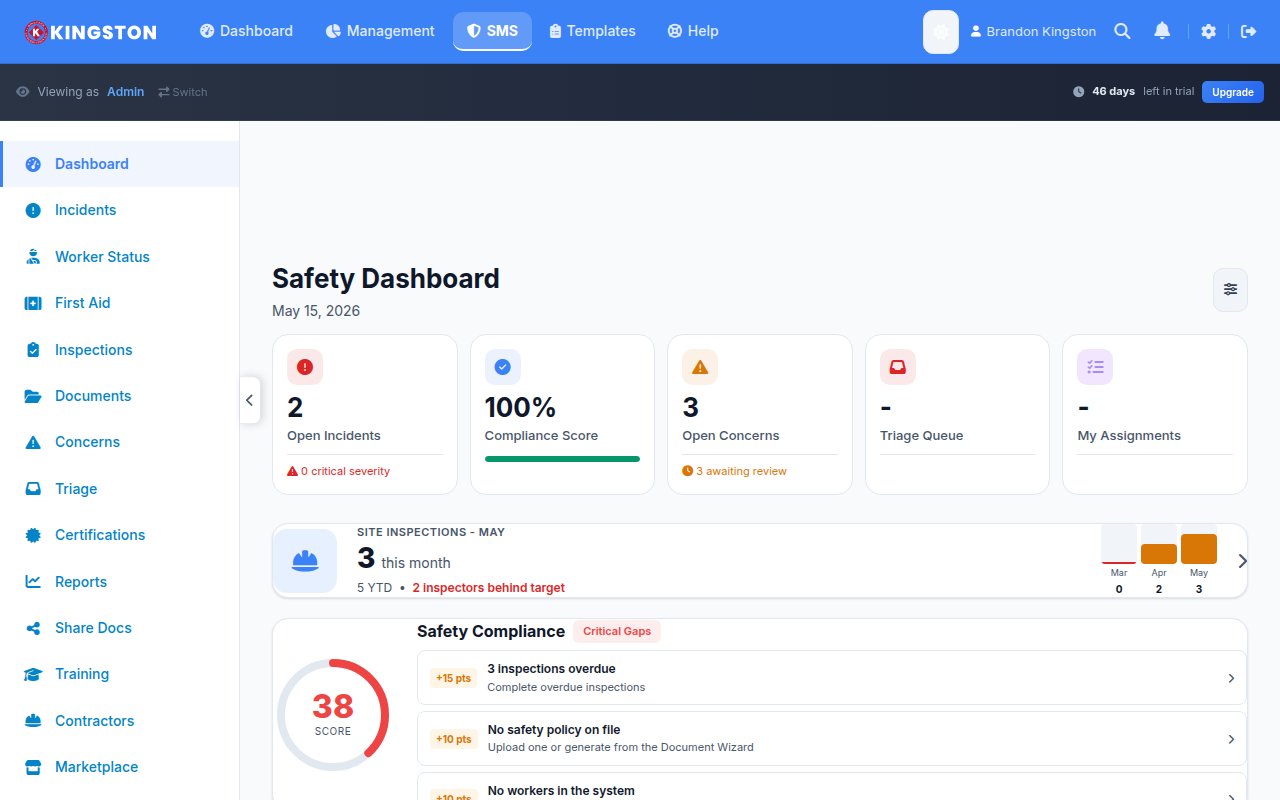
Make Safety Easy gives you the tools to stay ahead of enforcement: automated inspection scheduling, centralized document storage, and real-time visibility into your compliance status across every site and crew.
Penalties are rising every year. Your compliance program should be rising faster. Book a demo to see how Make Safety Easy protects your bottom line, or explore pricing to get started today.
Ready to simplify your safety program?
Make Safety Easy helps teams run toolbox talks, inspections, incident reports and more - all from one platform.
Start Your Free TrialNo credit card required. 14-day free trial.