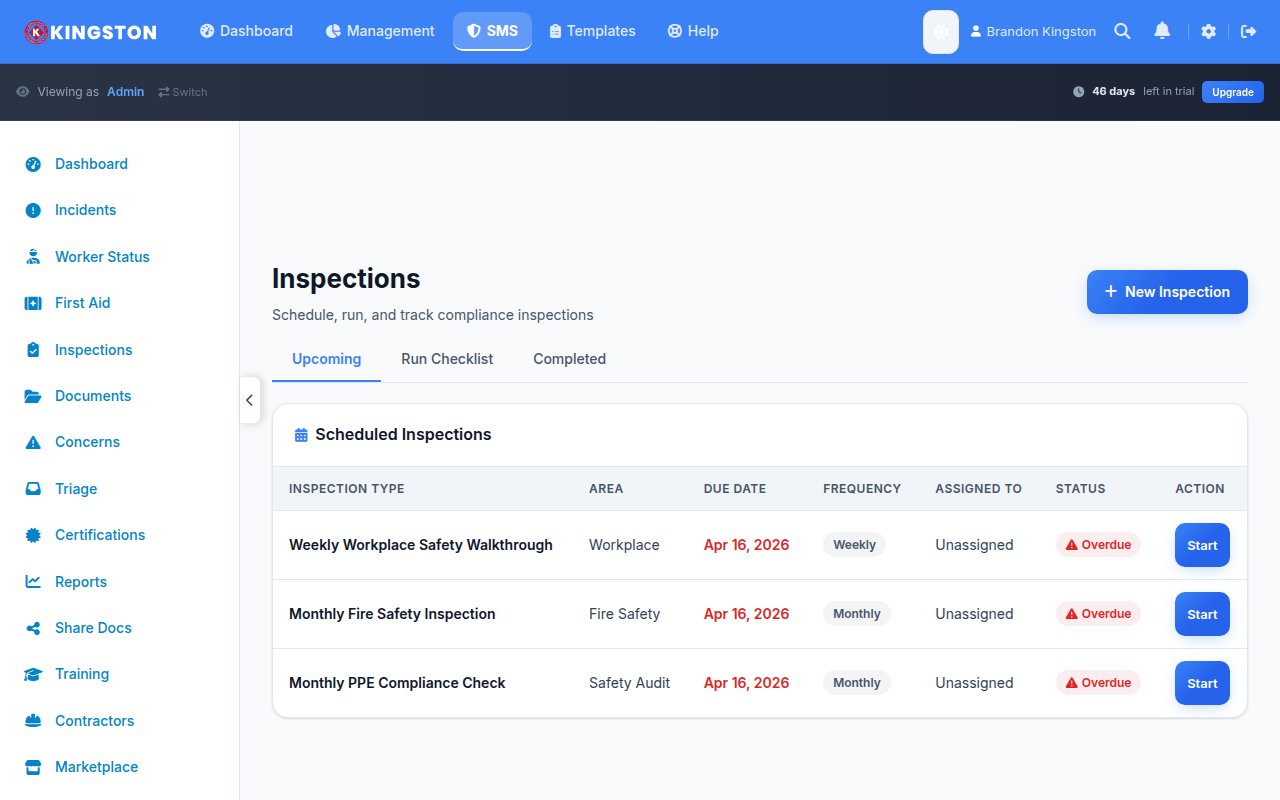
A safety audit is a structured evaluation of your workplace health and safety management system - examining policies, procedures, records and physical conditions to determine whether your organization meets regulatory standards and internal benchmarks. Companies that conduct regular safety audits experience up to 52% fewer workplace injuries according to Bureau of Labor Statistics trend data, making the audit process one of the most powerful tools available to safety professionals in any industry.
Whether you are preparing for an OSHA inspection, pursuing COR certification in Canada or simply trying to strengthen your internal safety culture, understanding the complete audit process from planning through corrective action is essential. This guide walks you through every stage of the safety audit lifecycle with checklists, scoring frameworks and actionable strategies you can implement immediately.
Types of Safety Audits Explained
Not all safety audits serve the same purpose. Understanding the different types helps you build an audit program that covers every angle of compliance and continuous improvement. Most mature organizations use a combination of all four types throughout the year.
Free Download: 5 Safe Work Procedures
Choose from 112 professionally written SWPs. No credit card required.
Get Free SWPsInternal Safety Audits
Internal audits are conducted by your own team - typically a safety manager, safety committee members or trained internal auditors. These audits are proactive and self-directed. They allow you to identify gaps before an external party does. Internal audits should form the backbone of your audit program because they are frequent, low-cost and highly customizable to your specific operations.
Best practice is to conduct internal audits on a monthly or quarterly cycle depending on your industry risk level. High-hazard industries like construction, oil and gas and manufacturing benefit from monthly internal reviews. Lower-risk office environments may audit quarterly.
External Safety Audits
External audits are performed by independent third-party auditors who have no affiliation with your organization. These audits carry more weight because the auditor has no bias or incentive to overlook deficiencies. External audits are often required for certifications like ISO 45001, COR (Certificate of Recognition) in Canada and various industry-specific standards.
External auditors bring fresh eyes and industry benchmarking data. They can compare your performance against similar organizations and identify blind spots your internal team may have normalized over time.
Regulatory Audits and Inspections
Regulatory audits come from government agencies - OSHA in the United States, WorkSafeBC or provincial regulators in Canada, the HSE in the United Kingdom and Safe Work Australia. These are typically unannounced or come with minimal notice. The stakes are highest here because findings can result in citations, fines and operational shutdowns.
OSHA conducted over 32,000 federal inspections in fiscal year 2024. The average penalty for a serious violation exceeded $16,000 per instance. Repeat and willful violations can reach $165,514 per violation. Preparing for regulatory audits through strong internal audit programs is the most effective risk mitigation strategy available.
COR and Certification Audits
In Canada, the Certificate of Recognition (COR) program requires employers to undergo a comprehensive audit of their health and safety management system. COR audits follow a standardized protocol that evaluates 19 elements including management leadership, hazard assessment, training and emergency response. Achieving COR certification can reduce your WCB premiums by 10-20% depending on your province.
Similar certification audits exist for ISO 45001, VPP (Voluntary Protection Programs) in the US and various industry-specific certifications. Each follows a defined audit protocol with specific scoring thresholds for certification.
The 6-Step Safety Audit Process
Every effective safety audit follows a structured methodology. Skipping steps leads to incomplete findings and missed opportunities for improvement. Here is the complete six-step process used by professional auditors worldwide.
Step 1: Planning and Scope Definition
The planning phase determines the entire trajectory of your audit. Start by defining the audit scope - what areas, departments, processes and standards you will evaluate. A well-defined scope prevents scope creep and ensures the audit remains focused and actionable.
Key planning activities include:
- Selecting the audit type (compliance, management system, process-specific)
- Defining the physical areas and departments to be audited
- Identifying applicable standards and regulations (OSHA, CSA, ISO 45001)
- Reviewing previous audit findings and corrective action status
- Setting the audit timeline and scheduling key personnel interviews
- Preparing audit checklists and documentation templates
- Assigning audit team roles and responsibilities
During planning, gather all relevant documentation including your safety policy, hazard assessments, training records, inspection reports, incident investigation records and previous audit reports. Having these organized before the audit begins saves significant time during fieldwork.
Step 2: Opening Meeting and Communication
The opening meeting sets expectations with site management and workers. This meeting should explain the audit purpose, scope, methodology, timeline and confidentiality protocols. Transparency builds trust and encourages honest participation from workers during interviews.
During the opening meeting, confirm logistical details such as escort requirements, restricted areas, PPE requirements for the auditor and the schedule for department walkthroughs. Establish a primary point of contact who can provide documentation and coordinate access throughout the audit.
Step 3: Fieldwork and Evidence Collection
Fieldwork is where the audit comes to life. This phase involves three primary evidence-gathering methods that must be used in combination to produce reliable findings.
Document Review: Examine written policies, procedures, training records, inspection logs, incident reports and meeting minutes. Verify that documents are current, approved by appropriate personnel, accessible to workers and consistent with actual practices. Look for gaps between what is written and what is implemented.
Physical Observation: Walk through the workplace systematically. Observe work practices, housekeeping, equipment condition, PPE usage, signage, emergency equipment and physical hazard controls. Use your checklist to ensure nothing is missed. Take photographs to document findings - both positive observations and deficiencies.
Personnel Interviews: Interview a representative cross-section of workers, supervisors and managers. Ask open-ended questions about their understanding of safety policies, hazard reporting procedures, training they have received and their perception of the safety culture. Worker interviews often reveal the most valuable insights because they describe day-to-day reality versus documented procedures.
Aim to interview at least 10-15% of the workforce for a statistically meaningful sample. Include workers from different shifts, departments and experience levels. Interview workers privately and assure them their responses are confidential.
Step 4: Analysis and Scoring
After collecting evidence, analyze your findings against the audit criteria. Categorize each finding as a conformance, nonconformance or opportunity for improvement. Assign severity ratings to nonconformances based on their potential for harm and likelihood of occurrence.
Common severity classifications include:
| Severity Level | Definition | Example | Response Timeline |
|---|---|---|---|
| Critical | Immediate danger to life or health | Unguarded fall hazard at height | Immediate correction required |
| Major | Significant risk of serious injury | Missing lockout/tagout procedures | Within 30 days |
| Minor | Low risk, does not meet best practice | Outdated safety data sheet binder | Within 90 days |
| Observation | Improvement opportunity, no violation | Could improve signage visibility | Next review cycle |
If using a numerical scoring system, assign point values to each audit element based on its importance. COR audits in Canada use a weighted percentage system where each of the 19 elements contributes a defined percentage to the total score. A score of 80% or higher is typically required for certification.
Step 5: Reporting and Closing Meeting
The audit report is the primary deliverable and must be clear, factual and actionable. Structure your report with an executive summary, audit scope and methodology, detailed findings by category, scoring summary and recommended corrective actions.
Each finding should include:
- A clear description of the nonconformance or observation
- The specific standard or requirement that is not being met
- Evidence supporting the finding (photographs, document references, interview notes)
- The severity classification
- A recommended corrective action with assigned responsibility and deadline
Present findings at a closing meeting with management. Focus on systemic issues rather than individual blame. Highlight positive findings alongside deficiencies - this balanced approach maintains engagement and demonstrates that the audit process recognizes good work.
Step 6: Corrective Action and Follow-Up
An audit without corrective action follow-up is a waste of time. This final step is where actual safety improvement happens. Establish a formal corrective action tracking system that assigns each finding to a responsible person with a specific deadline.
Effective corrective action management includes:
- Documenting root causes for each nonconformance, not just surface symptoms
- Implementing both immediate corrections and systemic preventive actions
- Verifying effectiveness of corrective actions through follow-up inspection
- Tracking corrective action completion rates as a key performance indicator
- Escalating overdue items to senior management
Organizations using digital inspection and audit tools close corrective actions 40% faster than those relying on paper-based systems. Digital platforms provide automatic reminders, photo verification and real-time dashboards that keep corrective actions visible and accountable.
Comprehensive Safety Audit Checklist by Category
The following checklist covers the major categories evaluated in a comprehensive safety audit. Customize this framework for your specific industry and regulatory requirements.
Management System and Leadership
- Written health and safety policy signed by senior management
- Safety responsibilities defined for all levels of the organization
- Safety objectives and targets established with measurable KPIs
- Management review conducted at defined intervals
- Budget allocated specifically for health and safety activities
- Safety performance included in management performance reviews
- Worker consultation and participation mechanisms in place
Hazard Identification and Risk Assessment
- Formal hazard assessment process documented and implemented
- Job hazard analyses (JHAs) completed for all critical tasks
- Risk matrix or scoring system used consistently
- Hazard assessments reviewed when processes, equipment or materials change
- Workers involved in the hazard identification process
- Hierarchy of controls applied (elimination, substitution, engineering, administrative, PPE)
- Chemical inventory current and safety data sheets accessible
Training and Competency
- Training needs assessment completed for all positions
- New employee safety orientation program documented and delivered
- Job-specific training records maintained for all workers
- Refresher training scheduled at appropriate intervals
- Training effectiveness evaluated through testing or observation
- Supervisor safety training completed (competent person requirements)
- Specialized training current (first aid, confined space, fall protection, WHMIS/GHS)
Inspections and Preventive Maintenance
- Formal workplace inspection program with defined frequency
- Inspection checklists tailored to specific work areas
- Inspection findings documented and tracked to completion
- Equipment maintenance schedules established and followed
- Pre-use inspection requirements defined for critical equipment
- Inspection records retained for required periods
- Trends analyzed from inspection data to identify systemic issues
Emergency Preparedness
- Emergency response plan documented and current
- Emergency roles and responsibilities assigned
- Evacuation routes posted and unobstructed
- Emergency drills conducted at required frequency
- First aid supplies stocked and accessible
- Emergency communication system functional
- Fire protection equipment inspected and maintained
Incident Reporting and Investigation
- Incident reporting procedure documented and communicated
- Near-miss reporting encouraged and tracked
- Investigation process includes root cause analysis methodology
- Investigation findings shared with affected workers
- Corrective actions from investigations tracked to closure
- Regulatory reporting requirements met (OSHA 300 log, provincial requirements)
- Incident trends analyzed and reported to management
For a downloadable version of this checklist with scoring capability, explore our digital inspection platform which includes pre-built audit templates for OSHA, COR and ISO 45001 standards.
Building Your Audit Team
The composition of your audit team directly impacts the quality and credibility of audit findings. A well-structured team brings diverse perspectives and ensures thorough coverage of all audit elements.
Lead Auditor Qualifications
The lead auditor manages the entire audit process from planning through reporting. This person should have formal auditor training (ISO 19011 or equivalent), deep knowledge of applicable safety standards, strong communication skills and the ability to remain objective. For COR audits in Canada, lead auditors must be certified through the relevant certifying partner organization.
Team Member Selection
Include team members with operational knowledge of the areas being audited. A good audit team for a manufacturing facility might include a safety professional, an operations supervisor from a different department (to maintain objectivity), a maintenance technician and a worker representative. Cross-functional teams produce more comprehensive findings because each member notices different things.
Independence and Objectivity
Auditors must not audit their own work. This fundamental principle prevents conflicts of interest and ensures findings are credible. If your organization is small and independence is difficult to achieve, consider using external auditors or partnering with another company for reciprocal auditing.
Auditor Training Requirements
All audit team members should receive training in audit methodology, evidence collection techniques, interview skills and report writing. Many organizations invest in internal auditor certification programs that follow the ISO 19011 guidelines for auditing management systems. This investment pays dividends through higher-quality audit findings and more effective corrective actions.
Audit Scoring Systems and Benchmarking
Quantifying audit results through scoring systems enables trend analysis, benchmarking and objective measurement of improvement over time. Several proven scoring frameworks exist for different purposes.
Percentage-Based Scoring
The most common approach assigns each audit element a maximum point value and calculates the percentage achieved. For example, if your audit has 200 total possible points and you score 170, your audit score is 85%. This approach is used by COR programs across Canada with the following general benchmarks:
| Score Range | Rating | Interpretation |
|---|---|---|
| 90-100% | Excellent | Mature system with minor opportunities for improvement |
| 80-89% | Good | Meets certification threshold, some gaps to address |
| 70-79% | Developing | Significant gaps requiring focused improvement |
| 60-69% | Basic | Major deficiencies in multiple elements |
| Below 60% | Inadequate | System requires fundamental redesign |
Weighted Scoring
Not all audit elements carry equal importance. Weighted scoring assigns higher point values to critical elements like hazard assessment, training and incident investigation while assigning lower values to administrative elements. This ensures your score accurately reflects the strength of your most important safety processes.
Maturity Model Scoring
Some organizations use a maturity model approach that rates each element on a scale from 1 (reactive) to 5 (world-class). This provides more granular insight into where each element sits on the improvement continuum and helps prioritize resources toward elements with the greatest improvement potential.
Technology for Modern Safety Audits
Paper-based audits are increasingly inefficient and error-prone. Modern document management and inspection technology transforms the audit process in several critical ways.
Digital Audit Platforms
Cloud-based audit platforms allow auditors to complete checklists on mobile devices, capture photos directly within audit items, assign corrective actions in real time and generate reports automatically. This eliminates the data entry bottleneck that delays traditional audit reporting by days or weeks.
Real-Time Dashboards
Management dashboards provide instant visibility into audit scores, corrective action status, trending nonconformances and upcoming audit schedules. This real-time data enables proactive management rather than reactive responses to audit findings.
Automated Corrective Action Tracking
Digital systems automatically send reminders to responsible persons as corrective action deadlines approach. Escalation protocols trigger notifications to supervisors and managers when items become overdue. Photo verification capabilities allow auditors to confirm corrections without physical follow-up visits.
Data Analytics and Trend Analysis
Over time, digital audit data reveals patterns that manual systems cannot detect. You might discover that a specific department consistently scores low on housekeeping, that corrective actions related to PPE take longer to close or that audit scores improve measurably after targeted training interventions. These insights drive strategic safety improvement.
Audit Frequency Guidelines by Industry
The optimal audit frequency depends on your industry risk profile, regulatory requirements, organizational size and safety maturity level. The following guidelines represent industry best practice.
| Industry | Internal Audit Frequency | External Audit Frequency | Regulatory Considerations |
|---|---|---|---|
| Construction | Monthly | Annually | Project-specific audits for large jobs |
| Oil and Gas | Monthly | Annually | Process safety audits every 3 years (PSM) |
| Manufacturing | Quarterly | Annually | Machine guarding audits semi-annually |
| Healthcare | Quarterly | Annually | Joint Commission survey cycles |
| Warehousing/Logistics | Quarterly | Annually | Forklift program audits semi-annually |
| Office/Professional | Semi-annually | Every 2-3 years | Ergonomic assessments annually |
| Mining | Monthly | Annually | MSHA inspection readiness continuous |
These frequencies represent minimums. Increase your audit frequency after significant incidents, process changes, new equipment installations or regulatory changes. Organizations pursuing COR maintenance in Canada must complete an internal audit annually and an external audit every three years.
Closing the Loop: From Findings to Culture Change
The most overlooked aspect of the safety audit process is translating findings into lasting cultural change. Too many organizations treat audits as compliance exercises rather than improvement opportunities.
Communicating Results Effectively
Share audit results with all levels of the organization - not just management. Workers who participate in interviews and see their input reflected in audit findings and corrective actions develop greater trust in the safety management system. Use toolbox talks, bulletin boards, digital displays and team meetings to communicate key findings and improvement actions.
Root Cause Focus
Address systemic root causes rather than surface symptoms. If an audit finds that workers are not wearing required PPE, the root cause might be inadequate training, uncomfortable equipment, poor supervisor enforcement or a flawed hazard assessment that failed to identify the hazard. Fixing the root cause prevents recurrence across the entire organization.
Celebrating Improvements
Track your audit scores over time and celebrate improvements. When a department improves from 72% to 88% over two audit cycles, recognize that achievement. Positive reinforcement motivates continued engagement with the audit process and builds the safety culture that prevents incidents.
Linking Audits to Business Outcomes
Connect audit performance to business metrics that resonate with senior leadership. Demonstrate how improved audit scores correlate with reduced incident rates, lower workers compensation costs, fewer regulatory citations and improved operational efficiency. This connection secures ongoing budget and management support for your audit program.
Preparing for a Regulatory Inspection
When OSHA or a provincial regulator arrives at your door, your level of preparation determines whether the visit results in a clean bill of health or costly citations. Use your internal audit program as continuous inspection preparation.
Pre-Inspection Readiness Checklist
- OSHA 300 log and 300A summary posted and current (or provincial equivalent)
- Safety data sheets accessible within the required timeframe
- Training records organized and retrievable
- Written programs current (hazard communication, lockout/tagout, confined space, respiratory protection)
- Equipment inspection records up to date
- Emergency action plan posted and employees trained
- First aid supplies stocked per applicable standards
- PPE hazard assessments documented
- Safety committee meeting minutes available
For detailed guidance on preparing for specific regulatory inspections, read our guide on preparing for a WorkSafeBC inspection or explore our safety audit checklist guide for downloadable templates.
Common Audit Pitfalls and How to Avoid Them
Even experienced organizations make mistakes in their audit programs. Here are the most common pitfalls and practical strategies to avoid them.
Pitfall 1: Auditing to the Checklist Instead of the System
A checklist is a tool, not the audit itself. Auditors who mechanically check boxes miss systemic issues that fall between checklist items. Train auditors to think critically, ask probing follow-up questions and look for connections between findings across different audit elements.
Pitfall 2: Insufficient Worker Interviews
Skipping worker interviews or conducting them superficially is the single biggest mistake in safety auditing. Workers are the primary source of truth about whether safety systems actually function as designed. Allocate adequate time for meaningful conversations with frontline workers.
Pitfall 3: Failing to Verify Corrective Actions
Marking corrective actions as complete without physical verification undermines the entire audit process. Implement a verification step where an auditor or supervisor confirms that corrections have been properly implemented and are effective.
Pitfall 4: Audit Fatigue
When audits become routine and predictable, both auditors and auditees lose engagement. Combat audit fatigue by rotating audit team members, varying the audit focus areas, incorporating unannounced spot audits and connecting audit results to meaningful recognition programs.
Pitfall 5: No Management Accountability
If senior management does not review audit results and hold leaders accountable for corrective action completion, the audit program loses credibility. Include audit performance as a standing agenda item in management review meetings and tie corrective action completion to leadership performance metrics.
Building a World-Class Audit Program: Action Plan
Transform your safety audit program from a compliance exercise into a competitive advantage with this phased implementation plan.
Phase 1: Foundation (Months 1-3)
- Establish your audit schedule for all types (internal, external, regulatory preparation)
- Develop or adopt standardized audit checklists aligned with your regulatory requirements
- Train at least two internal auditors in audit methodology
- Implement a corrective action tracking system (spreadsheet minimum, digital platform preferred)
- Conduct your first baseline internal audit
Phase 2: Optimization (Months 4-8)
- Analyze baseline audit results and establish improvement priorities
- Implement weighted scoring to focus resources on highest-risk elements
- Train additional audit team members for broader coverage
- Begin tracking audit score trends and corrective action completion rates
- Integrate audit findings with your inspection program for continuous monitoring
Phase 3: Excellence (Months 9-12)
- Benchmark your scores against industry standards and certification thresholds
- Implement data analytics to identify systemic trends across multiple audits
- Develop leading indicators derived from audit data
- Present annual audit performance report to senior management with business impact analysis
- Plan for external audit or certification if applicable
Frequently Asked Questions About Safety Audits
How long does a comprehensive safety audit take?
A full internal safety audit for a medium-sized facility (50-200 workers) typically takes 2-5 days depending on the scope and number of departments. External certification audits like COR may take 3-7 days. Factor in additional time for report writing and corrective action planning.
What is the difference between a safety audit and a safety inspection?
A safety inspection examines physical conditions and work practices at a specific point in time. A safety audit is broader - it evaluates your entire safety management system including documentation, training, procedures, management commitment and worker participation. Inspections are tactical; audits are strategic.
Who should conduct internal safety audits?
Internal audits should be conducted by trained personnel who are independent of the area being audited. This could include safety professionals, trained supervisors from other departments, safety committee members or corporate safety staff. The key requirement is competence and objectivity.
How do I prepare workers for a safety audit?
Communicate the purpose and process openly. Explain that the audit is designed to improve their workplace, not to assign blame. Encourage honest responses during interviews. Review key safety procedures and emergency protocols so workers are confident in their knowledge. Ensure work areas are maintained to normal standards - auditors can spot a last-minute cleanup.
What happens if we fail a regulatory audit?
Regulatory audit failures typically result in citations with specific correction deadlines. OSHA issues citations categorized as other-than-serious, serious, willful or repeat, each with escalating penalties. Canadian regulators may issue compliance orders, administrative penalties or stop-work orders. The key is responding promptly, documenting your corrective actions thoroughly and implementing systemic changes to prevent recurrence.
Take Your Audit Program Digital
The safety audit process is too important to manage with paper checklists and spreadsheets. Modern safety management platforms streamline every step from checklist creation through corrective action verification, giving you real-time visibility into your safety performance and audit readiness.
Make Safety Easy provides purpose-built tools for safety inspections and audits with customizable templates, photo documentation, automated corrective action tracking and management dashboards. Combined with our document management system, you can maintain audit-ready documentation year-round.
Book a demo to see how organizations across North America are transforming their audit programs from reactive compliance exercises into proactive safety improvement engines. Or view our pricing to find the plan that fits your team's needs.
Ready to simplify your safety program?
Make Safety Easy helps teams run toolbox talks, inspections, incident reports and more - all from one platform.
Start Your Free TrialNo credit card required. 14-day free trial.