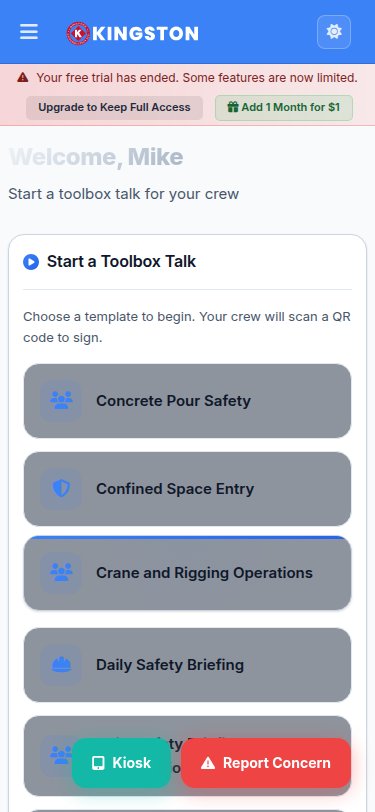
A toolbox talk is a short, focused safety discussion held at the worksite - typically 5 to 15 minutes - that addresses a specific hazard, procedure or safety topic relevant to the day's work. Organizations that deliver consistent, well-facilitated toolbox talks see up to 30% reductions in workplace incidents according to construction industry safety research, making these brief daily or weekly conversations one of the most cost-effective safety interventions available to any employer.
Despite their simplicity, most organizations underperform with toolbox talks. They default to reading scripts aloud, recycling stale topics, collecting signatures and calling it done. This guide provides the complete strategy for transforming your toolbox talk program from a compliance checkbox into a genuine driver of safety awareness, hazard recognition and worker engagement.
Purpose and Value of Toolbox Talks
Understanding why toolbox talks work is essential for designing a program that delivers results rather than just documentation. Toolbox talks serve multiple reinforcing functions within your safety management system.
Free Download: 5 Safe Work Procedures
Choose from 112 professionally written SWPs. No credit card required.
Get Free SWPsImmediate Hazard Awareness
The primary purpose is focusing workers' attention on specific hazards they will encounter that day or that week. When a supervisor discusses heat stress protocols before a 35-degree day or reviews trenching safety before an excavation begins, workers enter the task with heightened awareness of the risks and the controls in place. This "priming" effect is well-documented in safety psychology research.
Two-Way Communication Channel
Toolbox talks create a structured opportunity for workers to raise concerns, share observations and ask questions about safety procedures. This bottom-up communication is invaluable because workers observe hazards daily that supervisors may never see. A toolbox talk that only flows in one direction - supervisor talking, workers listening - captures only half the value.
Competency Reinforcement
Workers receive formal safety training during orientation and periodic refresher sessions. Between those formal events, knowledge degrades. Toolbox talks reinforce critical safety knowledge in small, digestible doses that are more easily retained than lengthy classroom sessions. Spaced repetition - revisiting topics at intervals - is one of the most effective learning techniques known to cognitive science.
Culture Building
Consistent toolbox talks signal organizational commitment to safety. When supervisors dedicate time every day or every week to discuss safety, it communicates that safety is genuinely valued - not just a policy buried in a binder. The cumulative cultural impact of hundreds of brief safety conversations over a year is profound.
Legal Documentation
Toolbox talk records demonstrate that the employer actively communicates safety information to workers. This documentation supports due diligence defense in incident investigations, regulatory inspections and litigation. In Canada, toolbox talk records are commonly reviewed during COR audits as evidence of ongoing safety communication.
Topic Selection Strategy
Topic selection is where most toolbox talk programs fail. Random topic selection leads to irrelevant content that workers tune out. Strategic topic selection ensures every talk addresses a genuine risk your workers face.
Data-Driven Topic Selection Framework
Build your topic calendar using multiple data sources:
| Data Source | How to Use It | Example Topic |
|---|---|---|
| Recent incidents and near misses | Address the specific hazard involved within 48 hours | Struck-by incident last week triggers tool securing talk |
| Inspection findings | Discuss recurring deficiencies found during walkthroughs | Multiple housekeeping findings trigger slip prevention talk |
| Seasonal hazards | Align with weather and environmental changes | Heat stress in summer, hypothermia in winter, visibility in fall |
| Upcoming work activities | Pre-brief high-risk tasks before they begin | Confined space entry procedure before tank cleaning |
| Industry incident alerts | Share lessons from incidents at other companies | Industry fatality bulletin triggers fall protection review |
| Workers compensation claims data | Target the injury types costing you the most | Sprain/strain claims high triggers manual handling talk |
| Worker suggestions | Address topics workers request | Workers ask about new chemical leads to GHS review |
| Regulatory updates | Communicate new or changed requirements | Updated silica exposure limits trigger dust control talk |
Building an Annual Topic Calendar
Create a 52-week topic calendar (for weekly talks) or a 250-day calendar (for daily talks) that blends planned topics with flexibility for reactive topics. A good split is 70% planned topics and 30% reserved for reactive topics triggered by incidents, inspections or emerging hazards.
Organize planned topics into monthly themes that align with your risk profile:
- January: Winter hazards - cold stress, ice, visibility, vehicle winterization
- February: PPE awareness - selection, inspection, proper use, limitations
- March: Housekeeping and organization - slip prevention, material storage, workspace maintenance
- April: Spring hazards - allergies, rain, ground conditions, wildlife
- May: Electrical safety - lockout/tagout, overhead lines, ground fault protection
- June: Heat stress and sun safety - hydration, acclimatization, heat illness recognition
- July: Fire prevention - hot work, flammable storage, fire extinguisher use
- August: Ergonomics - lifting techniques, workstation setup, stretching
- September: Fall protection - harnesses, ladders, scaffolding, floor openings
- October: Hazardous materials - GHS labels, SDS, spill response, chemical storage
- November: Emergency preparedness - evacuation, first aid, severe weather, communication
- December: Year in review - lessons learned, improvement priorities, recognition
For a comprehensive list of topic ideas, see our 100 toolbox talk topic ideas resource.
Avoiding Topic Repetition Fatigue
Workers disengage when they hear the same topics recycled without variation. Even foundational topics like fall protection and manual handling can be presented fresh by:
- Focusing on a different sub-topic each time (harness inspection vs. ladder setup vs. floor openings)
- Using a recent incident or news story as the entry point
- Changing the format (demonstration, quiz, group discussion, video)
- Having a different team member facilitate
- Incorporating hands-on elements (practice an inspection, test PPE fit)
Facilitation Techniques That Drive Engagement
The difference between a toolbox talk that changes behavior and one that workers endure is the facilitation quality. These techniques transform passive listeners into active participants.
The 80/20 Engagement Rule
In a truly effective toolbox talk, the facilitator speaks no more than 80% of the time and workers contribute at least 20%. In the best talks, this ratio shifts closer to 50/50. Achieve this by asking open-ended questions, inviting workers to share their experience with the topic and incorporating discussion into every talk.
Opening Hook Techniques
The first 30 seconds determine whether workers engage or mentally check out. Use one of these proven opening hooks:
- The question opener: "Who here has worked in a confined space before? What was the most challenging part?" This immediately signals that participation is expected
- The scenario opener: "You are working on the roof and your coworker slips near the edge. What do you do?" Scenarios create immediate mental engagement
- The statistic opener: "Last year, 423 workers died from fall-related injuries in the US. That is more than one per day." A well-chosen statistic creates emotional impact
- The visual opener: Show a photo of a relevant hazard, a near-miss from your site or equipment damage. Visual evidence is more compelling than words alone
- The personal story opener: Share a relevant personal experience or invite a worker to share theirs. Authentic stories resonate more than generic content
Interactive Discussion Methods
Think-Pair-Share: Pose a question, give workers 30 seconds to think individually, have them discuss with a partner for one minute, then share with the group. This technique ensures even quiet workers formulate a response.
What Could Go Wrong: Describe a work scenario and ask workers to identify everything that could go wrong. This builds hazard recognition skills and generates lively discussion.
The Walkthrough: Instead of talking about a hazard, walk to the hazard. If discussing chemical storage, walk to the storage area. If discussing fall protection, go to the elevated work area. On-location talks are dramatically more engaging and memorable than conference room discussions.
Demonstration: Show the correct procedure rather than just describing it. Have workers practice the procedure. Physical engagement creates muscle memory that verbal instruction alone cannot.
Quiz and Review: End with 2-3 quick questions that test understanding. Make it collaborative rather than punitive - "Let us see if we covered the key points" rather than "Let me see who was paying attention."
Facilitation Skills for Supervisors
Not every supervisor is a natural facilitator. Invest in developing these core skills:
- Preparation: Review the topic and key points before the talk. Identify relevant local examples. Anticipate questions
- Eye contact and body language: Make eye contact with different workers throughout. Stand where everyone can see and hear you. Avoid reading from a script
- Active listening: When workers speak, listen fully before responding. Validate their input. Use their comments to reinforce key points
- Redirecting: If discussion goes off-topic, acknowledge the contribution and steer back: "That is a great point about ladders - let us make sure we cover that next week. Today we are focusing on..."
- Inclusivity: Draw in workers who are not participating. "Marco, you have been doing this work for 15 years - what have you seen?" Experienced workers often have the best insights
- Closing with clarity: End every talk with a clear summary of the key takeaway and any specific actions workers should take
Digital Delivery and Modern Formats
Technology is transforming how toolbox talks are delivered, documented and measured. Digital delivery does not replace face-to-face discussion but it enhances the program in significant ways.
Digital Toolbox Talk Platforms
Modern safety platforms like Make Safety Easy's toolbox talk feature provide:
- Pre-built topic libraries with content that can be customized to your operations
- Scheduled delivery to supervisors' mobile devices on the designated day
- Digital sign-off that captures attendance with timestamps and signatures
- Photo and note capabilities for documenting discussion points
- Automatic record retention that eliminates paper filing
- Reporting dashboards showing completion rates by crew, department and site
Video-Enhanced Talks
Short safety videos (2-4 minutes) can supplement the facilitator's presentation and provide visual demonstrations that are difficult to replicate verbally. Use video as a discussion starter rather than a replacement for conversation. After the video, ask: "How does that apply to what we do here? What did you notice that is similar to our site?"
Multilingual Delivery
In diverse workforces, language barriers can undermine toolbox talk effectiveness. Strategies include providing written materials in multiple languages, using bilingual facilitators, incorporating visual aids and demonstrations that transcend language and pairing workers with bilingual colleagues who can clarify key points.
Remote and Distributed Team Delivery
For teams that cannot gather physically (distributed field crews, remote workers, multi-site operations), digital delivery options include video conference toolbox talks, pre-recorded video talks with digital acknowledgment, mobile-delivered content with comprehension questions and phone-based audio briefings for workers without smartphone access.
Sign-Off and Documentation
Documentation transforms a verbal conversation into a defensible record. Proper documentation must balance thoroughness with efficiency - if the sign-off process takes longer than the talk itself, something is wrong.
What to Document
- Date and time of the talk
- Location or work area
- Topic title and brief description
- Facilitator name
- Attendee names and signatures (or digital acknowledgments)
- Key discussion points or worker questions raised
- Any follow-up actions identified during the talk
Digital vs. Paper Sign-Off
Paper sign-off sheets work but create storage, retrieval and analysis challenges. A single construction company generating 5 toolbox talks per week across 10 crews produces 2,600 sign-off sheets per year. Finding a specific record during a regulatory inspection or litigation discovery is time-consuming and error-prone.
Digital sign-off through mobile devices solves these challenges. Records are instantly searchable, automatically organized and available from anywhere. Completion rates are visible in real time, allowing managers to identify and address non-compliance immediately rather than discovering gaps weeks later during a paper audit.
For best practices on transitioning to digital sign-off, read our guide on what is a toolbox talk which covers documentation fundamentals.
Retention Requirements
Retain toolbox talk records for a minimum of 3 years (OSHA training record retention) or longer based on your jurisdictional requirements and organizational policy. COR audit programs in Canada require evidence of ongoing safety communication, making historical toolbox talk records valuable during certification audits. Many organizations retain records for 5-7 years to align with the statute of limitations for personal injury claims.
Frequency Optimization
How often should you deliver toolbox talks? The answer depends on your industry, risk level, workforce characteristics and operational rhythm.
Frequency Guidelines by Context
| Context | Recommended Frequency | Rationale |
|---|---|---|
| Construction - active site | Daily (pre-shift) | High-hazard, changing conditions require daily awareness |
| Oil and gas - field operations | Daily (pre-shift) | High-consequence hazards with variable conditions |
| Manufacturing - production floor | Weekly | Relatively stable hazards with periodic changes |
| Warehousing and logistics | Weekly | Consistent hazard profile with seasonal variations |
| Healthcare | Weekly to bi-weekly | Varied hazards requiring regular reinforcement |
| Office environment | Monthly | Lower hazard profile with ergonomic and emergency focus |
| Mining | Daily (pre-shift) | High-hazard with variable underground conditions |
Duration Sweet Spot
Research on adult attention and information retention suggests the following duration guidelines:
- Daily talks: 5-10 minutes. Focused on one specific point relevant to today's work
- Weekly talks: 10-15 minutes. Broader topic coverage with discussion time
- Monthly talks: 15-20 minutes. Deeper exploration with interactive elements
Talks exceeding 20 minutes lose effectiveness as attention wanes. If a topic requires more depth, consider splitting it across two sessions or supplementing with written materials and hands-on practice.
Timing Considerations
Deliver talks at the beginning of the shift when workers are alert and before they are focused on production tasks. Pre-shift delivery ensures safety awareness is activated before work begins. Mid-shift or end-of-shift talks are less effective because workers are distracted by task completion or fatigue.
For night shifts, ensure the same topics are delivered with equal quality. Night shift workers are often underserved by safety communication programs because safety staff work primarily during day shifts. Digital delivery and trained night shift supervisors address this gap.
Measuring Toolbox Talk Effectiveness
Tracking completion rates tells you whether talks are happening but not whether they are working. True effectiveness measurement requires multiple data points.
Process Metrics
- Completion rate: Percentage of scheduled talks actually delivered (target: 95%+)
- Attendance rate: Percentage of eligible workers who attended (target: 90%+)
- Topic coverage: Percentage of planned annual topics delivered
- On-time delivery: Percentage delivered at scheduled time vs. postponed
- Documentation completeness: Percentage with all required fields completed
Quality Metrics
- Worker engagement scores: Periodic survey asking workers to rate toolbox talk relevance and delivery quality
- Discussion documentation: Are facilitators capturing worker questions and discussion points?
- Follow-up actions generated: Talks that generate follow-up items indicate genuine engagement
- Facilitator observation: Safety managers periodically observe talks and provide coaching feedback
Outcome Metrics
- Knowledge retention: Random spot-check questions about recent toolbox talk topics during field observations
- Behavioral correlation: Compare incident types and rates with toolbox talk topics delivered in preceding weeks
- Worker-initiated hazard reports: Increasing reports after talks on hazard recognition indicate awareness improvement
- Inspection finding trends: Declining findings in areas covered by recent toolbox talks suggest behavior change
Topic Library Organization
A well-organized topic library saves preparation time, ensures comprehensive coverage and prevents the common trap of defaulting to the same handful of familiar topics.
Category Structure
Organize your library into categories that align with your hazard profile:
- Physical hazards: Falls, struck-by, caught-in, electrical, noise, vibration, temperature extremes
- Chemical hazards: GHS/WHMIS, SDS, chemical storage, spill response, exposure monitoring
- Biological hazards: Bloodborne pathogens, mold, allergens, wildlife encounters
- Ergonomic hazards: Lifting, repetitive motion, posture, workstation setup, stretching
- Psychosocial hazards: Fatigue, stress, workplace violence, impairment, mental health
- Emergency response: Evacuation, fire, first aid, severe weather, communication
- PPE: Selection, inspection, proper use, storage, replacement criteria for each PPE type
- Administrative: Incident reporting, hazard communication, safe work procedures, permits
- Seasonal: Heat, cold, darkness, wet conditions, wildlife, holiday safety
- Equipment-specific: Vehicles, forklifts, cranes, power tools, ladders, scaffolding
Content Templates
Create a standard template for each topic that includes:
- Topic title and category
- Key learning objectives (2-3 maximum)
- Opening hook or discussion question
- Core content points (5-7 bullet points maximum)
- Discussion questions for worker engagement
- Relevant site-specific examples
- Key takeaway statement
- Related regulations or standards
- Links to detailed procedures or resources
Integration with Incident Data
The most powerful toolbox talk programs create a direct feedback loop between incident data and topic selection. This integration ensures talks address your actual risks rather than theoretical hazards.
Reactive Integration
When an incident or significant near miss occurs, deliver a related toolbox talk to all affected crews within 48 hours. This talk should cover what happened (without identifying individuals), what the investigation found, what corrective actions have been implemented and what workers should watch for going forward. Timely reactive talks demonstrate that the organization learns from incidents and communicates those lessons.
Proactive Integration
Analyze your incident and near-miss data quarterly to identify the top hazard categories. Ensure your toolbox talk calendar allocates proportionate attention to these categories. If 40% of your incidents involve manual handling, your topic calendar should reflect significant manual handling content throughout the year.
Leading Indicator Correlation
Track whether toolbox talk delivery correlates with safety performance improvements. Plot your toolbox talk completion rates against incident rates, near-miss reports and inspection findings over time. Organizations consistently report that periods of high toolbox talk compliance coincide with improved safety performance. This correlation data strengthens the business case for investing in talk quality and consistency.
Supervisor Training for Toolbox Talk Delivery
Supervisors are your toolbox talk delivery mechanism. Their skill and commitment determine whether your program succeeds or fails. Invest in their development with this structured training approach.
Initial Facilitator Training
Before assigning toolbox talk responsibility, provide supervisors with:
- 4-hour workshop on facilitation techniques (opening hooks, questioning techniques, managing discussion)
- Practice delivery with peer feedback in a low-pressure setting
- Orientation to the topic library, templates and documentation system
- Observation of experienced facilitators delivering effective talks
- Understanding of the strategic purpose - why talks matter beyond compliance
Ongoing Coaching
Safety managers should periodically observe supervisors delivering toolbox talks and provide constructive coaching. Focus on strengths first, then identify one or two improvement areas. Share best practices observed across different crews - "I noticed Carlos uses a great technique where he starts with a photo of a real hazard from our site. You might try that."
Recognition and Accountability
Recognize supervisors who deliver consistently high-quality toolbox talks. Include toolbox talk delivery and documentation in supervisor performance evaluations. Address non-compliance promptly but supportively - investigate whether the issue is skill, motivation or time pressure and respond accordingly.
Common Toolbox Talk Mistakes and Corrections
Mistake: Reading Scripts Verbatim
Workers can tell when a supervisor is reading without comprehension. Encourage facilitators to review the topic beforehand, note the key points and deliver in their own words. The template should be a guide, not a script.
Mistake: No Worker Participation
A talk where only the facilitator speaks is a lecture, not a discussion. Build at least 2-3 questions into every talk. Make participation an expectation, not an option. Call on individuals by name if voluntary participation is low initially.
Mistake: Generic Content Without Local Relevance
A generic toolbox talk about fall protection is less impactful than one referencing the specific elevated work areas on your site, the specific equipment your workers use and the specific incidents your company has experienced. Customize every talk with local examples and site-specific references.
Mistake: No Follow-Through on Worker Concerns
When a worker raises a safety concern during a toolbox talk and nothing happens, the message is clear: speaking up is pointless. Track every concern raised during talks and report back to workers on the response. This follow-through is what transforms toolbox talks from information delivery into genuine two-way safety communication.
Mistake: Treating Documentation as the Goal
Getting signatures is not the point. Changing behavior and building awareness is the point. Documentation is important but should never become the primary focus. If supervisors are rushing through content to get to the sign-off sheet, the program has lost its purpose.
Frequently Asked Questions About Toolbox Talks
Are toolbox talks legally required?
Toolbox talks specifically are not mandated by most regulations. However, the underlying requirement to communicate safety information to workers is universal. Toolbox talks are the most common and effective method for meeting this obligation. COR programs in Canada evaluate toolbox talks as evidence of ongoing safety communication. OSHA considers regular safety meetings as a best practice during inspections.
Who should facilitate toolbox talks?
The direct supervisor or foreperson is typically the best facilitator because they understand the daily work, the specific hazards and the workers. However, variety improves engagement - rotate facilitation among supervisors, invite safety committee members to lead talks on their specialty areas and occasionally bring in subject matter experts for technical topics.
What do we do when workers do not engage?
Low engagement usually indicates one of three problems: topics are not relevant to workers' actual risks, the facilitator is not skilled at generating discussion or workers have learned that their input does not lead to action. Address the root cause. Ask workers directly what topics they want covered. Train facilitators in engagement techniques. Follow through visibly on concerns raised.
How do we handle toolbox talks for workers who were absent?
Establish a makeup process. Options include having the supervisor deliver a brief one-on-one recap, providing the written content for self-review with sign-off, including the topic in the next talk as a brief review or using digital platforms that deliver content to individual devices for asynchronous completion.
Can toolbox talks replace formal safety training?
No. Toolbox talks supplement but do not replace formal training required by regulation. They reinforce concepts from formal training and address emerging hazards between formal sessions. OSHA-required training (hazard communication, lockout/tagout, confined space, etc.) must be delivered through formal programs that meet the specific regulatory requirements for content, duration and documentation.
Build a Toolbox Talk Program That Works
An effective toolbox talk program combines strategic topic selection, skilled facilitation, meaningful worker engagement and reliable documentation. The tools and strategies in this guide give you the framework to elevate your program from compliance exercise to cultural cornerstone.
Make Safety Easy provides a purpose-built toolbox talk platform with a comprehensive topic library, scheduled delivery, digital sign-off, completion tracking and integration with your broader safety management system. Read our related resources on effective safety meeting agendas and 100 toolbox talk topic ideas for additional content to fuel your program.
Book a demo to see how teams across North America deliver, track and improve their toolbox talk programs with Make Safety Easy. Or explore our pricing to find the right plan for your team.
Ready to simplify your safety program?
Make Safety Easy helps teams run toolbox talks, inspections, incident reports and more - all from one platform.
Start Your Free TrialNo credit card required. 14-day free trial.