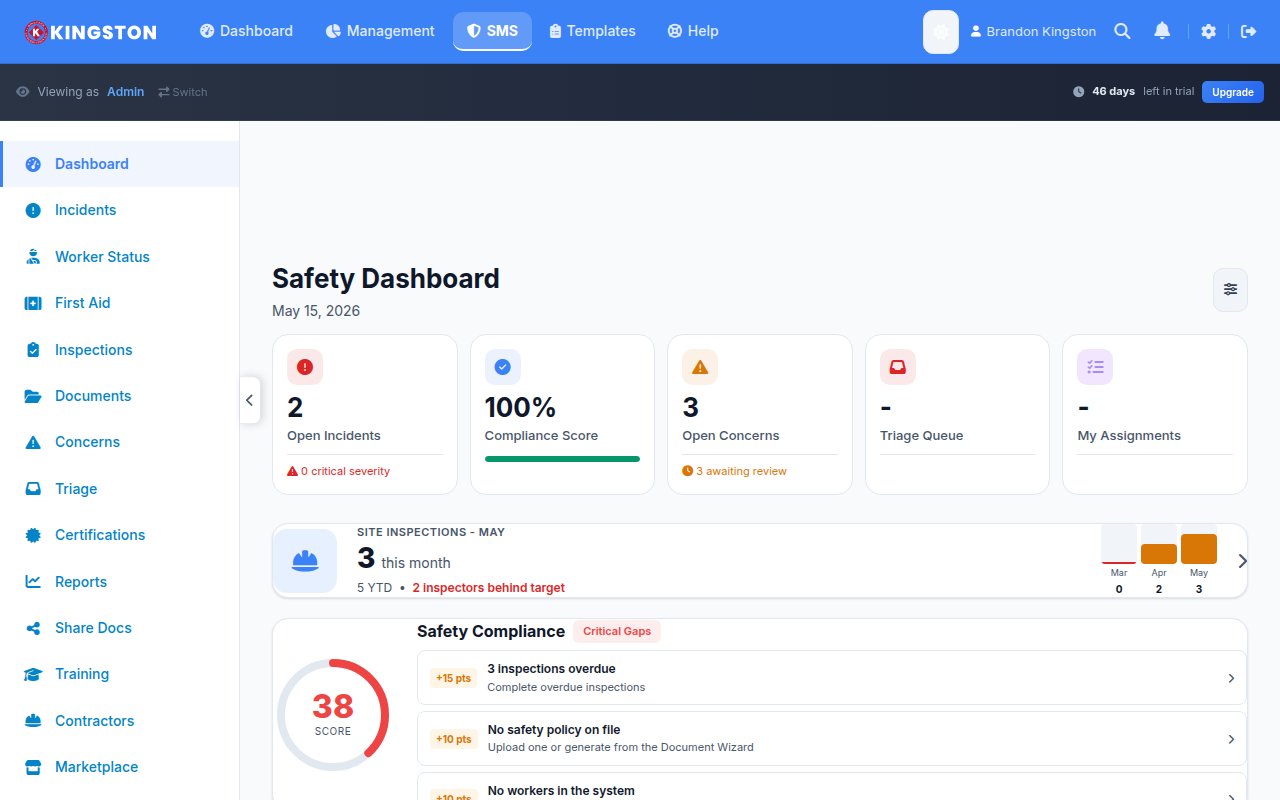
Safety management software for Australian companies must navigate the country's harmonised Work Health and Safety (WHS) laws, state-level variations and industry-specific codes of practice. From iron ore mines in Western Australia to construction projects in Sydney and Melbourne and manufacturing plants in Adelaide and Brisbane, Australian employers need a digital platform that manages safety obligations across jurisdictions. Make Safety Easy delivers a complete safety management system built to meet Australian WHS requirements.
Australia's WHS Regulatory Framework
Australia operates under a harmonised model WHS Act that most states and territories have adopted with minor variations. The framework places primary duty of care on a Person Conducting a Business or Undertaking (PCBU) - a broader concept than "employer" that captures contractors, labour hire companies and principal contractors.
Key Regulatory Requirements
- Model WHS Act: Adopted by Queensland, New South Wales, South Australia, Tasmania, the ACT and the Northern Territory. Western Australia has its own WHS Act effective from 2022. Victoria operates under its own OHS Act but aligns on most principles
- Duty of Care: PCBUs must ensure the health and safety of workers and others so far as is reasonably practicable. This requires hazard identification, risk assessment and implementation of controls following the hierarchy of controls
- Notifiable Incidents: Deaths, serious injuries and dangerous incidents must be reported to the relevant state regulator immediately. The incident site must be preserved until an inspector releases it
- WHS Management Systems: While not mandated by legislation in all states, codes of practice strongly recommend systematic approaches to safety management including documented policies, procedures, training and review processes
- Health and Safety Representatives (HSRs): Workers can request the election of HSRs who have significant powers including the ability to issue provisional improvement notices and direct work to cease in cases of serious risk
Make Safety Easy supports compliance across all Australian jurisdictions with configurable workflows that adapt to state-specific reporting requirements and regulatory nuances.
Free Download: 5 Safe Work Procedures
Choose from 112 professionally written SWPs. No credit card required.
Get Free SWPsKey Industries in Australia
Mining
Australia is one of the world's largest mining nations, producing iron ore, coal, gold, lithium, copper and rare earth elements. Mining operations range from massive open-cut operations in the Pilbara to underground mines in New South Wales and Queensland. Make Safety Easy's mining safety tools support critical risk management, principal hazard management plans, pre-start checks for mobile equipment and contractor safety management across FIFO (fly-in fly-out) operations.
Construction
Australia's construction sector is governed by the WHS (Construction) Regulations and supporting codes of practice. High-risk construction work requires specific documentation including Safe Work Method Statements (SWMS) for every high-risk activity. Our construction safety features help Australian builders manage SWMS, conduct site inspections, track inductions and maintain compliance with principal contractor obligations.
Manufacturing
Australian manufacturing spans food and beverage processing, metal fabrication, chemicals, building products and defence equipment. Hazardous chemicals management, machine guarding and manual handling remain priority safety concerns. Plant and equipment regulations require documented risk assessments, maintenance records and operator competency verification.
Oil and Gas
Offshore and onshore oil and gas operations in Australia - particularly in Western Australia, the Northern Territory and Queensland's coal seam gas regions - operate under additional regulations including NOPSEMA requirements for offshore facilities. Safety case regimes demand thorough hazard analysis and documented safety management systems.
Local Safety Challenges in Australia
Extreme Heat and UV Exposure
Australian workers face some of the highest UV radiation levels on earth. Heat stress is a year-round concern in northern regions and a seasonal risk across the rest of the country. Skin cancer prevention, hydration protocols and heat illness management plans are essential components of any outdoor safety program. Safety software must support heat stress monitoring documentation and UV exposure tracking.
Remote and Isolated Work
The distances involved in Australian operations are staggering. Mining, pastoral, infrastructure and resources projects frequently operate hundreds of kilometres from the nearest town. FIFO rosters, fatigue management, lone worker protocols and emergency response planning for remote locations are critical safety considerations. Make Safety Easy's offline mobile functionality ensures safety tools work even in areas with no cellular coverage.
Wildlife and Environmental Hazards
Venomous snakes, spiders, marine stingers and crocodiles present real workplace hazards for outdoor workers in many parts of Australia. Employers must include wildlife hazard assessments in their risk management processes, maintain first aid supplies appropriate to local species and train workers in emergency response for envenomation and animal encounters.
Bushfire Risk
Bushfire seasons have become longer and more intense across much of Australia. Employers with outdoor workers must monitor fire danger ratings, maintain bushfire emergency plans and ensure workers can be evacuated quickly when conditions deteriorate. Air quality from bushfire smoke also triggers WHS obligations for respiratory protection.
How Make Safety Easy Serves Australian Companies
Inspection Management for WHS Compliance
Make Safety Easy's inspection module provides Australian companies with customisable checklists aligned to WHS codes of practice, scheduled inspection workflows and corrective action tracking with full audit trails. Whether you need plant pre-start checks, workplace inspections or contractor audits, the platform adapts to your requirements.
SWMS and Safe Work Procedures
Create, review and distribute Safe Work Method Statements and standard operating procedures digitally. Workers can access the latest versions on any device, sign off on pre-start briefings and confirm they understand the risks and controls for their assigned tasks.
Incident and Hazard Reporting
Capture incidents, near-misses and hazard observations from any mobile device. Built-in investigation workflows guide users through root cause analysis and corrective action development. Automated notifications ensure the right people are informed immediately and notifiable incident reports can be generated for state regulators.
Contractor and Visitor Management
Principal contractors in Australia carry significant safety obligations for everyone on their worksites. Make Safety Easy helps you verify contractor qualifications, manage site inductions, track insurance and licensing requirements and maintain visibility into contractor safety performance.
Fatigue Management
Fatigue is a leading contributor to workplace incidents in Australian industries, particularly mining, transport and construction. Make Safety Easy supports fatigue risk management through shift logging, journey management plans and fitness-for-work documentation.
Multi-State Compliance
Many Australian companies operate across multiple states and territories. While the harmonised WHS framework provides consistency, important differences remain - particularly with Victoria and Western Australia. Make Safety Easy's configurable platform lets you manage state-specific requirements from a single dashboard without duplicating effort.
Get Started with Make Safety Easy in Australia
Australian employers face a rigorous safety regulatory environment across some of the most challenging work conditions on the planet. Make Safety Easy gives you the digital tools to meet your WHS obligations, protect your workers and demonstrate due diligence to regulators.
Book a demo to see how Make Safety Easy works for Australian companies. Or check out our pricing plans to find the right fit for your operation.
Ready to simplify your safety program?
Make Safety Easy helps teams run toolbox talks, inspections, incident reports and more - all from one platform.
Start Your Free TrialNo credit card required. 14-day free trial.